Ideas
Everyday actions that help your neighborhood bloom.
Shared meals, gardens, and seed networks nurture local food and living landscapes.

Get a Biotonne: close the compost loop in Cologne
Get a Biotonne: close the compost loop in Cologne About 40% of what lands in the grey residual bin is compostable organic waste. In Niehl it is burned: costing money, CO₂, and fertile matter that could return to parks and gardens as torffreier Kölner Kompost. What you can do - Ask your landlord for the free brown Biotonne (tenants can use Zero Waste Köln’s postcard template on their project page). - Line the bin with newspaper, keep it in the shade, and skip “compostable” plastic bags: they need industrial conditions Cologne’s plants do not offer. - Buy Kölner Kompost or Blumenerde from AWB/AVG outlets (the Verein advocates more neighbourhood pick-up points). Why it matters Separate bio collection has been mandatory in Germany since 2015, but Cologne households still need to request the bin. Less bio in residual waste can mean a smaller (cheaper) grey bin.
Join Quito's community compost and zero waste network
Municipal tools: neighbourhood compost Ecuador’s Alianza Basura Cero documents a growing compost network and municipal zero waste ordinances residents can advocate for locally. The alliance publishes a model ordinance and maps community compost sites, from Pomasqui and Cotacachi to neighbourhood clubs such as Club del Compost in Bellavista. What you can do - Find a mapped compostera comunitaria near you and volunteer for a work day. - Ask your parish or neighbourhood council to adopt zero-waste ordinance language from the alliance toolkit. Why it matters Community compost keeps food sovereignty and soil health local while giving municipalities a replicable legal frame, reuse included, not just collection.
Neighbourhood compost with Kiez-Kompost in Berlin
Neighbourhood compost with Kiez-Kompost in Berlin Kiez-Kompost builds neighbourhood-scale composting for housing estates, garden clubs, urban farms, and solidarische Landwirtschaft projects in Berlin. Their bioreactor process keeps organic matter local and aims for humus-rich compost without industrial peat from drained moors. What you can do - Contact the team via kiez-kompost.de to ask about a neighborhood composter for your courtyard or garden association - Partner as an urban gardening or Solawi project that needs finished compost returned to beds - Follow their RBB Gartenzeit feature and Instagram for build updates while the venture scales - Start small: one shared bin plus clear rotation rules beats waiting for a perfect site How it works Kiez-Kompost is in an active launch phase: offerings evolve quickly. Reach out by email or the site contact form; they reply with project fit, bioreactor sizing, and neighbour onboarding steps. Why it matters Berlin loses fertile soil to bagged shop compost and long transport chains. Ortsnahe Kreisläufe keep carbon and nutrients in the neighborhood where people grow food together.Clean local energy and thoughtful use help neighborhoods shine without leaving anyone behind.
Join the Munich Klima-Taler team
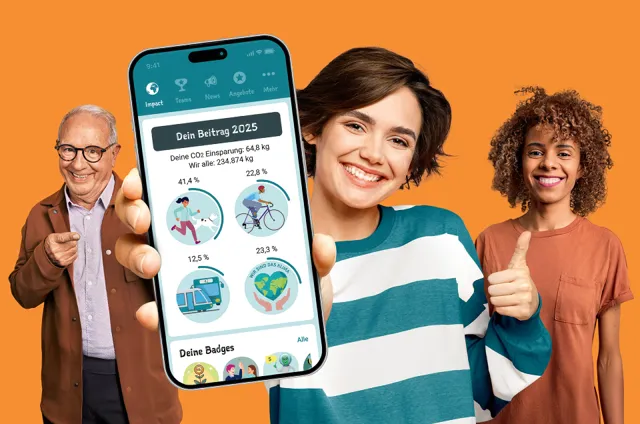
Join the Munich Klima-Taler team Munich joined the nationwide Klima-Taler network in 2025. Download the app, join the Landeshauptstadt München team, and collect one Taler per five kilograms of avoided CO₂ from walking, cycling, transit, and energy savings. Redeem at partner shops and services listed in the app. Businesses can join the marketplace for free because the city pays the licence. What you can do - Download Klima-Taler and join the Munich team via Re:think München - Log green trips and household meters, then spend Taler at partners on the in-app map - Shops: offer a reward through Munich Business (no fee) - This is a different city from the existing Frankfurt Klima-Taler listing How it works You can start without giving a name or email. Savings are credited to the city team you join. Offers change, so treat the app marketplace as the live list. Why it matters Playful rewards make everyday climate choices visible and keep spend with neighbourhood partners.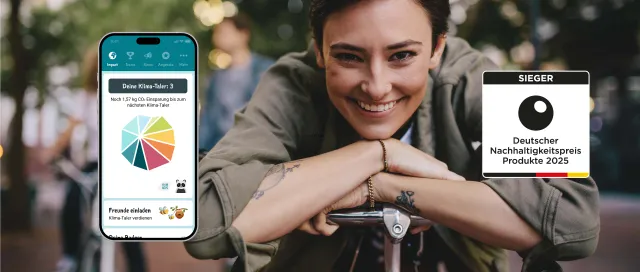
Join Klima-Taler city teams across Germany in Cologne
Join Klima-Taler city teams across Germany in Cologne More than 50 municipalities use Klima-Taler. Beyond Frankfurt and Munich, residents in Cologne, Aachen, Darmstadt, Königstein im Taunus, Hamm, Kempen, Leer, and many smaller towns join a city team, race friendly CO₂ rankings, and redeem tokens with 500+ partners, including municipal pools. Tokens work across the network, not only in your home town. What you can do - Download the app from klima-taler.com and join your city's team (no name required) - Cycle, walk, or ride transit; link meters if you want energy Taler - Redeem at local partners shown in the app (pools, museums, shops, clubs) - Schools, clubs, and workplaces can start their own teams - Municipal staff: ask via the cities form if your town is not listed yet How it works Blacksquared GmbH (Berlin) runs the software. Cities pay a licence so residents and local traders join free. Treat the in-app marketplace as the current redeem list: we do not copy shop directories here. Why it matters A shared climate currency makes quiet daily trips count in public, and it keeps spend local.
Corporate Sustainability Handprint at GIZ field in Frankfurt
Corporate Sustainability Handprint at GIZ field in Frankfurt Outside Germany, GIZ teams use the Corporate Sustainability Handprint (CSH), a management tool that tracks both footprint (energy, water, travel) and handprint (active contributions such as solar arrays, carpooling, and fair procurement) in Frankfurt. Sustainability officers embed CSH targets in job roles so field offices contribute to the company-wide Sustainability Programme. What you can do - NGOs and development agencies: adapt the footprint/handprint split for your own country offices, track consumption and positive projects side by side - Municipal climate teams: borrow CSH indicators for embassies, twin-town partnerships, or international NGO hubs in your city - Workplace green teams: list one measurable handprint project per quarter (bike racks, PV, reusable event kit) How it works Country offices report CSH categories aligned with climate, procurement, and biodiversity goals. Handprint projects make visible what staff build, not only what they consume. Why it matters Corporate sustainability sticks when offices compete on contributions, not just compliance spreadsheets.
Weigh Brazil's energy transition at SESI Lab
Weigh Brazil's energy transition at SESI Lab Each cycle SESI Lab picks one transversal theme and runs it through exhibitions, educational activities, teacher training, publications, and technical partnerships. For 2025 and 2026 that theme is energy and the energy transition, which turns the museum on the Monumental Axis into a public room for working out how Brazil powers itself. What you can do - See which energy exhibitions and activities are running now on Exposições and the daily programação - Read the free digital curation Eficiência Energética: Aerogeradores, which connects electricity, renewable sources, and the form and function of a wind turbine - Walk the permanent Imaginando Futuros gallery, built to make visitors question the choices and decisions that shape the future (acervo digital) - Watch for the free course for education professionals on energy and sustainability, and for Night Lab evenings that take up the annual theme How it works The theme travels through the whole programme rather than sitting in one room. The interactive show Energia, Sou Watt? placed visitors at ten stations balancing economic growth, social justice, and environmental protection while deciding policy on nuclear power, mobility, production, and housing; it closed on 7 September, so treat it as a format to ask for rather than a live ticket. The Festival Energia brought five free public panels to Brasília: energy scenarios and transition, science communication and the climate emergency, decarbonisation and mobility, climate justice and sustainable development, and art and the climate emergency. Why it matters An energy transition is settled by people who can picture the trade-offs. A museum that hands you the dilemma instead of the conclusion builds exactly the civic muscle that climate policy runs on.Repair cafés and reuse circles keep good things in circulation and skills in the community.

Hofflohmärkte, neighbourhood courtyard flea market in Munich
Hofflohmärkte, neighbourhood courtyard flea market in Munich Hofflohmärkte is a Germany-wide reuse programme: residents register a private courtyard, garden, or garage and sell pre-loved goods while neighbours follow a linked tour plan through the district in Munich. The platform runs in 30+ cities and 300+ neighbourhoods; initiator René Götz operates registration, participants organise their own courtyards. What you can do - Download the tour plan PDF for your Viertel (published about one week before each market day) - Walk the linked addresses and buy second-hand treasures from neighbours - Register your own Hof if you have landlord approval and goods to pass on How it works - Sales stay on private ground only, not sidewalks or public space - Typical hours: Saturdays 10–16, Sundays 11–16 (Munich also runs selected Friday evenings with M-net sponsorship) - No food sales; private sellers only, professional dealers are not welcome - Registration closes three weeks before each date for tour-plan marking; late sign-ups are accepted but may not appear on the map - Organisers may cancel a date if fewer than 30 courtyards register, fees are then refunded About Hofflohmärkte Neighbours register a private Hof, Garten, or Garage on Hofflohmärkte and sell used goods on scheduled Viertel days. Registered addresses appear on a tour plan published about one week before each date. Sales happen on private ground only. See city pages for local schedules and Spielregeln & Tipps for seller rules. Why it matters Every item re-homed from a courtyard is one less thing bought new or landfilled, and a chance to meet the people who live behind the front doors.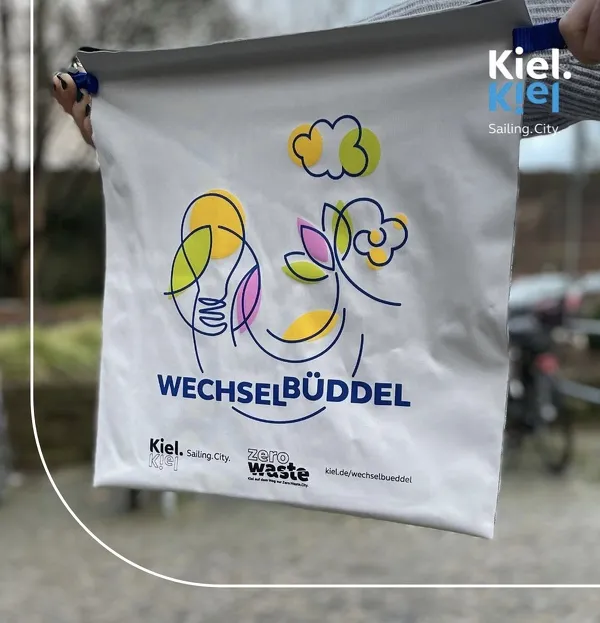
Pack Kita wet clothes in Wechselbüddel
Washable bags beat single-use plastic After a pilot, Kiel equipped about 55 Kitas with Wechselbüddel: waterproof, washable bags for muddy or wet children’s clothes instead of disposable plastic sacks. What you can do - Ask your Kita whether Wechselbüddel are in use; wash and return bags the same day when possible. - Replicate the pattern at home for swimming or forest days. Why it matters Daily Kita handovers add up; a durable bag removes thousands of plastic sacks per year across the city. Wechselbüddel
Support recycler cooperatives managing organics in Buenos Aires
Segregation at source: cooperatives in charge Argentina’s FACCyR-linked recycler groups manage organic streams where source segregation is in place, a pattern the 2025 regional report pairs with Colombian ANR experiences. Cooperatives such as El Amanecer de los Cartoneros in Villa Fiorito show how sorted organics and recyclables can stay in community hands. What you can do - Sort organics and clean recyclables before cooperative pick-up on your block. - Connect your barrio association with a registered cartonero/a cooperative for collection routes. Why it matters Recycler-led organics management turns a climate liability into local jobs and compost, without shipping waste out of sight.
Donate good furniture through ABK to Echt-Gut
Sofas and tables get a second home ABK Kiel and Stadtmission Kiel restarted furniture handovers: register usable pieces on the ABK site, pass inspection, and Echt-Gut-Kaufhaus collects them for resale and social programmes. What you can do - Photograph and register furniture that is clean, complete, and fire-safe before leaving it on the street. - Shop second-hand at Echt-Gut when you need a table or chair instead of ordering new flat-pack. Why it matters Bulky goods clog bulky-waste routes; matched donations keep timber and upholstery in use locally.Rewilding and urban green give birds, soil, and people more room to breathe together.
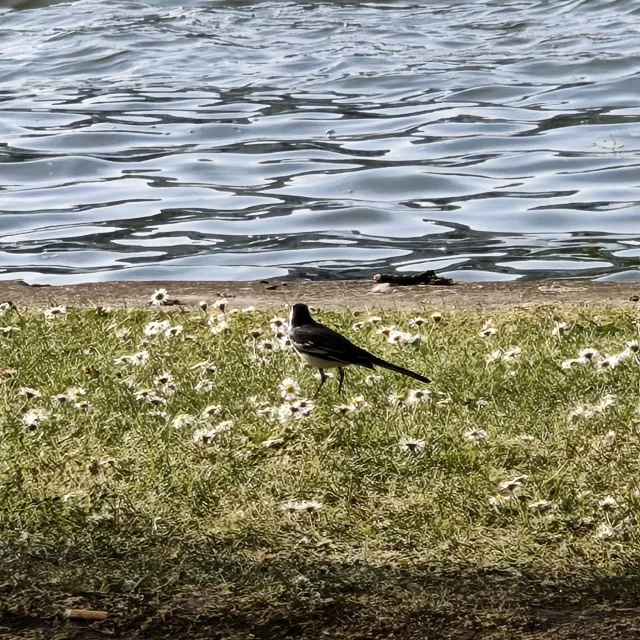
#RespektTaube
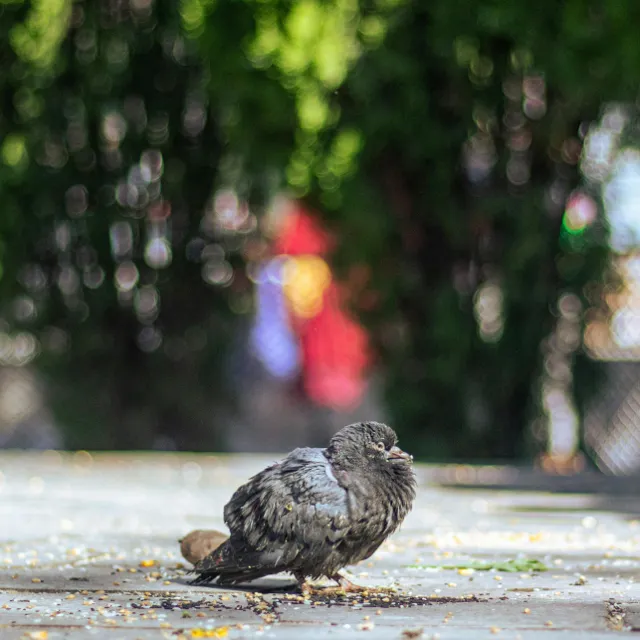
Siehst Du mich? Dein Blick verändert ihr Leben. Tauben sind sehr standort gebunden. Sie kehren immer wieder an ihren Wohnort zurück. Was ist die Lösung? Tauben brauchen ein zu Hause! Und die einzig effektive Möglichkeit die Tauben Population zu regulieren, ist der Eiertausch! Das gelingt nur, mit festen, überwachten Brutplätzen. Daher brauchen wir dringen Taubenhäuser in Frankfurt. Denn nur so kriegen wir es hin das Menschen und Tiere gut miteinander leben können.
Photograph insects for Frankfurt biodiversity research
Photograph insects for Frankfurt biodiversity research Frankfurt's Umweltamt supports SLInBio (Städtische Lebensstile und die Inwertsetzung von Biodiversität): researchers from Senckenberg, Goethe University, and neighbourhood partners study how everyday city life connects to insect diversity. Residents can join by uploading insect photos to the Insekten Hessen reporting portal. What you can do - Photograph bees, butterflies, or beetles in your garden, balcony, or park (no faces needed) - Upload sightings through the Insekten Hessen meldeportal - Follow project updates on insektenvielfalt-frankfurt.org and join open events when listed - Visit the Insect Embassy art installation by ISOE and HfG Offenbach to learn why urban insects matter How it works Scientists use crowd-sourced images to map distribution and population trends across Hesse. SLInBio links the data to questions about urban lifestyles, green yards, and shared stewardship with NABU Frankfurt, BioFrankfurt, and the Palmengarten. Why it matters Insects pollinate food, recycle nutrients, and signal healthy neighbourhoods. A few phone photos from many streets beat a lone expert survey.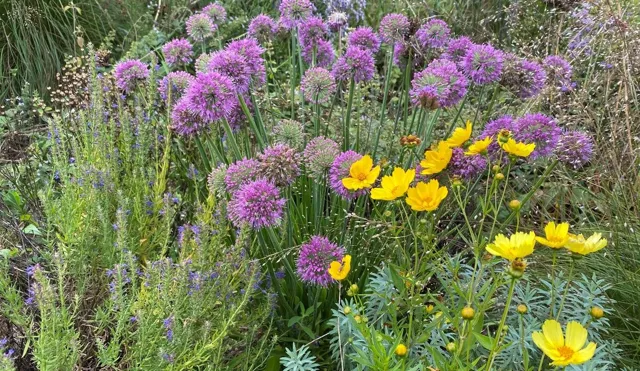
Walk the Lincoln sponge quarter
Visit a climate-adapted neighbourhood The Lincoln-Siedlung in Darmstadt is a lived example of sponge-city thinking. Built on a former US Army base in 2016, the quarter mixes modernist apartments, decentralized rainwater storage, and planted open spaces. The centrepiece is the Quartierspark, which will soon add 19 native trees and unsealed pathways to cool the microclimate by up to 5 °C on hot days. What you can do - Walk through the neighbourhood and rest in the Quartierspark shade and seating - See how unsealed surfaces and clustering trees beat the heat without gentrification - Talk to residents about what it means to live in a quarter that listens to its people How it works Darmstadt's planning started with a neighbour survey in 2025. Residents asked for more green, shade, and gathering space. The city acted on those wishes directly in the rebuild plan. Participation was design input, not decoration. Why it matters This is how equitable cooling works: hear people, plan together, build for health and joy. The Lincoln quarter shows climate adaptation can mean shared outdoor life and neighbourhood identity, not just infrastructure.
Walk Singapore's Supertree Grove at dusk
See living towers that harvest light and shade a city park Gardens by the Bay's Supertree Grove is the built image many people mean by Solarpunk architecture: vertical gardens, rainwater and solar systems, and a free outdoor grove open to walkers. Architizer's Solarpunk architecture essay notes icons like these inspire — and that green policy does the heavier lifting. What you can do - Walk the outdoor Supertree Grove for free (MRT Bayfront) - Stay for the free Garden Rhapsody light shows in the evening when listed on the Gardens site - Optional: book OCBC Skyway or conservatories if you want elevated or indoor biomes How it works Supertrees are engineered arbors that host plants, collect rain, and support park ventilation — symbols of Singapore's Garden City / City in Nature push, not a substitute for street trees and zoning. Why it matters Joyful biophilic places show the future already underfoot — then send you home hungry for canopy on your own block.Gatherings, mutual aid, and open participation make cities places we shape together.