Programme nearbyCommunityCologneWalk Cologne with the Zero Waste SchweifWalk Cologne with the Zero Waste Schweif Grab the Schweif booklet and one to four friends, then wander your Kiez with small tasks that help you spot waste, reuse, and resources in everyday streets. No tour guide: you set the pace. How it works - Pick up a booklet at partner cafés, unverpackt shops, or Zero Waste Köln info stands (hours vary by location). - Work through quizzes and observation prompts designed in Cologne, usable in any urban neighbourhood. - Optional deep-dive facts on the project page after you have tried the riddles yourself. Why it matters Cologne burns roughly 2,000 tonnes of waste every day; the Schweif turns that abstract number into curiosity about what we throw away and what could stay in the loop.walkingeducationlocal
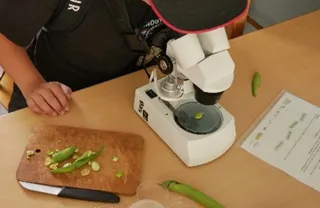
Programme nearbyCommunityFrankfurtBook a Heldenbohne school food morning in FrankfurtBook a Heldenbohne school food morning in Frankfurt Umweltlernen in Frankfurt runs Lernwerkstatt Heldenbohne for years 7 to 10: beans, peas, and lentils as climate food, biodiversity, and everyday choice. Sessions sit at stadtRAUMfrankfurt during Foodtura week. Kindergarten and primary groups can book apple picnic or edible-Ginnheim walks with Klimawerkstatt instead. What you can do - Teachers: email kirsten.allendorf@stadt-frankfurt.de to book a free Heldenbohne morning (deadline 1 September 2026; remaining dates 17 to 23 September) - Read the Heldenbohne listing - For younger children, ask Klimawerkstatt about Apfelpicknick or Essbares Ginnheim (by appointment) - Adults can still taste Hessian pulses at Heldenbohne x Freitagsküche How it works School formats are free and booked as a class, not as drop-in. Confirm remaining slots with Umweltlernen. Why it matters One morning in a real kitchen beats a worksheet on climate diets.educationschoolpulses +2
Programme nearbyCommunityKievZaporizhzhia: zero waste community programme: podcast, workshops, local plansBuilding zero waste culture in a city close to the front Zero Waste Zaporizhzhia: a member of the Zero Waste Alliance Ukraine: promotes zero waste principles in the Zaporizhzhia community through local waste management plans, reuse/repair workshops, a podcast, and social media education. The programme deliberately keeps building skills and culture in a city facing severe disruption, demonstrating that zero waste work continues even under wartime conditions. What the programme covers - Local and regional waste management plans developed and submitted to authorities - Reuse and repair workshops open to residents: practical skill-building in mending, fixing, and repurposing - A podcast reaching Zaporizhzhia residents with zero waste content designed for the local context - Social media education campaigns tailored to community needs during the ongoing conflict How to engage - Zaporizhzhia residents: follow Zero Waste Zaporizhzhia on social media and attend workshops when they are running safely - International zero waste networks: amplify Zero Waste Zaporizhzhia's work: visibility and solidarity matter for a team working under difficult conditions - Podcast listeners: find and share the Zero Waste Zaporizhzhia podcast to extend its reach Why it matters Zero waste culture cannot wait for peace. Workshops, podcasts, and local plans keep repair and reuse skills alive in Zaporizhzhia, showing that community-led waste work persists even when cities are under severe disruption.educationpodcastworkshops +2
Programme nearbyCommunitySofiaBulgaria: zero waste event guide for businesses and organisersA practical guide making sustainable events the easy choice Za Zemiata published a practical zero waste event guide offering concrete advice on hosting low-waste and waste-free events: covering catering, packaging, waste station design, volunteering, and post-event reporting. The guide has been well received by business partners as well as civil society, positioning waste reduction as a competitive advantage rather than an obligation. What the guide covers - Step-by-step instructions for event planners: pre-event, during, and post-event waste management - Catering supplier checklist for single-use plastic alternatives and reusable systems - Waste station layout templates optimised for different event sizes - Communication templates for telling attendees what they can do - Case studies from Bulgarian events that have already adopted zero waste practices How to engage - Event organisers in Bulgaria: download the guide from Za Zemiata and share it with your catering and venue partners - Businesses hosting corporate events: use the guide as a starting point for your sustainability commitments - Municipalities planning public events: contact Za Zemiata for tailored support applying the guide to specific local contexts Why it matters Festivals and corporate gatherings generate concentrated waste in a single weekend. A practical guide lowers the barrier for organisers who want to do better, turning zero waste from a niche commitment into something any venue can plan for.eventseducationreuse +2
Programme nearbyCommunityNicosiaCyprus: festival zero waste certification: leading with eventsFestivals approaching Friends of the Earth Cyprus for zero waste guidance Several Cypriot festivals are proactively approaching Friends of the Earth Cyprus for waste reduction guidance: signalling that the events sector is moving ahead of regulation. FoE Cyprus has developed a festival zero waste certification pathway covering plastic reduction, waste stream analysis, reuse systems, and post-event reporting. What the certification pathway covers - Pre-event: waste audit, supplier requirements, reusable system design - During: waste station placement, sorting guidance for staff and volunteers, data collection - Post-event: waste audit review and public reporting - Certification awarded when the event meets minimum waste reduction benchmarks How to engage - Festival and event organisers in Cyprus: contact Friends of the Earth Cyprus to start the zero waste certification process for your event - Attendees: look for the FoE Cyprus zero waste certification mark at events: and provide feedback to organisers who don't yet have it - Municipalities: hosting certified zero waste events on public land sets a visible standard and builds community appetite for broader policy Why it matters Voluntary certification creates early movers ahead of PAYT regulation. When PAYT eventually arrives in Cyprus, municipalities and event organisers who have already built the habits will adapt faster: and lead the rest.eventscertificationfestivals +2
Programme nearbyFood & GardenWarsaw#ForkToFarm Poland: improving bio-waste collection in three municipalitiesA campaign turning composting from a good idea into a daily habit The Polish Zero Waste Association participates in the #ForkToFarm campaign by Zero Waste Europe, working with three Polish municipalities to improve bio-waste collection rates. The campaign combines practical infrastructure (bins, collection services) with resident education to move organic kitchen waste out of the mixed bin and into the composting stream. What the campaign involves - Working with the three participating municipalities to audit current bio-waste practices - Distributing composting bins and providing set-up guidance to households - Running awareness campaigns explaining what counts as bio-waste and how to compost correctly - Documenting results so the three municipalities can become reference cases for other Polish towns How to engage - Polish residents: check whether your municipality participates in #ForkToFarm and request a bio-waste bin if you don't already have one - Municipalities: apply to the next #ForkToFarm cohort through Zero Waste Europe or contact Polish Zero Waste Association for national programme support - Teachers and community leaders: run a bio-waste workshop using the #ForkToFarm materials: Zero Waste Association can provide resources in Polish Why it matters Kitchen scraps are the easiest fraction to divert, yet they still fill mixed bins across Poland. Three municipalities testing #ForkToFarm together can show neighbours that composting is a daily habit, not a pilot novelty.compostingbio-wasteForkToFarm +2
Programme nearbyCommunitySofiaEcoObshtina: Bulgaria's national zero waste municipality competitionThe competition that raised the stakes for Bulgarian local government The EcoObshtina (Eco Municipality) competition is Bulgaria's largest annual award for sustainable municipalities, organised in partnership with the French Embassy. Za Zemiata shapes its evaluation criteria to prioritise measurable waste reduction outcomes: ensuring the competition rewards genuinely impactful programmes over greenwashing. In 2024, both Svilengrad and Gabrovo received the EcoMunicipality award, boosting the visibility of zero waste solutions at the level of national ministries and the National Association of Municipalities. What EcoObshtina does for zero waste - Evaluation criteria designed by Za Zemiata to reward source separation rates, PAYT implementation, and community engagement over less measurable commitments - Award ceremonies provide media coverage that amplifies zero waste success stories nationally - Partnership with the French Embassy brings international credibility and comparative benchmarking - Winning municipalities become reference cases for other local authorities to study How to engage - Bulgarian municipalities: apply for the next EcoObshtina cycle: follow Za Zemiata for application deadlines and criteria - Community groups: nominate your municipality for EcoObshtina recognition and document the waste programmes it runs - Policy advocates: use the competition results to name and praise municipalities that are leading: and ask the Ministry why national policy has not yet caught up with local practice Why it matters National awards turn local zero waste wins into stories ministers and neighbouring mayors cannot ignore. When Svilengrad and Gabrovo took EcoMunicipality honours in 2024, they gave every Bulgarian council a visible benchmark, and a reason to aim higher than greenwashing.advocacyawardspolicy +2
Programme nearbyCommunityViennaGraz "(Zero) Waste in the City?": civic dialogue between activism and urban agendaA panel that brought zero waste into the policy conversation In September 2024, Zero Waste Austria participated in a panel discussion in Graz: "(Zero) Waste in the City? Between Activism and Urban Agenda", organised by the Waste in Motion (WiM) research network. The panel brought together experts from WiM, representatives of the City of Graz, Zero Waste Austria, and Katja Sres from Ekologi Brez Meja (Slovenia): one of the strongest Zero Waste Europe member organisations. The format is designed to be replicable in other Austrian cities. What the panel discussion format provides - A structured dialogue between zero waste advocates, researchers, and city officials - Cross-border learning: Slovenia's experience via Ekologi Brez Meja adds an EU best-practice dimension - A public record that zero waste is a legitimate part of urban policy discourse in Graz - A template that other Austrian cities can use to host similar panels with city council involvement How to engage - Austrian municipalities and research institutions: contact Zero Waste Austria or the Waste in Motion research network to organise a similar panel in your city - Activists and civil society: use the Graz format as a model for connecting with local researchers and city officials: the research network provides academic legitimacy - Students and academics: engage with the Waste in Motion network and connect zero waste scholarship to local policy advocacy Why it matters Zero waste needs a seat at the urban policy table, not just protest outside it. The Graz panel brought advocates, researchers, and city officials into one room, a replicable format for turning activism into municipal agenda.advocacyeducationpolicy +2
Programme nearbyFood & GardenVilniusGarden with Miesto laboratorija in VilniusGarden with Miesto laboratorija in Vilnius Miesto laboratorija runs an educational garden and club on Antakalnis. Neighbours learn soil skills and share harvest talk. What you can do - Visit miestolaboratorija.lt for events - Ask about ML SODO klubas or open garden sessions - Come to Antakalnio g. 17-13 when a public slot is listed How it works The centre mixes cafe, events, and garden. Confirm open hours before you travel. Why it matters Vilnius gets a neighbourhood lab where learning and lettuce share a yard.vilniusgardeneducation +1
Programme nearbyCommunityBrasiliaBridge peripheries through Diálogos com TerritóriosBridge peripheries through Diálogos com Territórios Diálogos com Territórios is SESI Lab's inclusion programme, linking the museum with cultural groups and social organisations from Brasília's peripheries. Residencies combine maker skills, audiovisual work, entrepreneurship, accessibility, and environmental education so communities co-create the science culture instead of only receiving it. What you can do - Watch SESI Lab programming and news for open showcases, oficinas, and calls tied to Diálogos - Follow O SESI Lab educational programmes if your collective works with youth, culture, accessibility, or environmental education - Attend the free public showcases when residencies close (past cycles have produced games, prototypes, publications, and performances) - Connect partner organisations (coverage cites groups such as Jovem de Expressão and Casa Akotirene) through the museum's education team How it works Selected DF groups join mentored residencies with dozens of formation hours, then share results with the public. Cycles are periodic, so treat each closing date as a window into an ongoing programme rather than a single ticketed festival. Why it matters Climate and energy decisions land hardest on the edges of a city. A museum that runs its environmental education with those neighbourhoods, not about them, is how science culture stops being a downtown privilege.inclusionresidencyculture +2
Programme nearbyCommunityBrasiliaHost the travelling SESI Lab near youHost the travelling SESI Lab near you SESI Lab Itinerante packs about ten interactive apparatuses plus a workshop area so the museum experience can travel across the Distrito Federal and other Brazilian states. Schools and local partners can request the kit and add teacher formation shaped to local needs, and everything the museum builds is mirrored in a free digital acervo. What you can do - Explore the travelling exhibits and oficinas in the acervo Itinerante - Ask your school network, municipal culture desk, or SESI regional office how to host a stop - Rebuild the workshop recipes (light badges, motor cars, electric insects, conductive dough) in a classroom, using the published tutorials - Run the free digital exhibition BioOCAnomia Amazônica with students: it puts bioeconomy, biodiversity conservation, and reducing climate change impacts at the centre of Amazonian development How it works The itinerant set carries a slice of the long-duration exhibition and of the educational action programme. Hosts negotiate dates and training with SESI Lab, so there is no permanent street pin because the venue moves. The digital acervo stays open to anyone with a connection, at no cost. Why it matters Inquiry science should not stop at the Rodoviária. A travelling lab plus an open archive lets a distant classroom touch the same phenomena, and reuse the same lesson, as the Esplanada galleries.itinerantschoolseducation +2
Programme nearbyCommunitySkiathosCoastal zero waste tourism: how dayboats can protect remote beachesSkiathos shows that tourist operators can lead on waste The Zero Waste Rota programme, developed by ECOREC and the Municipality of Skiathos, trains dayboat operators to actively educate tourists about proper waste disposal: including at remote beaches that are inaccessible by road and therefore lack collection infrastructure. The programme measurably increased recycling rates on the island and fostered a culture of environmental responsibility among visitors. What the programme involves - Dayboat operators receive training on waste separation and guest communication - Tourists are briefed on board before reaching remote beaches about what to do with packaging and recyclables - Operators bring separated waste back to port for collection: protecting beaches that cannot be serviced by standard vehicles - The approach is scalable to any island with a dayboat economy Why it matters Greece's Aegean islands face intense seasonal waste from marine tourism. Regulation alone cannot reach a boat at sea or a path-only beach. The Skiathos model shows that education and operator buy-in can do what infrastructure cannot, and it is directly replicable on any island with a similar tourist boat economy. How to replicate it - If you operate or charter boats in the Aegean, contact ECOREC about Zero Waste Rota training - If you visit Greek islands by dayboat, ask whether the operator follows Zero Waste Rota practices: and request it if not - Municipal waste officers on other islands can use the Skiathos programme as a template for ERIC or national funding bidscoastaltourismrecycling +2