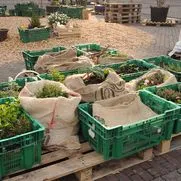
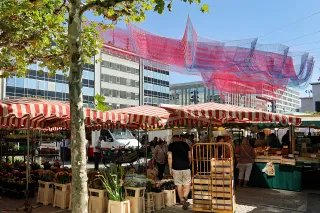
Programme nearbyCommunityFrankfurtClean up a square with friends and make it feel in FrankfurtClean up a square with friends and make it feel in Frankfurt Frankfurt has a small public square near almost every home: a market corner in Höchst, a quiet Platz in Nordend, a bench area in Ostend, a spot in Bockenheim or Westend. Most just need people to show up. Gather a few friends, spend an hour picking up litter together, then stay a while and enjoy the place you just cleaned. That is the whole idea, and it works because you repeat it. What you can do - Pick a square near where you live. Browse Wikimedia Commons: Squares in Frankfurt am Main for names and photos, or explore a district first on Visit Frankfurt: Frankfurter Stadtviertel (Bockenheim and Westend, the Brückenviertel in Sachsenhausen, Höchst's old town, Nordend and Bornheim, or Ostend along the Main). Well-known squares like Opernplatz, Konstablerwache, or Höchster Markt work too, but any square near you is just as good a start. - Message two to six friends who live close by and agree on a time. A Saturday morning works well. - Sign up once as a Sauberkeitspatin or Sauberkeitspate on the FES page Bürgerinnen und Bürger helfen mit. You choose the square or street, FES gives you grabbers, gloves, and bags and keeps restocking them, and you get one fixed contact person for questions. You clear small litter yourself and report anything larger, like dumped furniture, by phone or email. - Or plan a one-time group clean-up through FES Bürger-Sammeltage. Pick an upcoming date, such as the Main Cleanup on 12 September 2026 or World Cleanup Day on 20 September 2026. FES supplies the equipment and collects the waste afterward. For parks, playgrounds, or the city forest, contact the Grünflächenamt first (gruenflaechenamt@stadt-frankfurt.de), as the FES page explains. - Or join the citywide Frankfurt Cleanup weekend, run together by cleanffm and FES Frankfurt. The last edition, in March 2026, brought together more than 7,000 people across around 200 pickup points. The next one is set for 12 and 13 March 2027; registration opens closer to the date. - Add a reuse table once the litter is gone, the way Klimaschutz-Initiative Riedberg does it: lay out tools, toys, and household items nobody needs anymore so a neighbour can take them home instead of them being thrown away. - Finish by staying. Bring coffee, sit on a bench, talk to whoever passes by. That last part is what turns a cleaned square into a square people actually want to be in. How it works The Sauberkeitspate programme has run since 2000 and keeps adding people: 416 patrons by 2022, 476 by 2023, plus schools and kindergartens that care for an area as a group. You decide how large your patch is and how often you show up; there is no minimum. Bürger-Sammeltage work the same way for a single day: register, pick up gloves and bags at a collection point, clean, and FES takes the waste away afterward. Frankfurt Cleanup scales that same pattern to one weekend a year, city-wide. None of this changes who owns the square. It stays public land; you are simply the person, or group of friends, who looks after a small part of it. Why it matters Showing up for the same square more than once turns strangers into people you recognise and greet. It is a low-effort way to meet neighbours, and there is no guilt attached: you are not fixing a crisis, you are just making one place a little nicer to be in. A handful of small groups doing this across Frankfurt adds up to a city where public squares get used and looked after instead of avoided.cleanupplazaneighbourhood +2
Programme nearbyRewildingDarmstadtWalk the Lincoln sponge quarterVisit a climate-adapted neighbourhood The Lincoln-Siedlung in Darmstadt is a lived example of sponge-city thinking. Built on a former US Army base in 2016, the quarter mixes modernist apartments, decentralized rainwater storage, and planted open spaces. The centrepiece is the Quartierspark, which will soon add 19 native trees and unsealed pathways to cool the microclimate by up to 5 °C on hot days. What you can do - Walk through the neighbourhood and rest in the Quartierspark shade and seating - See how unsealed surfaces and clustering trees beat the heat without gentrification - Talk to residents about what it means to live in a quarter that listens to its people How it works Darmstadt's planning started with a neighbour survey in 2025. Residents asked for more green, shade, and gathering space. The city acted on those wishes directly in the rebuild plan. Participation was design input, not decoration. Why it matters This is how equitable cooling works: hear people, plan together, build for health and joy. The Lincoln quarter shows climate adaptation can mean shared outdoor life and neighbourhood identity, not just infrastructure.sponge cityplazashade +2
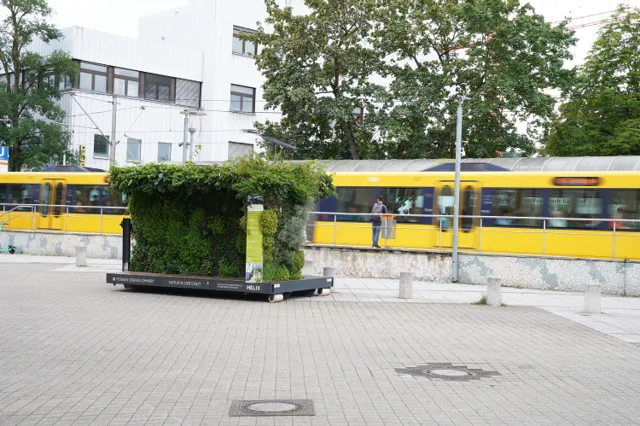
Programme nearbyRewildingStuttgartSit in a Mobiles Grünes ZimmerRest in a rolling green room on the plaza Helix's Mobiles Grünes Zimmer is a freestanding green wall and kiwi trellis on a roll-off container: shade, edible herbs, seating, and a climate-adaptation demo that cities, schools, and citizen groups can host. Since 2016 the rooms tour public squares, stations, and events across Germany. What you can do - Sit and cool off when a room is deployed near you (Stuttgart-Feuerbach station plaza has hosted one) - Ask your school, Ortsbeirat, or Bürgerinitiative to host a room for a festival, heat day, or neighbourhood pop-up - Use the side panels as a meeting point for climate and greening talks How it works A truck drops the pre-grown room; Helix handles most care. Local organisers top up the water tank. Residents get an instant cool oasis without digging the square. Why it matters Heat islands become places to linger. Neighbours feel what green infrastructure can do before permanent plantings arrive.mobile greenshadeplaza +2
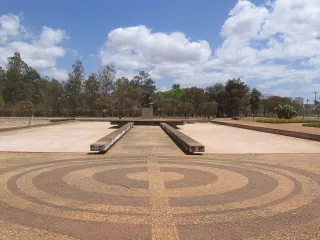
Programme nearbyCommunityBrasiliaAdopt a public square in the DFAdopt a public square in the DF The Governo do Distrito Federal programme Adote uma Praça lets residents, companies, and institutions maintain and improve plazas, gardens, roundabouts, and other public spaces through formal cooperation terms. Cultiva Lab itself sits in this programme: civic care making the capital greener and shadier block by block. What you can do - Read the programme overview on the GDF Adote uma Praça page - Download forms and the adopter manual from SEPE documentos - File a request at your Administração Regional or via E-Protocolo for a square you want to steward - Partner with neighbours or a local organisation on native planting, shade trees, water infiltration, lighting, or accessibility How it works SEPE coordinates terms of cooperation after Seduh viability checks. Hundreds of spaces across the DF have been adopted; officials cite more than 200 active spaces citywide. Adoption is voluntary maintenance and improvement, not ownership of public land. Why it matters Shade, permeable ground, and native species are the cheapest climate adaptation a hot inland capital has, and a tended square is where neighbours meet the people they will build the rest with.plazacivicgardening +2
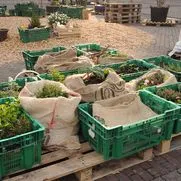
Programme nearbyRewildingLudwigshafenGarden the unsealed museum plaza in LudwigshafenGarden the unsealed museum plaza in Ludwigshafen Since 2012 the Wilhelm-Hack-Museum has turned the former sealed Hans-Klüber-Platz behind the museum into hack-museumsgARTen: crates, recycled planters, and free bed sponsorships in the middle of Ludwigshafen (PLZ 67xxx). What you can do - Take a free Beetpatenschaft on the hack-museumsgARTen page - Join a Gartentreff (last Thursday, and from May the second Friday, 18:00) in the April to October season - Garden as a household, Kita, school, or club: the plaza is built for mixed groups How it works The museum, anstiftung, BASF SE, and city partners host the plaza. You do not need a ticket to garden. Solarpunker does not assign beds: the museum garden team does. Why it matters Unsealing a museum square puts flowers, herbs, and neighbours on the same paving stones that used to shed rain.gardenunsealingplaza +1