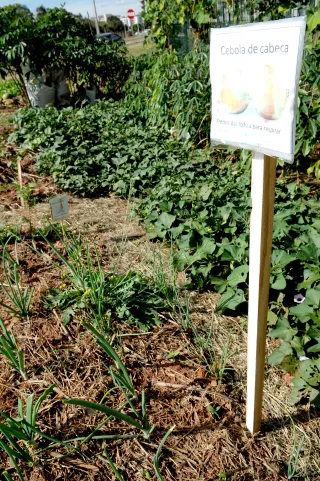
Food & GardenBrasiliaWalk Brasília's living agroforest galleryWalk Brasília's living agroforest gallery Cultiva Lab turns about 6,200 m² between SESI Lab and the Biblioteca Nacional into an open-air agroecology laboratory. Roughly 90 species from four Brazilian biomes (Cerrado, Amazônia, Mata Atlântica, Caatinga) grow together to answer one question in public: can you restore an ecosystem and produce food on the same piece of ground? What you can do - Walk the Cultiva Lab gallery and read its four growth phases as they unfold: pioneer species and first harvests, then ecological succession, vegetation layering, and a mature canopy - Look for the short-cycle food crops planted between the large trees (corn, squash, cassava, vegetables, medicinal herbs) and for the sensors that track soil and climate - Follow the pedagogical trails and mediated activities on soil regeneration, biodiversity, food security, and the relationship between city and nature - Trace circular economy in practice on site: water, nutrient, and material flows are routed back through the system to cut waste How it works The technical design came from IPOEMA (Instituto de Permacultura), structured by forest engineer Cláudio Jacintho, and was approved by IPHAN and the urban-planning bodies. The plot sits inside the GDF Adote uma Praça programme and feeds SESI Lab STEAM and CTSA education. Entry follows museum ticketing, including free first-Sunday admission (Visite). Over five years the project plans residencies for 50 artists and 50 researchers working on soil regeneration, carbon capture, and agroforestry systems. Why it matters The numbers are stated honestly. About 3 to 5 tonnes of food in the first two years go to ten social institutions in the Distrito Federal, and the system is expected to capture roughly 10 tonnes of CO2e a year against the some 700 tonnes the museum's own activity generates. Cultiva Lab is not sold as an offset: it is a measured public experiment showing that food, forest, and culture can share the same ground in the middle of a capital.agroecologyagroforestrybiodiversity +2
Join inRewildingBrasiliaJoin the Cerrado restoration network in BrasiliaJoin the Cerrado restoration network in Brasilia Collect native seeds, plant trees, and work beside local farmers to help the Cerrado savanna grow back around Brasilia. The Araticum network links seed collectors, farmers, and researchers across nine Brazilian states. What you can do in Brasilia - Fill the Araticum membership form and join the Cerrado restoration network - Take part in a working group on knowledge, local groups, maps, or public policy - Share a native seed restoration Cerrado project that uses natural regrowth, direct seeding, or native-tree farming - Learn from seed collectors, including Cerrado de Pé in Chapada dos Veadeiros - Read the member principles on inclusive restoration before you join How to join The public path is the form on the associe-se page. Members get periodic news and invites to meetings, events, working groups, and task forces. Members follow the charter: wide participation, science plus traditional knowledge, landscape-scale work that keeps farming and wild species together, cooperation, transparency, respect for traditional peoples, and environmental, labour, and human-rights law. The programme is ongoing. Why it matters in Brasilia Araticum (Articulação pela Restauração do Cerrado) started in 2020 with an aim of 2 million hectares by 2030 across nine Brazilian states. By June 2026 more than 27,000 hectares were under restoration, with seeds from more than 150 native species. More than 400 people from 180 organizations take part. Coordination includes Rede de Sementes do Cerrado, Semeia Cerrado, Embrapa, ICMBio, Agroicone, COOCREARP, and WWF-Brasil. The network was named a UN World Restoration Flagship in 2026. This row is separate from the Cultiva Lab garden at SESI Lab in Brasilia: here you join a national savanna network, not a single demo plot. Healthy savanna holds water in the territory, feeds native fruit, and can bring seed income to local groups. Find more community projects in Brasilia. Good to know - How do I become an Araticum member? Fill the membership form. You then receive news and invites to meetings and working groups. - Who can join Araticum? People and organizations that accept the inclusive-restoration principles. The network already holds more than 400 people from 180 organizations. - What will I actually do? You can join one of four working groups: restoration knowledge, stronger local organizations, territorial maps, or opportunities and public policy.restorationsavannaseeds +1
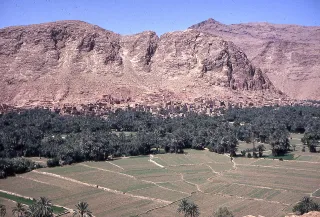
VolunteerRewildingMarrakechHigh Atlas Foundation tree nurseries MoroccoHigh Atlas Foundation tree nurseries Morocco High Atlas Foundation runs community fruit-tree nurseries and planting days from Marrakech outward, including M'Goun Valley landscapes. What you can do in Marrakech - Read nursery and planting programmes on the foundation site (HAF Our Work) - Apply to volunteer when teams need extra hands for nursery care or planting weeks - Learn how organic saplings support farmer cooperatives long after visitors leave - See Earth Day Canopy Project Morocco as background on national tree goals (Canopy Project Morocco) How to join Submit the volunteer application on the High Atlas Foundation site. Teams reply when a project matches your dates and skills. There is rarely a drop-in day without approval. Why it matters in Marrakech Atlas foothills lose soil fast. Community nurseries turn donations into rooted trees tended by local farmers. Good to know - Is there a fixed schedule? Most work requires an approved application, not a casual weekend. - Do I pay to volunteer? Read each project page for logistics costs or homestay notes. - Can I visit without working? Some outreach days welcome observers; ask staff first.tree plantingnurserymarrakech +2