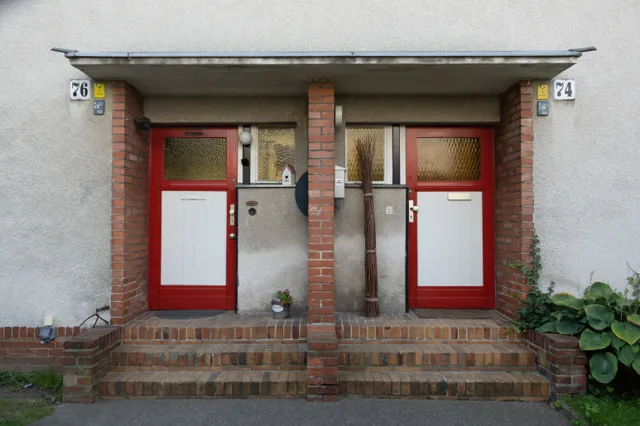
Programme nearbyRepair & ReuseMunichHofflohmärkte, neighbourhood courtyard flea market in MunichHofflohmärkte, neighbourhood courtyard flea market in Munich Hofflohmärkte is a Germany-wide reuse programme: residents register a private courtyard, garden, or garage and sell pre-loved goods while neighbours follow a linked tour plan through the district in Munich. The platform runs in 30+ cities and 300+ neighbourhoods; initiator René Götz operates registration, participants organise their own courtyards. What you can do - Download the tour plan PDF for your Viertel (published about one week before each market day) - Walk the linked addresses and buy second-hand treasures from neighbours - Register your own Hof if you have landlord approval and goods to pass on How it works - Sales stay on private ground only, not sidewalks or public space - Typical hours: Saturdays 10–16, Sundays 11–16 (Munich also runs selected Friday evenings with M-net sponsorship) - No food sales; private sellers only, professional dealers are not welcome - Registration closes three weeks before each date for tour-plan marking; late sign-ups are accepted but may not appear on the map - Organisers may cancel a date if fewer than 30 courtyards register, fees are then refunded About Hofflohmärkte Neighbours register a private Hof, Garten, or Garage on Hofflohmärkte and sell used goods on scheduled Viertel days. Registered addresses appear on a tour plan published about one week before each date. Sales happen on private ground only. See city pages for local schedules and Spielregeln & Tipps for seller rules. Why it matters Every item re-homed from a courtyard is one less thing bought new or landfilled, and a chance to meet the people who live behind the front doors.flea marketreuseneighbourhood +2
Programme nearbyCommunityFrankfurtClean up a square with friends and make it feel in FrankfurtClean up a square with friends and make it feel in Frankfurt Frankfurt has a small public square near almost every home: a market corner in Höchst, a quiet Platz in Nordend, a bench area in Ostend, a spot in Bockenheim or Westend. Most just need people to show up. Gather a few friends, spend an hour picking up litter together, then stay a while and enjoy the place you just cleaned. That is the whole idea, and it works because you repeat it. What you can do - Pick a square near where you live. Browse Wikimedia Commons: Squares in Frankfurt am Main for names and photos, or explore a district first on Visit Frankfurt: Frankfurter Stadtviertel (Bockenheim and Westend, the Brückenviertel in Sachsenhausen, Höchst's old town, Nordend and Bornheim, or Ostend along the Main). Well-known squares like Opernplatz, Konstablerwache, or Höchster Markt work too, but any square near you is just as good a start. - Message two to six friends who live close by and agree on a time. A Saturday morning works well. - Sign up once as a Sauberkeitspatin or Sauberkeitspate on the FES page Bürgerinnen und Bürger helfen mit. You choose the square or street, FES gives you grabbers, gloves, and bags and keeps restocking them, and you get one fixed contact person for questions. You clear small litter yourself and report anything larger, like dumped furniture, by phone or email. - Or plan a one-time group clean-up through FES Bürger-Sammeltage. Pick an upcoming date, such as the Main Cleanup on 12 September 2026 or World Cleanup Day on 20 September 2026. FES supplies the equipment and collects the waste afterward. For parks, playgrounds, or the city forest, contact the Grünflächenamt first (gruenflaechenamt@stadt-frankfurt.de), as the FES page explains. - Or join the citywide Frankfurt Cleanup weekend, run together by cleanffm and FES Frankfurt. The last edition, in March 2026, brought together more than 7,000 people across around 200 pickup points. The next one is set for 12 and 13 March 2027; registration opens closer to the date. - Add a reuse table once the litter is gone, the way Klimaschutz-Initiative Riedberg does it: lay out tools, toys, and household items nobody needs anymore so a neighbour can take them home instead of them being thrown away. - Finish by staying. Bring coffee, sit on a bench, talk to whoever passes by. That last part is what turns a cleaned square into a square people actually want to be in. How it works The Sauberkeitspate programme has run since 2000 and keeps adding people: 416 patrons by 2022, 476 by 2023, plus schools and kindergartens that care for an area as a group. You decide how large your patch is and how often you show up; there is no minimum. Bürger-Sammeltage work the same way for a single day: register, pick up gloves and bags at a collection point, clean, and FES takes the waste away afterward. Frankfurt Cleanup scales that same pattern to one weekend a year, city-wide. None of this changes who owns the square. It stays public land; you are simply the person, or group of friends, who looks after a small part of it. Why it matters Showing up for the same square more than once turns strangers into people you recognise and greet. It is a low-effort way to meet neighbours, and there is no guilt attached: you are not fixing a crisis, you are just making one place a little nicer to be in. A handful of small groups doing this across Frankfurt adds up to a city where public squares get used and looked after instead of avoided.cleanupplazaneighbourhood +2
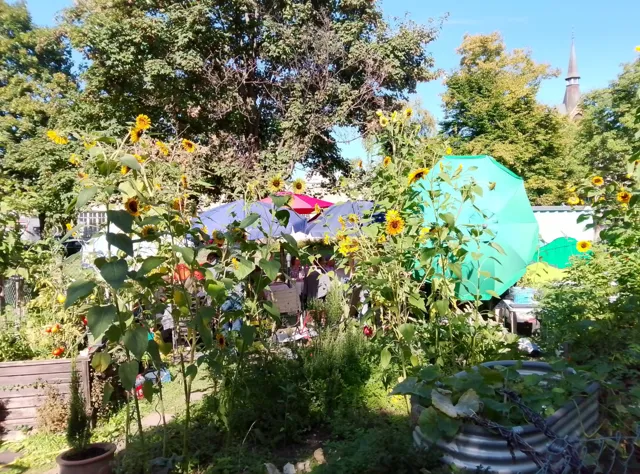
Programme nearbyFood & GardenAnkaraGarden at 100. Yil Bostan in AnkaraGarden at 100. Yil Bostan in Ankara The 100. Yil neighbourhood bostan gathers weekly garden care and an open Saturday atelier. Use the documented pathway while live join links catch up. What you can do - Read the handle record for context - Ask local contacts about weekly bostan and Saturday atelier - Arrive ready to garden or mend with neighbours How it works Weekly bostan plus Saturday open atelier is the documented rhythm. Confirm current street access with neighbours on site. Why it matters Ankara keeps a neighbourhood food yard that doubles as a Saturday forum.ankarabostangarden +1
Programme nearbyFood & GardenLyonAdopt a fruit tree through a neighbourhood orchard programmeSponsor a tree your block can harvest together Vergers Urbains and similar programmes let households adopt trees in shared orchards: you help fund planting or care, and the neighbourhood shares the fruit at harvest. What you can do - Check adoption options and orchard maps on Vergers Urbains - Gather neighbours in Lyon to co-adopt a row and split watering shifts - Label your adopted tree on a public map so passers-by know they can ask before picking How it works Adopters pay a modest annual fee or volunteer hours. Orchard teams handle grafting, disease checks, and harvest days open to nearby residents. Why it matters Tree adoption spreads care across many hands so one expert gardener is not the bottleneck.orchardadoptionfruit +2
Programme nearbyCommunityStockholmJoin Sodergarden open hemgard, StockholmJoin Sodergarden open hemgard, Stockholm Sodergarden is a neighbourhood house with courses and a fritidsbibliotek. Join the open hemgard for everyday mutual aid. What you can do - Browse sodergarden.org - Pick a course or open house slot - Use the fritidsbibliotek while you are there How it works Neighbourhood house programmes. Confirm opening hours before you go. Why it matters Stockholm keeps a house where neighbours meet without buying a ticket.stockholmhemgardcourses +1
Programme nearbyCommunityAnkaraJoin 100. Yil dinner forum in AnkaraJoin 100. Yil dinner forum in Ankara The 100. Yil weekly dinner forum gathers neighbours for shared food and talk. Use the documented pattern while live join links catch up. What you can do - Read the handle record - Ask neighbourhood contacts about dinner forum nights - Combine with Saturday atelier when both are open How it works Weekly dinner forum is the documented rhythm. Confirm street access with people on site. Why it matters Ankara neighbours practise democracy at a shared table.ankaraforumdinner +1
Programme nearbyCommunityMunichRegister your courtyard for the Hofflohmärkte tour in MunichRegister your courtyard for the Hofflohmärkte tour in Munich Want to sell pre-loved books, toys, or furniture without hauling everything to a central market? Hofflohmärkte lets you register your private courtyard for a scheduled Viertel day and appear as a stop on the published tour plan in Munich. What you can do - Choose your city and Viertel date on the Hofflohmärkte shop page - Pay the local registration fee (varies by city; early-bird pricing is often 50% off until year-end) - Receive tour-plan marking if you register three weeks before the date with a complete street address inside the prior-year Viertel area Seller rules (paraphrased) - Get landlord or owner approval before registering - Sell only on private ground, no stalls on sidewalks or public space - Offer used goods privately, no professional dealers or food sales - Plan for all weather; bring shade or cover if needed - You remain responsible for your Hof; the platform operator does not run the event on site Why it matters Courtyard sales keep reuse hyperlocal, neighbours meet on their own steps instead of hauling goods across town. About Hofflohmärkte Registration and tour plans are managed at Hofflohmärkte. Pick your city page (for example München) and read Spielregeln & Tipps before checkout. Late registrations after the three-week deadline are possible but may not be marked on the tour plan.registrationcourtyardneighbourhood +2
Programme nearbyCommunityBerlinNeighborhood heat walks (Hitzespaziergänge) in BerlinNeighborhood heat walks (Hitzespaziergänge) in Berlin Hitzespaziergänge and Climatewalks let residents feel where asphalt bakes, where trees cool, and where the next shade project could go, guided by city staff, health groups, or urban planners in Berlin. What you can do - Join a listed walk on Hitzeaktionstag or a municipal climate office open day - Note hotspots: unshaded bus stops, south-facing playgrounds, and heat islands around car parks - Bring suggestions back to a neighborhood meeting or Bauausschuss Formats to look for - Talk and Walk routes (for example Stadt Viersen or Köln-Ehrenfeld) - Stadtteilspaziergänge comparing cool corners and sunny squares (Munich MVHS, Stuttgart Gesundheitsamt) - Architecture Climatewalks along green belts (Frankfurt Anlagenring) Why it matters You cannot plant shade for a street you have never walked in August, these tours turn data into stories neighbours act on.heat walkHitzespaziergangurban heat +2
Programme nearbyCommunityBrasiliaBring a drive-thru collection day to your regionBring a drive-thru collection day to your region Reciclotech also pitches tents in the Regiões Administrativas so a resident can drop electronics without leaving the car. The format is a neighbourhood collection day, not a permanent shop. What you can do - Watch SECTI Reciclotech and Programando o Futuro channels for the next drive-thru tent in your RA - Ask your Administração Regional to request a date: the official description is tents at strategic points so the public can discard e-waste without getting out - Bring only Reciclotech-accepted electronics (IT, phones, cables, batteries, small appliances as listed on the programme pages); leave cooking oil and tyres for the SLU map - If no tent is scheduled, use a standing PEV this week instead of waiting How it works The Reciclotech overview describes drive-thru actions alongside PEVs as the two private-source collection routes. Sema-DF / Abree coverage likewise mentions drive-thru days. No standing calendar was published on the official pages, so this is a recurring pattern to request, not a pinned date. Confirm the RA and accepted materials on the organiser's announcement before you queue. Why it matters A tent in the parking lot meets people where they already move. Collection that fits a Saturday errand will outperform a lecture about what should not go in the grey bin.drive-thrucollectionneighbourhood +1
Programme nearbyCommunityBerlinJoin a German housing cooperative in BerlinJoin a German housing cooperative in Berlin Join a German housing cooperative in Berlin and live as a co-owner, not as a tenant of a distant landlord. You pay a fair use fee, hold shares, cast one vote, and keep a lifelong right to stay that feels secure like ownership and flexible like rent. More than 400 cooperatives belong to the national marketing network of Wohnungsbaugenossenschaften. This is the mainstream co-op model, not a DIY house-building project. What you can do in Berlin - Read how a Genossenschaft works so shares, votes, and the board make sense - Open a regional member list (Berlin, Cologne, Hannover, Hessen, Schleswig-Holstein, Baden-Württemberg, Sachsen, and others) and pick one co-op near you - Apply for membership on that co-op's own site: the board decides; you draw shares, often more for a larger flat, and some charge an entry fee - If you already live in a co-op, browse guest flats for members, or use Mobile Mitgliedschaft when you move so your old shares can transfer How to join You become a member by drawing shares. Extra shares usually scale with flat size. Shares are typically returned when you leave; entry fees are not. Members elect representatives who oversee the board. Stick to known network members and read the caution on the how-it-works page: some schemes misuse the co-op label. Waitlists are real. In Berlin, many co-ops only take new members when they can also offer a flat. The Berlin network still reports about 5,000 relets each year, roughly half to new members, so joining is possible but rarely instant. Why it matters in Berlin Surplus goes back into homes and neighbourhoods, not distant shareholders. Courtyards, guest flats, and shared votes keep care local while rents stay fairer than speculative markets. Find more community projects in Berlin. Good to know - What is a Wohnungsbaugenossenschaft? Neighbours are co-owners. You hold Geschäftsanteile, pay a Nutzungsgebühr, and keep a lifelong Dauernutzungsrecht: one member, one vote. - Do I apply to the national office? No. Apply on the co-op's own site. The marketing network only helps you find members. - Can I move my shares later? Many co-ops take part in Mobile Mitgliedschaft so your share balance can transfer when you move.housingcooperativemembership +2
Programme nearbyFood & GardenReutlingenGrow veg in the ArBi neighbourhood garden in ReutlingenGrow veg in the ArBi neighbourhood garden in Reutlingen Arbeiterbildung e.V. (ArBi) grows vegetables and fruit on a city plot in Reutlingen. The group has a hut and keeps shaping the site. Meet-ups are by arrangement. The garden sits behind the Achalmbad at Äußere Kelterstraße 10. What you can do in Reutlingen - Write via the Urban Gardening page if you want to join - Offer spare tools, plants, or pots if you cannot garden every week - Visit the ArBi office hours if you need a first conversation (Lederstr. 86) How to join The city provided the land. The group meets when they agree a time, not on a fixed public clock. Office hours on the site: Monday, Wednesday, Friday 09:00 to 13:00. Solarpunker does not book you in. Why it matters in Reutlingen A neighbourhood veg patch behind the baths puts Reutlingen food in walking distance of daily life. Find more community projects in Reutlingen. Good to know - Is there a fixed public clock? Meet-ups are by arrangement. Contact ArBi first. - Where is the office? Lederstr. 86. Office hours: Monday, Wednesday, Friday 09:00 to 13:00.reutlingengardenneighbourhood +1
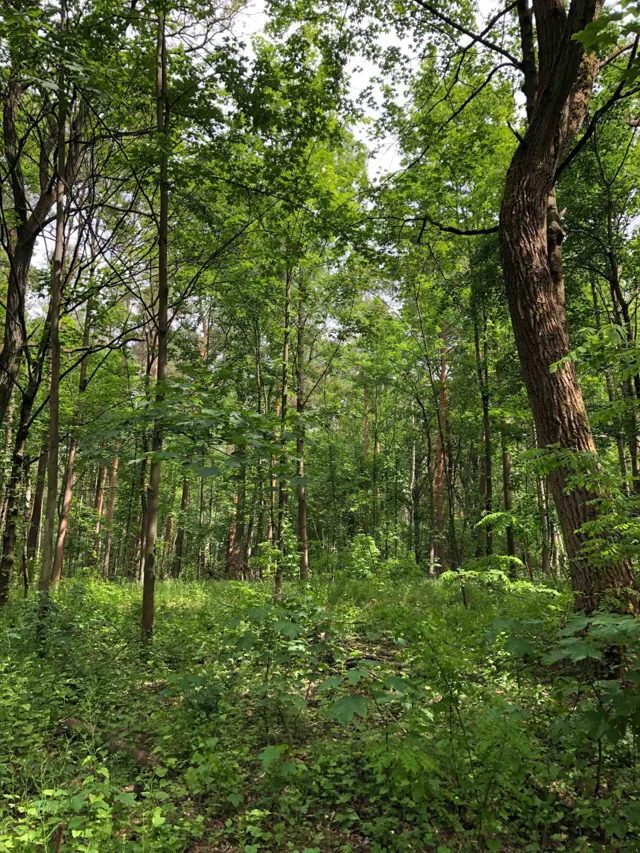
Programme nearbyRewildingBochumVisit and tend the Wattenscheid Tiny Forest in BochumVisit and tend the Wattenscheid Tiny Forest in Bochum Tiny Forest Friends and Stadt Bochum planted a Miyawaki-style mini-forest in Wattenscheid in mid-March 2026 on a former works yard at Stadtgartenring / Parkstraße. The first three years need watering and care so the stand can later look after itself. Confirm current public care days with the initiative and the city. What you can do - Follow Tiny Forest Friends for watering and care notes - Visit the unsealed yard at Stadtgartenring / Parkstraße, 44866 Bochum-Wattenscheid - Ask before organising a volunteer group: the city holds formal care, and the friends group still watches the trees How it works Planted March 2026 with pupils, residents, and a garden firm. Summer 2026 heat made watering a live topic. Do not invent extra public work days; check the organiser. Why it matters A pocket forest on a former sealed yard is a neighbourhood climate and habitat experiment you can walk to.forestunsealingtrees +1