Programme nearbyCommunityCologneWalk Cologne with the Zero Waste SchweifWalk Cologne with the Zero Waste Schweif Grab the Schweif booklet and one to four friends, then wander your Kiez with small tasks that help you spot waste, reuse, and resources in everyday streets. No tour guide: you set the pace. How it works - Pick up a booklet at partner cafés, unverpackt shops, or Zero Waste Köln info stands (hours vary by location). - Work through quizzes and observation prompts designed in Cologne, usable in any urban neighbourhood. - Optional deep-dive facts on the project page after you have tried the riddles yourself. Why it matters Cologne burns roughly 2,000 tonnes of waste every day; the Schweif turns that abstract number into curiosity about what we throw away and what could stay in the loop.walkingeducationlocal
Programme nearbyCommunityFrankfurtJoin Foodtura City Experiences in FrankfurtJoin Foodtura City Experiences in Frankfurt Foodtura is a ten-day festival (18 to 27 September 2026) where restaurants, farms, initiatives, and kitchens open their doors. Klimagourmet and Initiative Gastronomie Frankfurt organise about 50 City Experiences: tastings, workshops, bike tours, playground markets, and neighbourhood tables. Many events are free. Massif Central on Bethmannstraße is the festival hub. What you can do - Browse the live programme and book the events that fit your week - Start at the free Opening (18 September) or the Playground market (19 September) - Bring neighbours to a supper club, farm day, or unpackaged shop action listed on the map - Follow Über Foodtura for who is behind the festival (not a Solarpunker event) How it works Hosts publish dates, prices, and booking links on each event page. Tickets, if any, go to the organiser. Solarpunker does not take bookings. The programme can still grow through September, so check the festival site before you travel. Why it matters Sustainable eating is easier when it is delicious, local, and shared. Foodtura turns that into a week of doors you can actually walk through.festivalfoodfrankfurt +2
Programme nearbyCommunityFrankfurtClean up a square with friends and make it feel in FrankfurtClean up a square with friends and make it feel in Frankfurt Frankfurt has a small public square near almost every home: a market corner in Höchst, a quiet Platz in Nordend, a bench area in Ostend, a spot in Bockenheim or Westend. Most just need people to show up. Gather a few friends, spend an hour picking up litter together, then stay a while and enjoy the place you just cleaned. That is the whole idea, and it works because you repeat it. What you can do - Pick a square near where you live. Browse Wikimedia Commons: Squares in Frankfurt am Main for names and photos, or explore a district first on Visit Frankfurt: Frankfurter Stadtviertel (Bockenheim and Westend, the Brückenviertel in Sachsenhausen, Höchst's old town, Nordend and Bornheim, or Ostend along the Main). Well-known squares like Opernplatz, Konstablerwache, or Höchster Markt work too, but any square near you is just as good a start. - Message two to six friends who live close by and agree on a time. A Saturday morning works well. - Sign up once as a Sauberkeitspatin or Sauberkeitspate on the FES page Bürgerinnen und Bürger helfen mit. You choose the square or street, FES gives you grabbers, gloves, and bags and keeps restocking them, and you get one fixed contact person for questions. You clear small litter yourself and report anything larger, like dumped furniture, by phone or email. - Or plan a one-time group clean-up through FES Bürger-Sammeltage. Pick an upcoming date, such as the Main Cleanup on 12 September 2026 or World Cleanup Day on 20 September 2026. FES supplies the equipment and collects the waste afterward. For parks, playgrounds, or the city forest, contact the Grünflächenamt first (gruenflaechenamt@stadt-frankfurt.de), as the FES page explains. - Or join the citywide Frankfurt Cleanup weekend, run together by cleanffm and FES Frankfurt. The last edition, in March 2026, brought together more than 7,000 people across around 200 pickup points. The next one is set for 12 and 13 March 2027; registration opens closer to the date. - Add a reuse table once the litter is gone, the way Klimaschutz-Initiative Riedberg does it: lay out tools, toys, and household items nobody needs anymore so a neighbour can take them home instead of them being thrown away. - Finish by staying. Bring coffee, sit on a bench, talk to whoever passes by. That last part is what turns a cleaned square into a square people actually want to be in. How it works The Sauberkeitspate programme has run since 2000 and keeps adding people: 416 patrons by 2022, 476 by 2023, plus schools and kindergartens that care for an area as a group. You decide how large your patch is and how often you show up; there is no minimum. Bürger-Sammeltage work the same way for a single day: register, pick up gloves and bags at a collection point, clean, and FES takes the waste away afterward. Frankfurt Cleanup scales that same pattern to one weekend a year, city-wide. None of this changes who owns the square. It stays public land; you are simply the person, or group of friends, who looks after a small part of it. Why it matters Showing up for the same square more than once turns strangers into people you recognise and greet. It is a low-effort way to meet neighbours, and there is no guilt attached: you are not fixing a crisis, you are just making one place a little nicer to be in. A handful of small groups doing this across Frankfurt adds up to a city where public squares get used and looked after instead of avoided.cleanupplazaneighbourhood +2
Programme nearbyCommunityLisbonPAYT pilots in Portugal: municipalities taking control of waste costsPay-As-You-Throw arrives in Portuguese cities In 2024 the Portuguese national government opened new Pay-As-You-Throw (PAYT) funding schemes, making it financially viable for municipalities to overhaul their waste collection systems. Municipalities including Fornos de Algodres, São João da Madeira, and Silves are implementing the measures they observed during study visits to Italy and Spain: including door-to-door collection schedules, smart bin tags that identify and reject incorrectly sorted bins, and digital monitoring tools. What PAYT means for residents - Households that separate waste correctly and generate less residual waste pay lower bills - The system creates a direct, fair link between individual behaviour and cost - Monitoring data helps municipalities pinpoint collection problems before they worsen What you can do - If your municipality is piloting PAYT, attend public information sessions and ask how your household can benefit - Advocate with your local council to apply for the new national PAYT funding - Follow ZERO for the latest funding rounds and municipal case studies Why it matters With 60 % of Portugal's waste going to overflowing landfills, cost-based incentives for households are one of the fastest levers available. PAYT pilots in Silves and São João da Madeira are the first step toward national uptake.paytwaste-reductionfunding +1
Programme nearbyCommunityLjubljanaZero Waste strategies for Laško, Zreče, and Gorenja vas-PoljaneThree municipalities: formally approved by end of 2024 Ekologi brez meja (EBM) supported Laško, Zreče, and Gorenja vas-Poljane in developing full Zero Waste strategies together with plastic prevention plans: all three formally approved before the end of 2024. All three are now Zero Waste candidate municipalities under the ZWE network, joining Slovenia's already strong field of 5 certified and 7 candidate cities. What the strategies cover - Source-separation improvements and expanded composting - Plastic prevention measures at the municipal level - Roadmap for Zero Waste certification What you can do - If you live in Laško, Zreče, or Gorenja vas-Poljane: contact your municipality to learn how to participate in the implementation - Follow EBM for public events and workshops connected to the strategies Why it matters Municipal Zero Waste strategies convert commitment into policy and budget: and EBM's approach of pairing a waste strategy with a plastic prevention plan is becoming a template for Central European cities.strategycandidateplanning +1
Programme nearbyCommunityLjubljanaLjubljana hotel sector: reuse in hospitality and eventsFrom rooms to banquets: waste prevention in the tourism economy Ekologi brez meja worked with the Ljubljana Tourism Board and city waste operator VOKA SNAGA over two years to bring waste prevention and reuse into the hotel and events sector. The partnership surfaces what the ZWE report calls a systemic gap: hospitality generates high volumes of single-use waste but rarely has a reuse infrastructure to switch to. What the collaboration covers - Shared reusable tableware systems for hotel events and catering - Guidance for venues on reducing single-use room amenities - Pilot reuse programmes for public and private events in Ljubljana How to get involved - If you organise or attend events in Ljubljana, ask venues whether they offer reusable alternatives - Hotel guests can ask about refillable amenity dispensers instead of single-use toiletries - Follow VOKA SNAGA for city-level waste prevention updates Why it matters Ljubljana hosts millions of visitors per year. Embedding reuse in the hospitality sector shifts waste prevention from individual choice to city-scale default.hotelstourismreuse +1
Programme nearbyCommunityFlorenceCapannori: one of Europe's first certified Zero Waste citiesThe pioneer that showed it could be done Capannori, a municipality of about 45,000 people near Lucca in Tuscany, is one of Europe's first cities to achieve Zero Waste certification. It set out decades ago to prove that a community could dramatically reduce the waste it sends to landfill and incineration: not through technology fixes, but through source separation, reuse, and community involvement. What Capannori built - Door-to-door separate collection as the default for every household - A Zero Waste Research Centre (Centro Capannori Rifiuti Zero) studying product design flaws and advocating for producer responsibility - Composting and textile collection integrated alongside paper, glass, metal, and plastics - Waste reduction targets embedded in municipal planning Why it matters Capannori's model is not a product of wealth or special geography. It is a replicable template: start with ambitious separate collection targets, involve residents early, and redirect waste budget away from disposal toward prevention. The ZWE-certified result inspired dozens of Italian municipalities to follow. How to engage - Visit or contact Zero Waste Italy to learn how Capannori's model can be adapted for your municipality - Follow Capannori's zero waste research centre for publications and advocacy toolscertifiedcircularpioneer +2
Programme nearbyCommunityRomeCalatafimi Segesta: 87.7% source separation in rural SicilyA small Sicilian town at the top of Europe's waste rankings Calatafimi Segesta, a municipality of around 6,000 in the province of Trapani, Sicily, achieved over 87.7% source separation of municipal solid waste: one of the highest rates in Italy and among the best in Europe. In a country where Sicily's aggregate recycling performance lags the national average, Calatafimi Segesta stands as proof that ambition and community participation matter more than location or wealth. What drives the result - Rigorous door-to-door collection for all fractions: organics, paper, plastics, glass, residual - A culture of participation built through consistent communication with residents - Close collaboration with the local waste operator and Zero Waste Italy - Regular monitoring and public reporting of results What you can do - If your municipality is below 50% separate collection, ask your waste operator and council what it would take to adopt door-to-door collection - Share Calatafimi Segesta's results as evidence when advocating for better collection in your area - Follow Zero Waste Italy for case studies and advocacy support Why it matters At 87.7%, Calatafimi Segesta diverts nearly nine tonnes in ten from disposal. Multiplied across the 340-municipality Italian Zero Waste network, this model has the potential to remove millions of tonnes of waste from landfills and incinerators.recyclingsource-separationrural +1
Programme nearbyCommunityFlorenceLivorno incinerator closure: community mobilisation winsHow Livorno permanently closed its local incinerator In 2024, Zero Waste Italy helped mobilise the community of Livorno, a port city on the Tuscan coast, to secure the permanent closure of its local incinerator. The campaign combined technical advocacy: showing that alternatives existed: with community organising to build broad public and political pressure. What happened - ZWI supported local residents and civil society groups in building the case against continued incineration - Community pressure alongside technical evidence persuaded decision-makers to close the facility permanently - Livorno joins a growing list of Italian cities phasing out waste incineration in favour of source separation and reuse Why it matters The Livorno closure shows that communities do not have to accept incineration as the default. With the right information and organised residents, the economics and politics of waste can be shifted. ZWI's experience here is now a template for similar campaigns elsewhere in Italy. What you can do - If your city has a waste-to-energy facility under review, contact Zero Waste Italy for advocacy support and technical materials - Attend public consultations on local waste management plans and raise the zero-waste alternativeadvocacyanti-incinerationcommunity-mobilisation +1
Programme nearbyCommunityRomeMarche region Zero Waste pilot: embedding the path at local levelFrom Tuscany to Marche: scaling the regional model Following the success of the Tuscany cluster pilot, Zero Waste Italy launched a parallel pilot in the Marche region: working with municipalities to embed a clear Zero Waste path at the local level. A key challenge the pilot addresses is administrative discontinuity: when mayors change and political majorities shift, Zero Waste commitments can be lost. The pilot builds institutional memory and community ownership that outlast any single administration. What the pilot does - Works directly with municipalities on Zero Waste strategies and waste prevention plans - Builds local reference points: civic observers, neighbourhood coordinators: to maintain momentum through political cycles - Shares findings with the broader Italian ZW network so other regions can adopt the model What you can do - If you live in Marche, ask your municipality whether it is participating in the ZWI pilot and how residents can contribute - Volunteer as a local Zero Waste observer or ambassador through Zero Waste Italy - Use the findings from the pilot to advocate for your own municipality's commitment to a Zero Waste strategy Why it matters The biggest obstacle to Zero Waste is not technology: it is political and institutional continuity. Marche's pilot is testing exactly how to build the civic infrastructure that makes the commitment stick.networkpilotregional +2
Programme nearbyCommunityGuimarãesGuimarães: on track to be Portugal's first Zero Waste certified cityThe city that could change Portugal's waste map Guimarães, a UNESCO World Heritage city of around 160,000 people in northern Portugal, is the country's leading Zero Waste candidate: expected to achieve full ZWE Zero Waste Cities certification in 2026. Working with ZERO – Associação Sistema Terrestre Sustentável, Guimarães is building the collection infrastructure, resident participation culture, and political commitment needed to become a national landmark for sustainable waste management. What the candidacy involves - Implementation of separate door-to-door collection for all main fractions - Community composting and organic waste diversion - Local plastic prevention policies and reuse promotion - Regular monitoring and public reporting of waste reduction results Why it matters for Portugal Portugal currently sends 60 % of its municipal solid waste to landfill: one of the highest rates in Western Europe. Guimarães's certification would give the country its first credible proof point that a different path is achievable, and would directly inspire other candidate municipalities (Albergaria-a-Velha, Corvo, São João da Madeira, Vila de Rei) currently in the pipeline. How to get involved - If you live in Guimarães, follow the municipal environmental office for participation opportunities in the Zero Waste programme - Follow ZERO for certification updates and policy advocacy tools - Ask your local councillor how your municipality can begin the ZW candidacy processcandidatecertificationplanning +1
Programme nearbyCommunityViladecansViladecans Plastic Prevention Plan: binding measures already runningA ZW candidate city taking plastic seriously Viladecans, a municipality of 70,000 on the southern edge of Barcelona, is a Zero Waste candidate city and a participant in the EU ERIC (Elevating Reuse In Cities) project alongside Torrelles de Llobregat. In 2024, Viladecans became one of the first Catalan cities to approve and begin implementing a binding Plastic Prevention Plan: a document that commits the municipality to specific, measurable plastic reduction measures already underway. What the plan includes - Reduction of single-use plastics in municipal events and public spaces - Promotion of reusable alternatives for takeaway containers in local hospitality - Procurement criteria requiring plastic-free options for city contracts - Monitoring and annual public reporting on plastic reduction outcomes How to participate - Attend Viladecans municipal events: they are piloting reusable tableware and cup systems - Ask local restaurants and bars about takeaway reuse options promoted under the plan - Follow Rezero for the ERIC project updates on reuse infrastructure in Viladecans Why it matters Binding plans with implementation already started are rare: most cities stop at commitments. Viladecans's plan, combined with its ERIC project participation, makes it one of the most concretely active zero waste cities in Spain right now.plasticpreventionplan +2
Programme nearbyCommunityTorrelles de LlobregatTorrelles de Llobregat: certified and plastic-free by planA certified Zero Waste city with a binding plastic prevention plan Torrelles de Llobregat, a small ZWE-certified Zero Waste municipality in Catalonia, took its commitments further in 2024 by approving and starting to implement a binding Plastic Prevention Plan: following the same model as candidate city Viladecans. Torrelles also participates in the ERIC project alongside Viladecans, creating a productive pair of municipalities that share tools, funding, and lessons. What Torrelles shows - Small certified municipalities can lead on plastic prevention without large budgets - Certification and plastic prevention planning are complementary: not sequential - The ERIC project provided both the methodology and funding that made the plan viable What you can do - Visit Torrelles as a case study if you are working on Zero Waste strategies in your own municipality - Contact Rezero to access the Torrelles and Viladecans plastic prevention planning tools - Follow the ERIC project for replicable reuse infrastructure models applicable to any small city Why it matters Certified cities that continue innovating: instead of resting on certification: keep the Zero Waste movement credible and dynamic. Torrelles's plan shows that even very small municipalities can set binding plastic reduction targets.certifiedplasticprevention +2
Programme nearbyCommunityBarcelonaRezerolabDades: check your Catalan municipality's zero waste progress30+ indicators for 300 municipalities, updated every year RezerolabDades is a free public data tool built by Rezero that analyses over 30 waste-related indicators for approximately 300 Catalan municipalities each year. Indicators include separate collection rates, residual waste per capita, composting volumes, and proximity to Zero Waste targets. The tool is used by municipalities, researchers, journalists, and residents to track whether their area is moving toward or away from zero waste. What you can do with it - Look up your municipality's separate collection rate and compare it to Catalan neighbours - Share results with your local council as evidence for improving collection infrastructure - Use the data to write letters, reports, or media pieces about waste performance in your area - Identify which municipalities are models worth visiting or learning from How to access it - Visit Rezero's data page for the latest RezerolabDades release - Rezero publishes an annual summary report alongside the raw indicators Why it matters Accountability needs data. RezerolabDades makes it impossible for municipalities to hide poor performance behind vague statements: and equally easy to celebrate genuine progress. It is one of the most sophisticated municipal waste monitoring tools in Europe at a regional scale.datamonitoringanalytics +2
Programme nearbyCommunityZagrebKrk Island: Europe's first certified Zero Waste island clusterSeven municipalities: one shared model Krk Island became Europe's first certified Zero Waste island when all seven of its municipalities: Krk, Baška, Dobrinj, Malinska-Dubašnica, Omišalj, Punat, and Vrbnik: achieved Zero Waste certification together through the waste company PONIKVE. The result: 60 % average separate collection and only 73 kg of residual waste per resident per year, compared to the Croatian national average of 247 kg. What makes Krk replicable - Door-to-door sorting integrated with the existing island waste system - Joint certification across multiple small municipalities sharing one operator - Farmers and hotels participate in the same collection circuits as households - Ongoing focus on waste prevention and reuse: not just better sorting How to get involved - If your municipality partners with PONIKVE, ask about volunteering in collection or composting - Visit or follow Zelena Akcija to support national Zero Waste certification advocacy Why it matters Krk shows that tourist islands: where seasonal waste peaks are hardest to manage: can still hit Zero Waste targets. The model is already inspiring other coastal communities across Croatia and beyond.islandcertifiedrecycling +2
Programme nearbyCommunitySkiathosSkiathos Zero Waste candidate: plastic prevention and the ERIC projectA tourist island taking on plastic: with EU support Skiathos, one of the Sporades islands and a major summer tourist destination, is a Zero Waste candidate municipality working with ECOREC on a Plastic Prevention Plan under the EU ERIC (Elevating Reuse In Cities) project. The plan, in development as of 2024: addresses the particular waste challenge of an island that receives hundreds of thousands of tourists each summer, many of them arriving on dayboats, generating concentrated seasonal waste. What the Skiathos programme covers - Plastic Prevention Plan being developed with ECOREC and the ERIC project framework - Collaboration with the municipality on waste stream analysis and reduction targets - The Zero Waste Rota programme trains dayboat operators to educate tourists on waste disposal at sea and on remote beaches not accessible by road Why it matters Greek tourist islands generate disproportionate waste relative to their permanent populations. A working plastic prevention plan in Skiathos would give every other Aegean tourist island a concrete template: and the ERIC project means European funding and methodology back the effort. How to engage - If you visit Skiathos, follow guidance on dayboat operators' waste practices and separate waste correctly at island facilities - Follow ECOREC for the Plastic Prevention Plan's public consultation stages - Ask your own municipality's environmental office whether ERIC project participation is availableplasticpreventionplan +2
Programme nearbyCommunitySkiathosCoastal zero waste tourism: how dayboats can protect remote beachesSkiathos shows that tourist operators can lead on waste The Zero Waste Rota programme, developed by ECOREC and the Municipality of Skiathos, trains dayboat operators to actively educate tourists about proper waste disposal: including at remote beaches that are inaccessible by road and therefore lack collection infrastructure. The programme measurably increased recycling rates on the island and fostered a culture of environmental responsibility among visitors. What the programme involves - Dayboat operators receive training on waste separation and guest communication - Tourists are briefed on board before reaching remote beaches about what to do with packaging and recyclables - Operators bring separated waste back to port for collection: protecting beaches that cannot be serviced by standard vehicles - The approach is scalable to any island with a dayboat economy Why it matters Greece's Aegean islands face intense seasonal waste from marine tourism. Regulation alone cannot reach a boat at sea or a path-only beach. The Skiathos model shows that education and operator buy-in can do what infrastructure cannot, and it is directly replicable on any island with a similar tourist boat economy. How to replicate it - If you operate or charter boats in the Aegean, contact ECOREC about Zero Waste Rota training - If you visit Greek islands by dayboat, ask whether the operator follows Zero Waste Rota practices: and request it if not - Municipal waste officers on other islands can use the Skiathos programme as a template for ERIC or national funding bidscoastaltourismrecycling +2
Programme nearbyCommunityFrankfurtBook a Heldenbohne school food morning in FrankfurtBook a Heldenbohne school food morning in Frankfurt Umweltlernen in Frankfurt runs Lernwerkstatt Heldenbohne for years 7 to 10: beans, peas, and lentils as climate food, biodiversity, and everyday choice. Sessions sit at stadtRAUMfrankfurt during Foodtura week. Kindergarten and primary groups can book apple picnic or edible-Ginnheim walks with Klimawerkstatt instead. What you can do - Teachers: email kirsten.allendorf@stadt-frankfurt.de to book a free Heldenbohne morning (deadline 1 September 2026; remaining dates 17 to 23 September) - Read the Heldenbohne listing - For younger children, ask Klimawerkstatt about Apfelpicknick or Essbares Ginnheim (by appointment) - Adults can still taste Hessian pulses at Heldenbohne x Freitagsküche How it works School formats are free and booked as a class, not as drop-in. Confirm remaining slots with Umweltlernen. Why it matters One morning in a real kitchen beats a worksheet on climate diets.educationschoolpulses +2
Programme nearbyCommunityBrusselsBrussels zero waste events action planMaking every public event in Brussels waste-free Zero Waste Belgium developed a comprehensive strategic action plan for zero waste events across Brussels: covering event logistics, supplier requirements, reuse system specifications, and transition guidance for organisers. The plan, built from extensive research and cross-city case studies, is designed for full implementation in 2025. What the plan covers - Reuse requirements for cups, plates, and food packaging at public events - Case studies from cities across Europe that have already mandated zero waste events - Legal framework summary so event organisers understand their obligations - Practical tools and templates for municipalities and venue managers How to engage - Event organisers in Brussels: contact Zero Waste Belgium for support implementing zero waste standards at your event - Municipalities: request a copy of the action plan to adapt it for your local authority - Residents: ask your borough council whether events in your neighbourhood already follow zero waste guidelines Why it matters Public events generate disproportionate single-use waste in short bursts. A city-wide action plan removes the ambiguity: every organiser knows what is expected, every supplier knows what to offer, and every resident can expect a consistent experience across Brussels' festivals, markets, and fairs.eventsreusepolicy +2
Programme nearbyCommunityViennaGraz "(Zero) Waste in the City?": civic dialogue between activism and urban agendaA panel that brought zero waste into the policy conversation In September 2024, Zero Waste Austria participated in a panel discussion in Graz: "(Zero) Waste in the City? Between Activism and Urban Agenda", organised by the Waste in Motion (WiM) research network. The panel brought together experts from WiM, representatives of the City of Graz, Zero Waste Austria, and Katja Sres from Ekologi Brez Meja (Slovenia): one of the strongest Zero Waste Europe member organisations. The format is designed to be replicable in other Austrian cities. What the panel discussion format provides - A structured dialogue between zero waste advocates, researchers, and city officials - Cross-border learning: Slovenia's experience via Ekologi Brez Meja adds an EU best-practice dimension - A public record that zero waste is a legitimate part of urban policy discourse in Graz - A template that other Austrian cities can use to host similar panels with city council involvement How to engage - Austrian municipalities and research institutions: contact Zero Waste Austria or the Waste in Motion research network to organise a similar panel in your city - Activists and civil society: use the Graz format as a model for connecting with local researchers and city officials: the research network provides academic legitimacy - Students and academics: engage with the Waste in Motion network and connect zero waste scholarship to local policy advocacy Why it matters Zero waste needs a seat at the urban policy table, not just protest outside it. The Graz panel brought advocates, researchers, and city officials into one room, a replicable format for turning activism into municipal agenda.advocacyeducationpolicy +2
Programme nearbyCommunityFrankfurtWalk Frankfurt's creative quarters during Creative WeekWalk Frankfurt's creative quarters during Creative Week Creative Week Frankfurt (21 to 26 September 2026) opens studios, museums, and neighbourhoods for festival-goers. The guided tours page lists walks through the Brückenviertel, heritage routes, art parcours, and backstage theatre visits. Most tours need a Festival-Ticket while places last (book through the Creative Week site, not Solarpunker). What you can do - Browse guided tours and pick a date that fits your week - Walk the Kreativ-Tour Brückenviertel through artist collectives, fashion makers, and food studios in Sachsenhausen - Join the Union Areal art parcours or a Judengasse to Goldener Apfel heritage walk - Book a backstage tour at the English Theatre (tour in English, about 30 minutes) How it works Creative Week is run by CLUK (conference) and k/c/e Marketing (festival). Secure a Festival-Ticket on the organiser site when sales open, then reserve the tour slot you want. Solarpunker does not sell tickets. Why it matters Seeing how neighbours make art, food, and theatre in their own districts turns a business festival into something you can actually walk through.festivaltourfrankfurt +2
Programme nearbyCommunityFrankfurtVisit the WDC Hub at Museum Angewandte Kunst in FrankfurtVisit the WDC Hub at Museum Angewandte Kunst in Frankfurt The WDC Hub at Museum Angewandte Kunst is the home base for World Design Capital Frankfurt RheinMain 2026. Studio formagora built the forum and foyer from reused exhibition materials. Admission is free: read, work, chat, or join a pop-up workshop tied to the museum programme. What you can do - Walk in during museum opening hours and use the forum as a meeting point - Check the WDC calendar for readings, yoga sessions, and partner workshops - Ask the WDC team about hosting your own neighbourhood workshop in the Hub How it works The Hub runs all through 2026. Most drop-in use needs no ticket. Partner events may ask for registration on their own pages. Why it matters Democratic design starts with rooms where anyone can question, sketch, and stay awhile without buying anything.designhubmuseum +2
Programme nearbyCommunityFrankfurtJoin democracy workshops at neighbourhood kiosk in FrankfurtJoin democracy workshops at neighbourhood kiosk in Frankfurt DemokratieKioske (WDC 2026) redesigns eleven kiosks across Frankfurt RheinMain into meeting points for dialogue, print labs, music, and youth workshops (February to September 2026). Lust auf besser leben runs the project with Young Urban Future Labs in schools and youth centres. What you can do - Browse open workshops on demokratiekiosk.de (many need no registration) - Visit Frankfurt kiosks in Gallus, Atzelberg, Sachsenhausen, or Sossenheim - Try a hands-on format such as postcard writing to politicians or a print-lab session How it works About 45 open workshops welcome walk-ins; youth sessions may need a group signup via demokratiekiosk.de. All listed open formats are free. Why it matters Democracy works better when it meets people on the corner they already pass every day.democracykioskworkshop +2
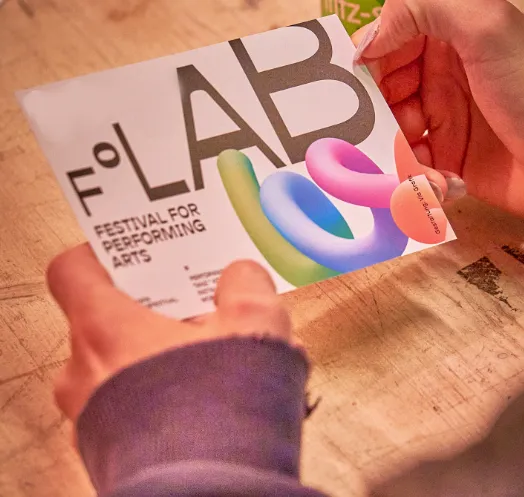
Programme nearbyCommunityFrankfurtJoin free making sessions at F°LAB Festival in FrankfurtJoin free making sessions at F°LAB Festival in Frankfurt The F°LAB Festival for Performing Arts & Music (1 to 4 October 2026) fills the former Kommunikationsfabrik in Gallus with performances, but also with free walk-in sessions where you can weave, dance, eat cake, and talk with neighbours. No ticket needed for the participatory formats listed on frankfurt-lab.de. What you can do - Browse the F°LAB programme for formats marked Eintritt frei - Join Weben, a collective weaving session that sends a finished net to Ukraine - Try Community Dance with the Dresden Frankfurt Dance Company (free tickets at the DFDC info stand on the day) - Drop into Critical Cake, a playful art-and-cake conversation hosted by ASJA and Nora Schneider How it works Most free workshops need no reservation. Show up at Schmidtstraße 12 during the listed window. Solarpunker does not sell festival tickets for paid performances. Why it matters Contemporary art becomes neighbourhood glue when the door is open and your hands are invited in.workshopfestivalparticipation +2


-1200x630.webp&w=640&fm=webp&q=80)