Programme nearbyRepair & ReuseBarranquillaSegregate waste at home with Barranquilla recyclersClean streams: dignified work The ASOREBAQ recycler cooperative in Barranquilla works with local leaders on a 41-component programme: Barranquilla Composta y Cultiva, that helps households separate organics and deliver clean dry recyclables. The model mirrors recycler-led organic management in Colombia and Argentina highlighted in the 2025 regional zero-waste report. What you can do - Join neighbourhood sorting workshops run by ASOREBAQ and partner schools. - Separate organics and rinsed recyclables at home before hand-off to the cooperative’s collection routes. Why it matters When recyclers co-design collection, diversion rates rise and livelihoods are formalised, a builder-minded alternative to landfilling mixed waste.recyclingcompostsegregation
Programme nearbyCommunityZagrebPRE-KOM door-to-door collection: national leader in northern Croatia14 municipalities, 71 % separate collection PRE-KOM in Prelog operates door-to-door waste collection across 14 municipalities in northern Croatia: Prelog, Goričan, Donji Kraljevec, Sveta Marija, Donji Vidovec, Donja Dubrava, Kotoriba, Belica, Dekanovec, Domašinec, Podturen, Martijanec, Jalžabet, and Pribislavec. The network consistently ranks as Croatia's top performer in separate waste collection, averaging over 71 % and producing fewer than 73 kg of residual waste per resident: well below the national average of 247 kg. What residents do - Sort household waste into the collected fractions at source - Follow the door-to-door schedule provided by PRE-KOM for each street Why it matters In a country where national policy still favours waste-to-energy, these 14 municipalities prove that source separation at the household level works at scale: and that small municipalities can lead a large country.paytdoor-to-doorrecycling +1
Programme nearbyCommunityZagrebZagreb Pay-As-You-Throw: fairer billing, less landfillCitizens control their own waste bill Zagreb introduced a Pay-As-You-Throw (PAYT) system following recommendations from Zelena Akcija under the EU-funded ERIC (Elevating Reuse In Cities) project. By late 2024 the city had cut landfilling by 20 % and boosted separate collection by 50 % compared to 2022: with full rollout expected by end of 2026. What changed - Open street bins in the city centre replaced with underground containers for separated and mixed waste - Elsewhere, bins relocated into buildings and courtyards; caged and semi-underground containers added - Households charged based on the volume of mixed waste they generate, not a flat fee How to participate - Sort household waste into the correct streams: you directly reduce your bill - Follow Zagreb's city environmental office for updates on PAYT rollout in your district - Support the advocacy to extend door-to-door collection to more neighbourhoods Why it matters PAYT aligns the incentive system: the less mixed waste you produce, the less you pay. Combined with infrastructure improvements, Zagreb is turning around one of Central Europe's larger urban waste footprints.paytwaste-reductionurban +1
Programme nearbyCommunityRomeCalatafimi Segesta: 87.7% source separation in rural SicilyA small Sicilian town at the top of Europe's waste rankings Calatafimi Segesta, a municipality of around 6,000 in the province of Trapani, Sicily, achieved over 87.7% source separation of municipal solid waste: one of the highest rates in Italy and among the best in Europe. In a country where Sicily's aggregate recycling performance lags the national average, Calatafimi Segesta stands as proof that ambition and community participation matter more than location or wealth. What drives the result - Rigorous door-to-door collection for all fractions: organics, paper, plastics, glass, residual - A culture of participation built through consistent communication with residents - Close collaboration with the local waste operator and Zero Waste Italy - Regular monitoring and public reporting of results What you can do - If your municipality is below 50% separate collection, ask your waste operator and council what it would take to adopt door-to-door collection - Share Calatafimi Segesta's results as evidence when advocating for better collection in your area - Follow Zero Waste Italy for case studies and advocacy support Why it matters At 87.7%, Calatafimi Segesta diverts nearly nine tonnes in ten from disposal. Multiplied across the 340-municipality Italian Zero Waste network, this model has the potential to remove millions of tonnes of waste from landfills and incinerators.recyclingsource-separationrural +1
Programme nearbyCommunityZagrebKrk Island: Europe's first certified Zero Waste island clusterSeven municipalities: one shared model Krk Island became Europe's first certified Zero Waste island when all seven of its municipalities: Krk, Baška, Dobrinj, Malinska-Dubašnica, Omišalj, Punat, and Vrbnik: achieved Zero Waste certification together through the waste company PONIKVE. The result: 60 % average separate collection and only 73 kg of residual waste per resident per year, compared to the Croatian national average of 247 kg. What makes Krk replicable - Door-to-door sorting integrated with the existing island waste system - Joint certification across multiple small municipalities sharing one operator - Farmers and hotels participate in the same collection circuits as households - Ongoing focus on waste prevention and reuse: not just better sorting How to get involved - If your municipality partners with PONIKVE, ask about volunteering in collection or composting - Visit or follow Zelena Akcija to support national Zero Waste certification advocacy Why it matters Krk shows that tourist islands: where seasonal waste peaks are hardest to manage: can still hit Zero Waste targets. The model is already inspiring other coastal communities across Croatia and beyond.islandcertifiedrecycling +2
Programme nearbyCommunitySkiathosCoastal zero waste tourism: how dayboats can protect remote beachesSkiathos shows that tourist operators can lead on waste The Zero Waste Rota programme, developed by ECOREC and the Municipality of Skiathos, trains dayboat operators to actively educate tourists about proper waste disposal: including at remote beaches that are inaccessible by road and therefore lack collection infrastructure. The programme measurably increased recycling rates on the island and fostered a culture of environmental responsibility among visitors. What the programme involves - Dayboat operators receive training on waste separation and guest communication - Tourists are briefed on board before reaching remote beaches about what to do with packaging and recyclables - Operators bring separated waste back to port for collection: protecting beaches that cannot be serviced by standard vehicles - The approach is scalable to any island with a dayboat economy Why it matters Greece's Aegean islands face intense seasonal waste from marine tourism. Regulation alone cannot reach a boat at sea or a path-only beach. The Skiathos model shows that education and operator buy-in can do what infrastructure cannot, and it is directly replicable on any island with a similar tourist boat economy. How to replicate it - If you operate or charter boats in the Aegean, contact ECOREC about Zero Waste Rota training - If you visit Greek islands by dayboat, ask whether the operator follows Zero Waste Rota practices: and request it if not - Municipal waste officers on other islands can use the Skiathos programme as a template for ERIC or national funding bidscoastaltourismrecycling +2
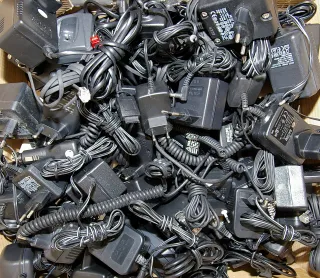
Programme nearbyRepair & ReuseBrasiliaDrop electronics at a DF voluntary delivery pointDrop electronics at a DF voluntary delivery point Brasília runs two public pathways for leftover electronics, and both ask residents to walk a device to a box rather than the ordinary bin. Reciclotech (SECTI-DF with Programando o Futuro) lists voluntary delivery points (PEVs) for computers, phones, cables, batteries, and similar gear. A separate reverse-logistics map from SLU-DF (Sema-DF with Abree) covers electroelectronics and household appliances, plus other take-back streams. What you can do - Look up Reciclotech PEVs on the SECTI PEV table (that page listed 149 active points when last updated 13 October 2025; the Reciclotech overview still says 102, so use the table) - Check the SLU reverse-logistics map and filter by residue type; Sema notes that the local Abree operator also keeps 9 of its own delivery points - Take small IT, phones, cables, and batteries to a Reciclotech box; use the SLU map for bulky appliances and for streams that are not electronics - Do not treat the whole map as electronics-only: the same network also receives medicines, cooking oil, tyres, glass, and x-ray plates How it works Reciclotech PEVs are boxes placed in regional administrations, metro stations, parks, SESC/SESI units, and other busy spots. The programme then sorts what can be repaired, donated, or recycled. Sema-DF's agreement with Abree (signed 24 September 2021) covers collection, transport, and environmentally adequate destination, executed locally by Zero Impacto. Confirm the current list on the official table or map before travelling: counts disagree across pages, and hours are not published as a single timetable. Why it matters A walk-up box is the lowest-friction circular step in a capital that otherwise sends metal, plastic, and batteries into ordinary waste. Neighbours keep gold, copper, and working machines in the city instead of in the soil.e-wastedropoffelectronics +2
Programme nearbyCommunityBerlinDeutschland trennt., community waste-sorting roads in BerlinDeutschland trennt., community waste-sorting roads in Berlin Deutschland trennt. is a nationwide action by the dual systems and their Mülltrennung wirkt initiative in Berlin. Show trucks, the TRENN-BÄR mascot, quiz wheels, and giant XXL packaging installations bring hands-on sorting advice to market squares and retail car parks across Germany: not in a lecture hall, but where neighbours already meet. What you can do - Visit a roadshow stop near you when the tour runs (check the event map on the campaign page) - Test your sorting knowledge at the quiz wheel and pick up practical tips for yellow-bin, paper, glass, and residual waste - Share what you learn with housemates or your building's waste station How to participate - Find dates and locations on Deutschland trennt. - The tour works with municipalities, waste companies, and 13 leading retail partners from grocery, DIY, drugstore, and organic sectors: events also appear at partner stores nationwide Why it matters Roughly 30% of what lands in yellow bins and sacks does not belong there: nappies, vacuum bags, and food scraps block recycling. Correct sorting at home keeps plastics, metals, and composites in the loop. More to explore - Try the 360° sorting-facility tour linked from Digitale Helfer to see what happens after the binsortingrecyclingroadshow +2
Programme nearbyRepair & ReuseNairobiGjenge Makers plastic waste bricksBuilding materials from shredded plastic waste Gjenge Makers (Nairobi, Kenya) turns plastic waste into affordable building materials, shredding and pressing discarded plastic into bricks and pavers that Impacc reports as seven times stronger and 50% lighter than concrete. What you can do - Source pavers or bricks for community paving, school yards, or yard paths - Organise neighbourhood plastic collection drives that feed local recycling processors - Visit or tour the workshop where possible to learn small-scale production lines How to participate - Enquire about products and collection partnerships via the Gjenge Makers portfolio page Why it matters Plastic litter becomes public infrastructure when makerspaces pair collection with honest engineering, strength tested, weight reduced, cost accessible.plasticrecyclingbricks +2
Programme nearbyCommunityTilosTilos: Greece's first certified Zero Waste islandA small Aegean island that changed the national conversation Tilos, a tiny island of around 800 permanent residents in the South Aegean, became Greece's first Zero Waste certified municipality through the Just Go Zero programme supported by ECOREC and funded by the South Aegean Region. By September 2024 the initiative had diverted approximately 14,600 kg of recyclables from landfill, significantly improving local environmental conditions and building a culture of source separation among residents, businesses, and visitors. What makes Tilos a model - Source separation extended to restaurants, hotels, and catering services - Community participation built through education and close municipal coordination - South Aegean Region funding provided the infrastructure budget, making the model replicable for neighbouring small islands - Certification achieved despite the absence of a local organic waste processing facility: demonstrating that progress is possible even where infrastructure gaps remain Why it matters beyond Tilos Tilos is the proof point the Greek zero waste movement has needed. The island's certification received national media coverage and directly influenced the South Aegean Region's decision to fund continuation: increasing the likelihood that neighbouring islands will follow. In a country planning up to six waste-to-energy plants by 2030, Tilos shows an alternative path that works. How to engage - Visit Tilos and participate in its waste separation culture: tourism revenue supports the programme - Follow ECOREC for the expansion of Just Go Zero to additional Greek islands - Share Tilos's results with local councillors on other Aegean islands as advocacy for similar programmescertifiedislandrecycling +2
Programme nearbyCommunityBudapestBlock DRS drop-off rotaRotate who walks the crate to the reverse-vending machine On panel estates, the nearest reverse-vending point may be a 400 m²+ supermarket a tram stop away, fine for weekly shops, heavy for daily empties. Agree a simple rota: each participating flat takes the lobby crate one week per month, returns with a receipt photo, and the group reconciles totals in the stairwell chat. What you can do - Társasház boards: pin the rota beside the postboxes, four flats, four weeks, repeat - Ground-floor shops: ask the corner store if they will accept hand returns during opening hours (required for large grocers; small shops can opt in) - School eco clubs: audit how many DRS containers your block generates, then design the rota to match How it works MOHU equips machines to recognise registered packaging; towns above 1,000 residents must have return points. A rota spreads the walk so nobody free-rides on goodwill. Why it matters Reuse culture sticks when the logistics are fair, not when one neighbour always carries everyone's cans.depositrecyclingrota +2
Programme nearbyRepair & ReuseBrasiliaBuild a neighbourhood circular economy hubBuild a neighbourhood circular economy hub In 2024 Reciclotech installed a Polo Distrital de Economia Circular (PDEC) in Ceilândia Norte. The hub is meant to join collection, sorting, recycling, training, and local jobs in one place, so the satellite city is not only a source of scrap. What you can do - Read the polo description on Programando o Futuro: Reciclotech (3rd edition) - Ask the executor how residents of Ceilândia and neighbouring RAs can train, work, or drop material at the hub - Treat the polo as a replicable pattern: a macrorregião workshop that keeps reverse logistics and digital skills under one roof - Pair a visit with the Gama training centre if your interest is the course catalogue rather than the Ceilândia site How it works The 2023 collaboration term funds installation of a circular-economy polo that integrates collection, sorting, and recycling of DF electronics, plus IT training for young people and adults, and donation of reconditioned equipment. Ceilândia Norte is the named 2024 site. Exact street hours are not on the partnership page: confirm with Programando o Futuro before travelling. The pin on the map is the Ceilândia Norte centre, marked approximate. Why it matters A hub in Ceilândia says the circular economy lives where people already live, not only in an industrial lot on the other side of the DF. Sorting, repair, and paycheques can share a neighbourhood.circular economyhubjobs +2