Programme nearbyCommunityFrankfurtJoin Frankfurt's water-saving pledge, one habit at a timeJoin Frankfurt's water-saving pledge, one habit at a time The city's "Frankfurt spart Wasser!" campaign, now running its fourth-plus warm season, asks residents to treat drinking water as the precious resource it is as heat and drought periods stretch longer. Posters, tram wraps, and postcards carry pledges like "Ich dreh ab", "Ich spar's mir", and "Ich fang dich auf": turn it off, skip it, catch it. What you can do - Shower instead of bathing: five minutes under the shower uses roughly a third of a full bath (about 50 versus 150 litres), and a water-saving showerhead or flow restrictor cuts it further - Turn off the tap while brushing your teeth or lathering up: saving hot water saves energy too - Run washing machines and dishwashers only when full, on eco programmes, and look for water-efficient models when buying new - Water the garden or balcony pots in the morning or evening, collect rainwater in a barrel, and choose drought-tolerant plants How it works The city renews the campaign each warm season with posters on Litfaßsäulen, tram and digital ads, U-Bahn messaging, and postcards stocked at neighbourhood libraries, restaurants, and cafés. It is part of Frankfurt's municipal water concept for securing long-term supply, and even children get a turn, with a button-making station at the GrünGürtel-Tier's birthday festival. Why it matters Longer heat and dry spells are lowering groundwater levels in and around Frankfurt. None of these habits cost much, but multiplied across a city they ease pressure on a resource everyone assumes will keep flowing from the tap.waterdroughthousehold +1
Programme nearbyFood & GardenLyonBio-waste source separation: AGEC law in actionFrance's circular economy law brings composting to every doorstep France's AGEC law (loi anti-gaspillage pour une économie circulaire) mandated source separation of bio-waste for all households from 1 January 2024. Municipalities across the country are now building collection infrastructure, distributing home composting equipment, and running resident education programmes to turn a legal obligation into a daily community habit. What municipalities are doing - Distributing separate bio-waste bins and/or home composting containers - Running neighbourhood workshops on what can be composted and how - Deploying door-to-door collection routes for organic kitchen waste - Partnering with local farms and green spaces to close the loop from food waste to compost How to engage - Check your municipality's website for the bio-waste collection calendar and bin distribution schedule - Attend a local composting workshop: many communes organise them in spring and autumn - Ask your building's property manager about a shared composter if you live in an apartment - Follow Zero Waste France for national advocacy and practical guides Why it matters Only 26% of EU food waste was captured in 2023 (up from 18% in 2020). France's AGEC law creates the legal architecture for a step change: but only works when residents and municipalities implement it together. Every neighbourhood that adopts source separation reduces landfill and methane emissions while creating local compost for urban greening.bio-wastecompostingsorting +2
Programme nearbyRewildingSingaporeWalk Singapore's Supertree Grove at duskSee living towers that harvest light and shade a city park Gardens by the Bay's Supertree Grove is the built image many people mean by Solarpunk architecture: vertical gardens, rainwater and solar systems, and a free outdoor grove open to walkers. Architizer's Solarpunk architecture essay notes icons like these inspire — and that green policy does the heavier lifting. What you can do - Walk the outdoor Supertree Grove for free (MRT Bayfront) - Stay for the free Garden Rhapsody light shows in the evening when listed on the Gardens site - Optional: book OCBC Skyway or conservatories if you want elevated or indoor biomes How it works Supertrees are engineered arbors that host plants, collect rain, and support park ventilation — symbols of Singapore's Garden City / City in Nature push, not a substitute for street trees and zoning. Why it matters Joyful biophilic places show the future already underfoot — then send you home hungry for canopy on your own block.singaporesupertreebiophilic +2
Programme nearbyRewildingSingaporeGrow neighbourhood canopy with City in NaturePlant and tend trees — the quiet half of Solarpunk Architizer's Solarpunk architecture essay warns that green towers without green policy become greenwash. Singapore's Green Plan 2030 — City in Nature and NParks' OneMillionTrees movement put residents in the soil: community plantings, facilitators, and park connectors that cool streets day after day. What you can do - Join NParks volunteering for OneMillionTrees facilitator training via Volunteer with us - Check Nature Kakis tree-planting sessions in your district - Read City in Nature strategies and lobby your own city for canopy targets, not only icon buildings How it works Residents plant and steward street and park trees under a national canopy goal. The spectacle of Supertrees is the postcard; the million trees are the climate work. Why it matters Solarpunk stays honest when neighbours dig holes — not when developers paste vines on glass.singaporetreescanopy +2
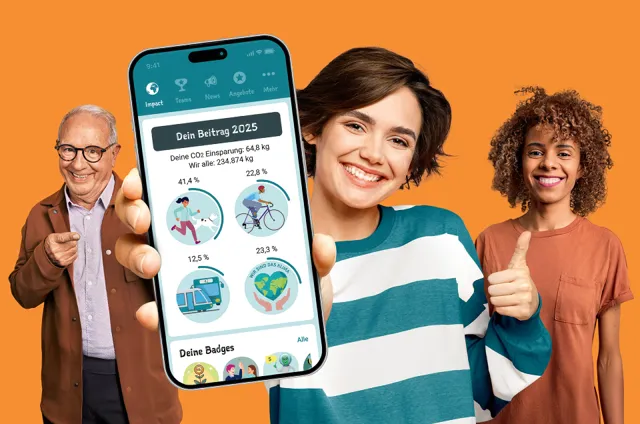
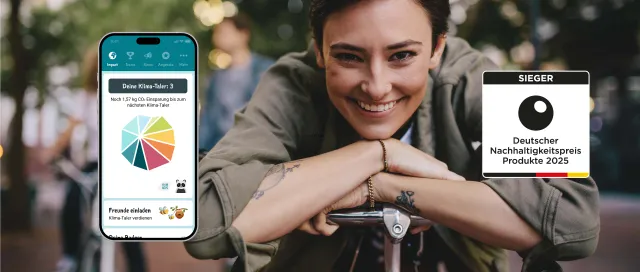
Programme nearbyEnergyMunichJoin the Munich Klima-Taler teamJoin the Munich Klima-Taler team Munich joined the nationwide Klima-Taler network in 2025. Download the app, join the Landeshauptstadt München team, and collect one Taler per five kilograms of avoided CO₂ from walking, cycling, transit, and energy savings. Redeem at partner shops and services listed in the app. Businesses can join the marketplace for free because the city pays the licence. What you can do - Download Klima-Taler and join the Munich team via Re:think München - Log green trips and household meters, then spend Taler at partners on the in-app map - Shops: offer a reward through Munich Business (no fee) - This is a different city from the existing Frankfurt Klima-Taler listing How it works You can start without giving a name or email. Savings are credited to the city team you join. Offers change, so treat the app marketplace as the live list. Why it matters Playful rewards make everyday climate choices visible and keep spend with neighbourhood partners.gamificationmobilityenergy +2
Programme nearbyEnergyCologneJoin Klima-Taler city teams across Germany in CologneJoin Klima-Taler city teams across Germany in Cologne More than 50 municipalities use Klima-Taler. Beyond Frankfurt and Munich, residents in Cologne, Aachen, Darmstadt, Königstein im Taunus, Hamm, Kempen, Leer, and many smaller towns join a city team, race friendly CO₂ rankings, and redeem tokens with 500+ partners, including municipal pools. Tokens work across the network, not only in your home town. What you can do - Download the app from klima-taler.com and join your city's team (no name required) - Cycle, walk, or ride transit; link meters if you want energy Taler - Redeem at local partners shown in the app (pools, museums, shops, clubs) - Schools, clubs, and workplaces can start their own teams - Municipal staff: ask via the cities form if your town is not listed yet How it works Blacksquared GmbH (Berlin) runs the software. Cities pay a licence so residents and local traders join free. Treat the in-app marketplace as the current redeem list: we do not copy shop directories here. Why it matters A shared climate currency makes quiet daily trips count in public, and it keeps spend local.gamificationmobilityenergy +2
Programme nearbyEnergyFrankfurtCorporate Sustainability Handprint at GIZ field in FrankfurtCorporate Sustainability Handprint at GIZ field in Frankfurt Outside Germany, GIZ teams use the Corporate Sustainability Handprint (CSH), a management tool that tracks both footprint (energy, water, travel) and handprint (active contributions such as solar arrays, carpooling, and fair procurement) in Frankfurt. Sustainability officers embed CSH targets in job roles so field offices contribute to the company-wide Sustainability Programme. What you can do - NGOs and development agencies: adapt the footprint/handprint split for your own country offices, track consumption and positive projects side by side - Municipal climate teams: borrow CSH indicators for embassies, twin-town partnerships, or international NGO hubs in your city - Workplace green teams: list one measurable handprint project per quarter (bike racks, PV, reusable event kit) How it works Country offices report CSH categories aligned with climate, procurement, and biodiversity goals. Handprint projects make visible what staff build, not only what they consume. Why it matters Corporate sustainability sticks when offices compete on contributions, not just compliance spreadsheets.handprintfootprintfield-office +2
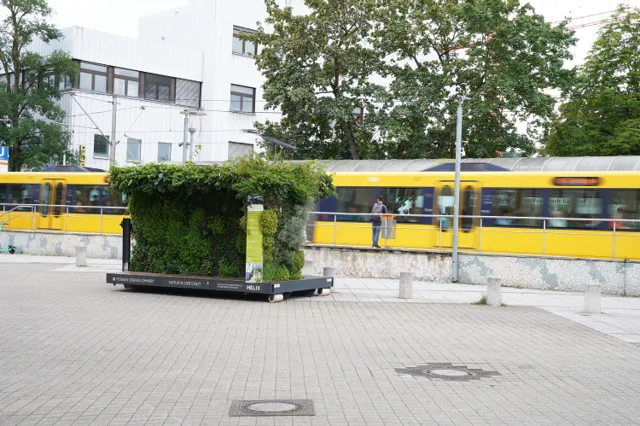
Programme nearbyRewildingStuttgartSit in a Mobiles Grünes ZimmerRest in a rolling green room on the plaza Helix's Mobiles Grünes Zimmer is a freestanding green wall and kiwi trellis on a roll-off container: shade, edible herbs, seating, and a climate-adaptation demo that cities, schools, and citizen groups can host. Since 2016 the rooms tour public squares, stations, and events across Germany. What you can do - Sit and cool off when a room is deployed near you (Stuttgart-Feuerbach station plaza has hosted one) - Ask your school, Ortsbeirat, or Bürgerinitiative to host a room for a festival, heat day, or neighbourhood pop-up - Use the side panels as a meeting point for climate and greening talks How it works A truck drops the pre-grown room; Helix handles most care. Local organisers top up the water tank. Residents get an instant cool oasis without digging the square. Why it matters Heat islands become places to linger. Neighbours feel what green infrastructure can do before permanent plantings arrive.mobile greenshadeplaza +2
Programme nearbyRewildingStuttgartPark a Klimakiste for bees and neighboursRoll native planters onto a paved square The Helix Klimakiste is a pre-grown wooden box (about 120 × 100 × 80 cm) with a solitary shrub and flowering underplanting. Citizen initiatives, schools, and cities can move boxes in for events or trials, then move them again. Plant for wild bees from day one. What you can do - Propose Klimakisten for a schoolyard, market, or temporary greening ask via Helix Klimakiste - Help water and tend boxes when your group hosts them - Choose native perennials so insects find food on sealed ground How it works Boxes arrive cultivated and move with a pallet jack. They buy time: prove that plants change how a place feels before you unseal asphalt for good. Why it matters Paved plazas can still feed bees and invite conversation. Temporary green is a rehearsal for lasting canopy.planterbiodiversitybees +2
Programme nearbyEnergyBrasiliaWeigh Brazil's energy transition at SESI LabWeigh Brazil's energy transition at SESI Lab Each cycle SESI Lab picks one transversal theme and runs it through exhibitions, educational activities, teacher training, publications, and technical partnerships. For 2025 and 2026 that theme is energy and the energy transition, which turns the museum on the Monumental Axis into a public room for working out how Brazil powers itself. What you can do - See which energy exhibitions and activities are running now on Exposições and the daily programação - Read the free digital curation Eficiência Energética: Aerogeradores, which connects electricity, renewable sources, and the form and function of a wind turbine - Walk the permanent Imaginando Futuros gallery, built to make visitors question the choices and decisions that shape the future (acervo digital) - Watch for the free course for education professionals on energy and sustainability, and for Night Lab evenings that take up the annual theme How it works The theme travels through the whole programme rather than sitting in one room. The interactive show Energia, Sou Watt? placed visitors at ten stations balancing economic growth, social justice, and environmental protection while deciding policy on nuclear power, mobility, production, and housing; it closed on 7 September, so treat it as a format to ask for rather than a live ticket. The Festival Energia brought five free public panels to Brasília: energy scenarios and transition, science communication and the climate emergency, decarbonisation and mobility, climate justice and sustainable development, and art and the climate emergency. Why it matters An energy transition is settled by people who can picture the trade-offs. A museum that hands you the dilemma instead of the conclusion builds exactly the civic muscle that climate policy runs on.energytransitionclimate +2
Programme nearbyEnergyCopenhagenBuy Middelgrunden wind shares, CopenhagenBuy Middelgrunden wind shares, Copenhagen Middelgrundens Vindmøllelaug is a citizen wind coop off Copenhagen. New shares can sell out, but the public Handelsplads still lists peer transfers with a transfer contract. What you can do - Open the Handelsplads and read current share listings - Complete the transfer steps the laug publishes for buyers - Note the listed membership fee before you pay How it works Shares move between members through the marketplace. Confirm fees, contracts, and whether new-issue shares are available on the site. Why it matters Copenhagen residents can still join offshore wind as citizen owners, not only as grid customers.copenhagenwindcoop +1
Programme nearbyEnergyStockholmGet energy-community advice in StockholmGet energy-community advice in Stockholm Sveriges Energigemenskaper guides people who want to start or join a local energy community. Visit the Stockholm desk for public advice. What you can do - Open sverigesenergigemenskaper.se - Ask how to start or join a gemenskap near you - Visit Maria Skolgata 83 when advice hours are listed How it works Public guidance is the entry. They do not sell panels on the spot. Bring questions about your building or street. Why it matters Stockholm residents get a clear desk for shared renewable energy.stockholmenergyadvice +1
Programme nearbyEnergyOsloUse KlimaOslo climate advice in OsloUse KlimaOslo climate advice in Oslo KlimaOslo is the city climate portal for residents who want advice on energy and climate action. Start with the public guidance pages. What you can do - Browse klimaoslo.no - Pick an advice pathway that matches your home or street - Contact the listed desk when a booking form appears How it works Advice is municipal and public. Follow the deepest linked form on the portal. Why it matters Oslo puts climate advice where residents already look for city services.osloclimateadvice +1
Programme nearbyEnergyHelsinkiRent a Helen solar share in HelsinkiRent a Helen solar share in Helsinki Helen lets Helsinki residents rent panels in city solar parks such as Suvilahti and Kivikko. Share production without a roof of your own. What you can do - Search helen.fi for solar share or panel rent offers - Compare Suvilahti and Kivikko park options - Sign only through the official Helen pathway How it works Residents rent capacity in utility parks. Pricing and availability change; check Helen before you commit. Why it matters Helsinki opens shared solar when a private roof is not an option.helsinkisolarshare +1
Programme nearbyEnergyPragueUse Prague renewable energy deskUse Prague renewable energy desk PCOE is Prague's one-stop desk for residents who want PV advice and energy-sharing guidance. Start with the about page, then ask for a consultation. What you can do - Read pcoe.cz/o-nas - Ask about rooftop PV or sharing options for your block - Book only through official PCOE contact channels How it works Advice is public and city-linked. Bring building details to make the talk useful. Why it matters Prague residents get one desk instead of scattered PV marketing.praguepvadvice +1
Programme nearbyEnergyBernJoin Energie Genossenschaft Schweiz in BernJoin Energie Genossenschaft Schweiz in Bern Energie Genossenschaft Schweiz plans and installs cooperative PV. Ask the Bern regional team how membership works. What you can do - Open energiegenossenschaft.ch - Ask for the Bern solar team contact - Request membership steps before any install talk How it works Coop membership comes first. Install planning follows for members and partner roofs. Why it matters Bern neighbours can own solar together through a Swiss energy coop.berncoopsolar +1
Programme nearbyEnergyAthensJoin Attica Energy Community near AthensJoin Attica Energy Community near Athens The Attica Energy Community is a citizen coop for renewable energy around Athens. Use the online membership form to join. What you can do - Visit atticaenergycommunity.gr - Complete the online membership form - Ask about metro-area projects that accept new members How it works Membership is online. Project locations sit across Attica; confirm which ones are open. Why it matters Athens residents can join renewable energy as citizens, not only as customers.athensenergycoop +1
Programme nearbyEnergyRigaBook free REA energy advice in RigaBook free REA energy advice in Riga Rīgas Enerģētikas Aģentūra (REA) runs a public energy advice desk. Book solar, efficiency, or energy-community questions in person or remote. What you can do - Open REA consultations and book a slot - Call +371 6701 2437 if the calendar needs a phone book - Ask about HOA and energy-community formation pathways How it works Advice is free for Riga residents and housing associations. Bring building questions. Confirm hours on the page. Why it matters Riga neighbours get a city desk for clean energy, not only a national tip list.rigaenergyadvice +1
Programme nearbyEnergyVilniusStart renovation via Amiestas in VilniusStart renovation via Amiestas in Vilnius VšĮ Atnaujinkime miestą (Amiestas) is Vilnius municipal one-stop shop for multi-apartment renovation. Residents meet advisors and join block upgrade paths. What you can do - Visit amiestas.lt and book advice - Call +370 670 91150 or write info@amiestas.lt - Bring your building association questions to the desk How it works Amiestas guides HOAs through renovation steps. Prefer this public desk over commercial solar-park shares. Why it matters Vilnius blocks cut energy waste together with municipal coaching, not alone.vilniusenergyrenovation +1
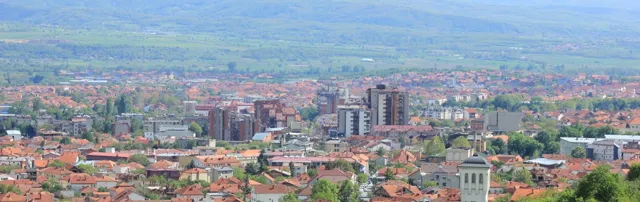
Programme nearbyEnergyBelgradeBeli Breg: village energy cooperative near VranjeThirteen households pool solar savings in southern Serbia In Beli Breg Popovci, a hillside hamlet near Vranje in south-eastern Serbia, thirteen households formed Energetska zadruga Beli Breg Popovci, one of the country's newest citizen energy cooperatives. Members voted at a founding assembly in June 2026 to keep savings, income, and future investments in the village rather than exporting them to distant utilities. What you can do - Nearby residents: contact the cooperative to learn how membership works and when rooftop solar planning begins - Other villages: use Beli Breg as a template for a multi-household cooperative under Serbia's new energy-community rules - Schools and municipalities: pair cooperative planning with the national energy communities portal for legal steps and peer examples How it works The cooperative plans its first shared solar arrays, roughly ten kilowatts of panels across one or more rooftops, with members deciding jointly how to reinvest revenue. Four development tracks were set at launch: shared solar and lower bills, joint farm equipment, rural tourism, and e-mobility links to the city. Why it matters Community-owned renewables keep money circulating locally. As Serbia opens energy-community legislation, Beli Breg shows how a handful of neighbours can start building energy independence today.energy-cooperativesolarrural +2
Programme nearbyEnergyBrusselsYoung Energy Consumers programmeYouth voice on fair energy access and consumer rights The Young Energy Consumers project places young people at the centre of debates about energy affordability, consumer protection, and fair access to clean technologies. EYEN coordinates peer learning between youth organisations across Europe. What you can do - Bring youth consumer perspectives into your local energy cooperative or municipal advisory board - Host a workshop on energy bills, efficiency, and rights using EYEN materials - Apply to EYEN volunteer roles focused on consumer advocacy How to participate - Learn more via EYEN, Our Projects - Contact EYEN at info@youthenergy.eu for partnership with local youth groups Why it matters Vulnerable households bear the highest energy burdens. Programmes that train young advocates create lasting local capacity for fair energy access.consumersyouthaffordability +2
Programme nearbyCommunityBerlinHitzeaktionstag, national heat action day in BerlinHitzeaktionstag, national heat action day in Berlin Each 11 June, municipalities, health groups, churches, and neighbours across Germany host walks, cooling rooms, and info stands for Hitzeaktionstag, a cross-sector campaign to make towns safer when temperatures spike in Berlin. What you can do - Find a local event on the Hitzeaktionstag calendar, walks, cooling points, school workshops, and citizen forums - Bring neighbours who may not hear heat warnings: seniors, outdoor workers, and families with young children - Ask what your city is doing beyond the action day, heat action plans, cool-place maps, and green shade routes How it works - The alliance coordinates a shared date; each Veranstalter runs their own venue - Formats range from Hitzespaziergänge (heat walks) and Kühle Orte (cool places) to church cooling rooms and green-space co-design - Resources also live at Hitze.info and the municipal HitzeService About Hitzeaktionstag Hitzeaktionstag is an annual Bündnis campaign on 11 June. Health for Future and many partners publish events on the shared calendar, Solarpunker reposts local listings for discovery only; we do not organise or endorse individual events. Why it matters Heat resilience is built neighbour by neighbour: shared cool spots, shade trees, and plans that protect the people most at risk, not fear alone, but practical care.heatHitzeaktionstagcooling +2
Programme nearbyEnergyDüsseldorfBook a public PV advice session in DüsseldorfBook a public PV advice session in Düsseldorf Stadtwerke Düsseldorf helps residents plan rooftop solar without a city energy cooperative. Düsseldorf has no city energy co-op to join yet, so the public path is municipal advice: web seminars, phone sessions, and the seasonal Düsselblitz info van. What you can do - Book a photovoltaic advice web seminar or a free phone follow-up - Visit the Energy Service Centre when you need a counter, not a home visit - Catch Düsselblitz in a neighbourhood from spring to autumn, 10:00 to 13:00, for on-street questions about support and storage How it works Register online for a compact web seminar, then use the phone line if your roof still raises questions. Home visits are paused for now because demand is high. Phone energy advice: Monday to Friday 09:00 to 15:00 on (0211) 821 2121, or energieberatung@swd-ag.de. Why it matters A clear talk about size, storage, and feed-in beats guessing from ads, and it keeps solar decisions in the hands of people who live under the roof.advicephotovoltaicseminar +1
Programme nearbyCommunityBrusselsCovenant of Mayors for Climate and EnergyLocal authorities committing to climate-neutral cities The Covenant of Mayors for Climate and Energy brings together local and regional authorities committed to cutting emissions, improving resilience, and expanding access to affordable clean energy. Close to 11 000 signatories develop sustainable energy and climate action plans in a joint effort to limit global warming. What you can do - Ask your municipality whether it has signed the Covenant and request a public progress report - Join or start a neighbourhood group that feeds input into your city's climate action plan - Volunteer with local climate assemblies linked to Covenant implementation How to participate - Explore signatory cities via Covenant of Mayors - Contact your city council sustainability office to propose concrete community projects Why it matters Cities drive most of Europe's energy use. When residents hold signatory councils accountable, national climate targets become neighbourhood action.citiesclimatemayors +2