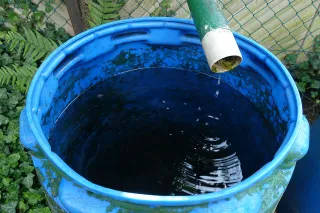
Programme nearbyCommunityFrankfurtJoin Frankfurt's water-saving pledge, one habit at a timeJoin Frankfurt's water-saving pledge, one habit at a time The city's "Frankfurt spart Wasser!" campaign, now running its fourth-plus warm season, asks residents to treat drinking water as the precious resource it is as heat and drought periods stretch longer. Posters, tram wraps, and postcards carry pledges like "Ich dreh ab", "Ich spar's mir", and "Ich fang dich auf": turn it off, skip it, catch it. What you can do - Shower instead of bathing: five minutes under the shower uses roughly a third of a full bath (about 50 versus 150 litres), and a water-saving showerhead or flow restrictor cuts it further - Turn off the tap while brushing your teeth or lathering up: saving hot water saves energy too - Run washing machines and dishwashers only when full, on eco programmes, and look for water-efficient models when buying new - Water the garden or balcony pots in the morning or evening, collect rainwater in a barrel, and choose drought-tolerant plants How it works The city renews the campaign each warm season with posters on Litfaßsäulen, tram and digital ads, U-Bahn messaging, and postcards stocked at neighbourhood libraries, restaurants, and cafés. It is part of Frankfurt's municipal water concept for securing long-term supply, and even children get a turn, with a button-making station at the GrünGürtel-Tier's birthday festival. Why it matters Longer heat and dry spells are lowering groundwater levels in and around Frankfurt. None of these habits cost much, but multiplied across a city they ease pressure on a resource everyone assumes will keep flowing from the tap.waterdroughthousehold +1
Programme nearbyCommunityDarmstadtJoin Darmbach e.V. for stream daylightingAdvocate for living water in the city Darmbach e.V. is a 160-member civic group founded in 2008 to uncover and restore the Darmbach stream, which has flowed underground since 1970. The group argues that visible, flowing water cools the city, supports ecology, cuts stormwater costs, and reconnects residents to hydrology. Membership costs €5/year and joins a landscape-scale advocacy effort. What you can do - Join Darmbach e.V. (€5/year) and attend planning meetings and site walks - Learn why daylit streams are cheaper and cooler than hidden pipes - Advocate to your Ortsbeirat for a Darmbach section in your ward - Support the group's dialogue with city planners about Masterplan 2030+ How it works The group documents the stream's path, teaches residents about its history and ecology, and pushes municipal decision-makers to prioritize water visibility in climate plans. Each win (unsealing a section, adding a cascade) changes how a place feels and what people expect. Why it matters Hidden water is invisible infrastructure. Daylit streams are gathering places, cooling corridors, and signs that the city listens to residents who know their watershed. This is how urban hydrology shifts from pipes to commons.streamdaylightingadvocacy +2
Programme nearbyFood & GardenNairobiIrri-Hub climate-smart irrigationAffordable irrigation and farmer support services Irri-Hub (Nairobi, Kenya) empowers smallholder farmers with climate-smart, affordable irrigation solutions and comprehensive support services, helping plots stay productive as rainfall patterns shift. What you can do - Enquire about irrigation kits, installation, and agronomic support for your farm or community garden - Pool orders with neighbouring smallholders to lower per-plot costs - Document water savings and yield stability to inspire watershed cooperatives How to participate - Contact Irri-Hub through links on the portfolio page Why it matters Climate adaptation on small farms is tangible: reliable water, shared know-how, and equipment sized for real plots, not industrial estates.irrigationfarmersclimate +2
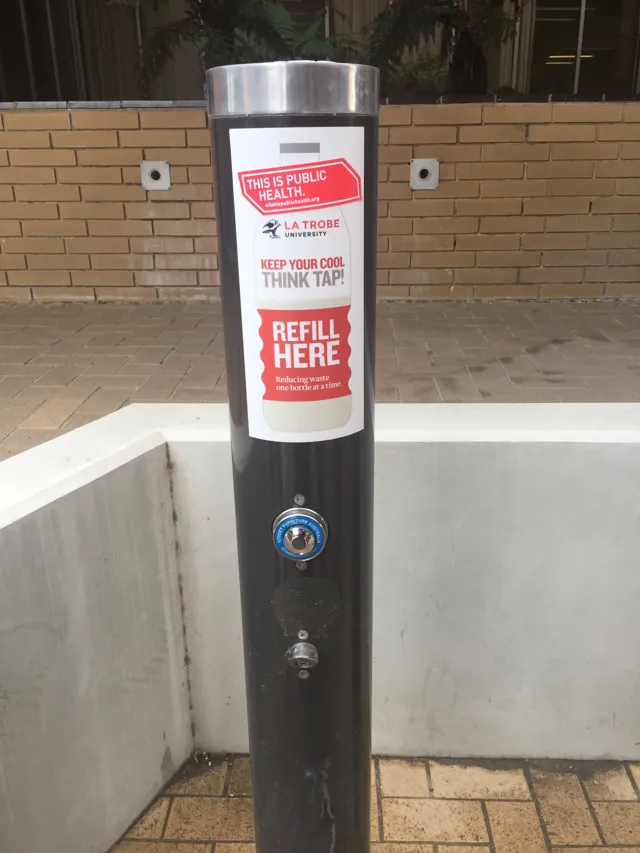
Programme nearbyCommunityBelgradePublic drinking fountains as urban water commonsBlue dots on the city map: free water and heat resilience Across Serbia, javne česme (public fountains) are reopening each spring, heritage infrastructure that doubles as climate adaptation. Refill stations cut single-use plastic, offer free hydration during heat waves, and anchor neighbourhood gathering spots when maintained and tested. What you can do - Residents: locate your nearest public fountain, carry a reusable bottle, and report broken taps to the local utility or health institute - Neighbourhood groups: map fountains in your district and advocate for repairs, signage, and water-quality transparency - Municipalities: treat fountains as public-health infrastructure, regular testing, winter maintenance, and new installations in heat-exposed zones How it works Most urban fountains connect to municipal water networks; Belgrade also lists dozens of spring-fed fountains monitored by the city public-health institute. Quality data should be published before peak summer use. Why it matters Accessible water is a solarpunk baseline: low-tech, shared, and life-sustaining. Every working fountain is a small act of care for the whole neighbourhood.waterfountainsheat +2
Programme nearbyCommunityFrankfurtCommunity refill & bag-share spots in FrankfurtCommunity refill & bag-share spots in Frankfurt Chart vinegar, oil, and water refill points plus bag-sharing stations so neighbours borrow instead of buy, start with three trusted locations and grow the map together in Frankfurt. What you can do - Visit Frankfurter Fass for bulk vinegar and oils - Fill your bottle at Refill Frankfurt partner taps - Use Taschenstationen to borrow a bag when you shop Why it matters Small daily habits, one refill, one borrowed bag, add up to a city that wastes less without feeling deprived.refillwatersharing
Programme nearbyCommunityKielRefill your bottle at city Refill stationsTap water beats disposable plastic Kiel hosts 30+ Refill stations, look for the blue droplet sticker. Municipal buildings including the Nachhaltigkeitszentrum and Zentralbücherei participate; the health office advises new hosts on water quality checks. How to participate - Carry a bottle; fill at participating cafés, offices, and cultural venues listed on the Refill map (e.g. Refill Deutschland / Karte von Morgen). - Ask your workplace or favourite shop to join via umwelthygiene@kiel.de. Why it matters Tap-water refills skip disposable plastic bottles, a habit anyone can start with one reusable bottle.refillwaterlocal
Programme nearbyCommunityDarmstadtApply for Darmstadt green and water grantsFund your own cooling and water projects Darmstadt offers grants (Förderprogramme) for residents and businesses to plant trees, install rainwater cisterns, set up greywater recycling, and add green roofs. The city pays for up to five high-stem fruit trees per household within city limits. Solar panel subsidies, drip irrigation, and water-storage retrofits are also supported. These tools make climate adaptation an action anyone can start. What you can do - Check which grants apply to your garden or yard (trees, cisterns, greywater systems) - Apply for city funding to cover part or all of the cost - Plant native species that tolerate drought and feed bees - Store rainfall where it lands so it feeds soil, not the sewer How it works Contact the Umweltamt or Grünflächenamt with your project idea. The city reviews and approves applications that meet climate adaptation criteria. Funding covers installation; you commit to maintenance and a 5-year tenure. Why it matters Individual properties add up. When hundreds of households unseal parking, plant trees, and hold rainwater, the neighbourhood cools faster and stormwater no longer overwhelms drains. Micro-actions become macro resilience.grantstreeswater +2
Programme nearbyCommunityCologneRefill your bottle free at Refill Köln stationsRefill your bottle free at Refill Köln stations Refill Köln is a Zero Waste Köln project turning willing shops, cafés, cultural venues, and restaurants across Cologne into free drinking-water stops for anyone with an empty bottle. What you can do - Look for the round blue "Refill Station" sticker in a window, then ask to fill your bottle with tap water: free in shops, restaurants may add a small service charge - Respect that every station joins voluntarily and unpaid, so a full till, a grubby bottle, or a big canister can mean a polite no - Ask your favourite café, shop, or workplace to become a station by emailing refill@zerowastekoeln.de: all it needs is regular opening hours and a way to fill bottles How it works Refill Köln plugs into the nationwide Refill Deutschland network under the Zero Waste Germany umbrella, so the blue sticker means the same thing wherever you spot it across the country. Why it matters Cologne's tap water is closely tested and costs well under a cent a litre, yet plastic bottles still pile up citywide. Choosing a refill over a new bottle is a small swap that could spare Germany billions of plastic bottles a year if the habit catches on.refillwaterplastic-free +1