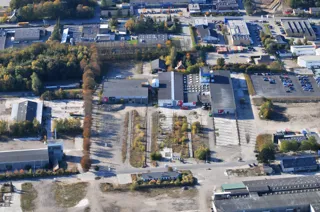
VolunteerRepair & ReuseRoskildePlan circular demolition in RoskildePlan circular demolition in Roskilde In Roskilde, you can see how circular demolition was planned at Musicon, the old concrete works the city bought in 2003. A pre-demolition audit of Hall 12 listed what could be used again before the selective take-down began. What you can do in Roskilde - Walk the Musicon district and see old factory ground turned into a neighbourhood (CityLoops on circular demolition) - Ask the city to require a material audit before the next public building comes down - Read the two CityLoops guides: one for the audit, one for selective demolition - If you own a building, use the Copenhagen Værdibyg guide to set a reuse aim before you tender the job (Værdibyg circular demolition booklet) - Ask designers to look at the audit while they draw the next building How to join Musicon is a public district of about 200,000 square metres, a former concrete factory and gravel pit. The city did not lock it to one fixed plan. Projects grow step by step with residents, builders, and the municipality. Hall 12 was audited by Golder: a desk study, then a field study, then a list of how to handle each material, including a store of saved parts. You can walk the district. You cannot join the Hall 12 works as a volunteer day. The audit is the pattern to copy. Why it matters in Roskilde An early list stops good doors, timber, and steel from being treated as rubbish. CityLoops found that contractors do not add this audit on their own after the contract is signed, so the city has to ask for it in the tender. A Danish client can follow the same idea with the Værdibyg steps: set an aim, survey resources, and write the handling rules into the tender. Find more community projects in Roskilde. Good to know - What is a pre-demolition audit? It is a list of materials, how much there is, how clean they are, and whether they can be used again, recycled, or must be treated as harmful. CityLoops says reuse is hard to promote without that list. - When should the first clear-out happen? As soon as the last user has left, before damp and vandalism spoil loose items.demolitionauditsalvage +2
EnergySão PauloInvite SENAI to map energy savings on your factory floorInvite SENAI to map energy savings on your factory floor PotencializEE brings SENAI specialists into small and medium industrial plants to find cheaper, cleaner kilowatt-hours. GIZ coordinates with Brazil's Ministry of Mines and Energy. The programme began in São Paulo and now reaches partner states including Minas Gerais, Paraná, Rio Grande do Sul, and Santa Catarina. What you can do - Inscreva sua indústria for a free SENAI pre-diagnosis visit at your plant - Walk the shop floor with the specialist: compressed air, boilers, heat pumps, refrigeration, and motors often hide quick wins - If the pre-diagnosis shows strong potential, take the subsidised deeper diagnosis (about 60% of that step's cost on published pages) and follow credit pathways (FINEP, Desenvolve SP guarantee fund where eligible) - Pass the signup link to neighbouring industrial SMEs in your cluster so the whole district gets leaner together How it works Register online. SENAI contacts eligible industrial SMEs (revenue and headcount caps are on the signup page), schedules a plant visit, and lists concrete savings measures. This pathway is for workplaces, not households. Why it matters Factories that measure and trim energy waste keep more money in the business and put cleaner production on the neighbourhood map.efficiencyfactorysenai +2