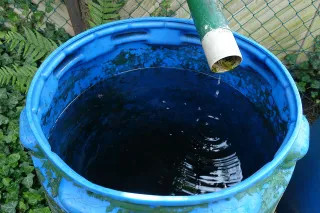
CommunityDarmstadtApply for Darmstadt green and water grantsFund your own cooling and water projects Darmstadt offers grants (Förderprogramme) for residents and businesses to plant trees, install rainwater cisterns, set up greywater recycling, and add green roofs. The city pays for up to five high-stem fruit trees per household within city limits. Solar panel subsidies, drip irrigation, and water-storage retrofits are also supported. These tools make climate adaptation an action anyone can start. What you can do - Check which grants apply to your garden or yard (trees, cisterns, greywater systems) - Apply for city funding to cover part or all of the cost - Plant native species that tolerate drought and feed bees - Store rainfall where it lands so it feeds soil, not the sewer How it works Contact the Umweltamt or Grünflächenamt with your project idea. The city reviews and approves applications that meet climate adaptation criteria. Funding covers installation; you commit to maintenance and a 5-year tenure. Why it matters Individual properties add up. When hundreds of households unseal parking, plant trees, and hold rainwater, the neighbourhood cools faster and stormwater no longer overwhelms drains. Micro-actions become macro resilience.grantstreeswater +2
RewildingNairobiApply for a nature adaptation grant in NairobiApply for a nature adaptation grant in Nairobi Community groups can ask the Global EbA Fund for money to plant shade trees, restore reefs, or protect wetlands that help people live with a hotter climate. You draft the proposal offline, then send it through the fund's online form. What you can do in Nairobi - Read the small-grants page and the Grants Procedures Manual before you draft - Prepare the nature adaptation grant form offline, then submit it on the online platform - Apply as a community group, an Indigenous Peoples' organisation, or a non-profit - Shape a project of up to 24 months that uses nature to help people adapt - Check the medium-size grant window on the same site How to join IUCN and UNEP are the secretariat for the Global EbA Fund. Small grants reach up to USD 250,000 with submissions from 28 September to 26 October 2026. Medium-size grants accept submissions from 12 October to 16 November 2026. Confirm the open call on the fund site before you send a file. Community groups, Indigenous Peoples' organisations, non-profits, universities, and consortia can apply. Government bodies can join a consortium but do not receive the grant. Forms are in English and the apply step is online. You do not need to visit a Nairobi office. Why it matters in Nairobi Ecosystem-based adaptation (using forests, wetlands, reefs, or farms so people can live with a hotter climate) can fund shade trees, mangrove planting, or wetland banks that also protect homes and fields. The Global EbA Fund offers catalytic money to test or scale that work. This row does not describe a Nairobi field site. It points groups to the secretariat hub city and the apply process. Find more community projects in Nairobi. Good to know - Who can apply for Global EbA Fund money? Community groups, Indigenous Peoples' organisations, non-profits, universities, and private companies. A government office does not receive the money. - How big is a Global EbA Fund small grant? Up to USD 250,000, for a project of up to 24 months. The 2026 small-grant window runs from 28 September to 26 October. - How do I send an ecosystem-based adaptation grant application? Draft offline from the template, then submit on the platform linked from the small-grants page. Use English.adaptationgrantsrestoration +1