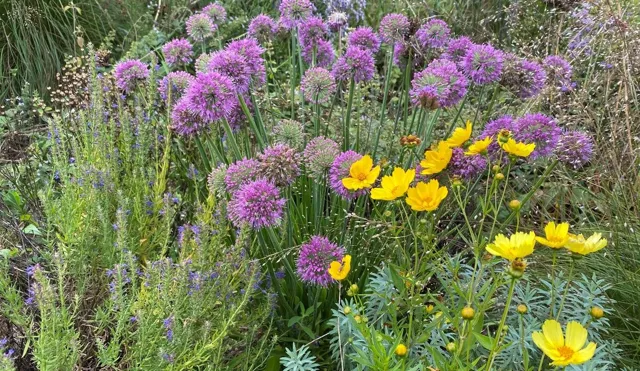
Programme nearbyRewildingDarmstadtWalk the Lincoln sponge quarterVisit a climate-adapted neighbourhood The Lincoln-Siedlung in Darmstadt is a lived example of sponge-city thinking. Built on a former US Army base in 2016, the quarter mixes modernist apartments, decentralized rainwater storage, and planted open spaces. The centrepiece is the Quartierspark, which will soon add 19 native trees and unsealed pathways to cool the microclimate by up to 5 °C on hot days. What you can do - Walk through the neighbourhood and rest in the Quartierspark shade and seating - See how unsealed surfaces and clustering trees beat the heat without gentrification - Talk to residents about what it means to live in a quarter that listens to its people How it works Darmstadt's planning started with a neighbour survey in 2025. Residents asked for more green, shade, and gathering space. The city acted on those wishes directly in the rebuild plan. Participation was design input, not decoration. Why it matters This is how equitable cooling works: hear people, plan together, build for health and joy. The Lincoln quarter shows climate adaptation can mean shared outdoor life and neighbourhood identity, not just infrastructure.sponge cityplazashade +2
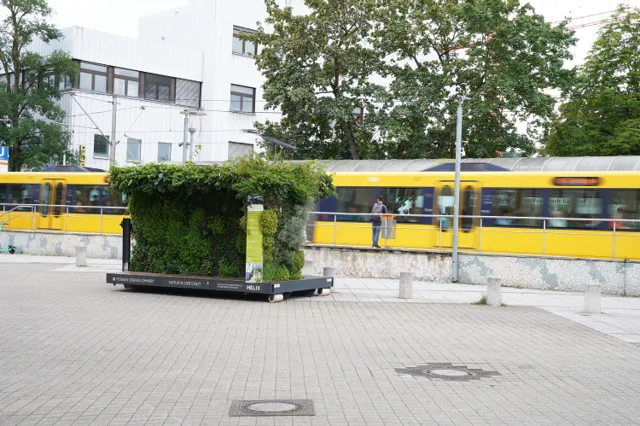
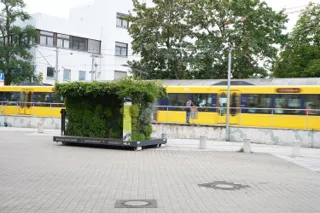
Programme nearbyRewildingStuttgartSit in a Mobiles Grünes ZimmerRest in a rolling green room on the plaza Helix's Mobiles Grünes Zimmer is a freestanding green wall and kiwi trellis on a roll-off container: shade, edible herbs, seating, and a climate-adaptation demo that cities, schools, and citizen groups can host. Since 2016 the rooms tour public squares, stations, and events across Germany. What you can do - Sit and cool off when a room is deployed near you (Stuttgart-Feuerbach station plaza has hosted one) - Ask your school, Ortsbeirat, or Bürgerinitiative to host a room for a festival, heat day, or neighbourhood pop-up - Use the side panels as a meeting point for climate and greening talks How it works A truck drops the pre-grown room; Helix handles most care. Local organisers top up the water tank. Residents get an instant cool oasis without digging the square. Why it matters Heat islands become places to linger. Neighbours feel what green infrastructure can do before permanent plantings arrive.mobile greenshadeplaza +2
Programme nearbyRewildingDarmstadtExplore Ludwigshöhviertel as sponge districtWalk through another climate-smart quarter The Ludwigshöhviertel, like Lincoln, was redesigned as a sponge district: rainwater versickert into sand beds, big trees are placed to lower surface temps, roofs are green where possible. Residents can see native plants and birds return to what was sealed ground. The city's freiraumplanung (public space strategy) treats both quarters as replicable patterns, not one-off projects. What you can do - Visit the neighbourhood and notice where water is held, where shade grows, where kids can play - Compare sealed vs unsealed streets and feel the temperature difference - Ask your neighbourhood Ortsbeirat if similar patterns could apply locally How it works Both quarters use the same toolkit: entsiegelung (unsealing), water-optimized tree spacing, green roofs, and stormwater that feeds the soil rather than the sewer. The city tests ideas at scale before rolling out guidance to private owners. Why it matters Once you see and feel the difference between a sponge plaza and a heat-island car park, you can't unsee it. These neighbourhoods show the shift is possible within a single city.sponge citygreen roofsneighbour +2
Programme nearbyEnergyBrasiliaWeigh Brazil's energy transition at SESI LabWeigh Brazil's energy transition at SESI Lab Each cycle SESI Lab picks one transversal theme and runs it through exhibitions, educational activities, teacher training, publications, and technical partnerships. For 2025 and 2026 that theme is energy and the energy transition, which turns the museum on the Monumental Axis into a public room for working out how Brazil powers itself. What you can do - See which energy exhibitions and activities are running now on Exposições and the daily programação - Read the free digital curation Eficiência Energética: Aerogeradores, which connects electricity, renewable sources, and the form and function of a wind turbine - Walk the permanent Imaginando Futuros gallery, built to make visitors question the choices and decisions that shape the future (acervo digital) - Watch for the free course for education professionals on energy and sustainability, and for Night Lab evenings that take up the annual theme How it works The theme travels through the whole programme rather than sitting in one room. The interactive show Energia, Sou Watt? placed visitors at ten stations balancing economic growth, social justice, and environmental protection while deciding policy on nuclear power, mobility, production, and housing; it closed on 7 September, so treat it as a format to ask for rather than a live ticket. The Festival Energia brought five free public panels to Brasília: energy scenarios and transition, science communication and the climate emergency, decarbonisation and mobility, climate justice and sustainable development, and art and the climate emergency. Why it matters An energy transition is settled by people who can picture the trade-offs. A museum that hands you the dilemma instead of the conclusion builds exactly the civic muscle that climate policy runs on.energytransitionclimate +2
Programme nearbyEnergyOsloUse KlimaOslo climate advice in OsloUse KlimaOslo climate advice in Oslo KlimaOslo is the city climate portal for residents who want advice on energy and climate action. Start with the public guidance pages. What you can do - Browse klimaoslo.no - Pick an advice pathway that matches your home or street - Contact the listed desk when a booking form appears How it works Advice is municipal and public. Follow the deepest linked form on the portal. Why it matters Oslo puts climate advice where residents already look for city services.osloclimateadvice +1
Programme nearbyCommunityMunichChampion gender-just climate and health action in MunichChampion gender-just climate and health action in Munich WECF connects ecofeminist groups that link clean air, toxin-free homes, and reproductive health in Munich. Their Gender Just Climate Solutions Awards recognise grassroots projects that already protect bodies and ecosystems together. The 2026 application window closed on 12 July; winners are celebrated at COP 31 in Antalya (November 2026). What you can do - Read Climate Justice Starts at the Roots for field-tested finance and policy asks - Follow WECF and the Women and Gender Constituency for 2026 winners and the next award round - Host a neighbourhood conversation using WECF toolkits on chemicals in everyday products How it works WECF funds and mentors women-led organisations, then brings their evidence into UN and EU climate spaces. Local groups test solutions first; advocates scale what works. Why it matters Climate policy that ignores gender misses who cooks, cares, and lives nearest to pollution. Grassroots women already hold the blueprints.healthgenderclimate +2
Programme nearbyCommunityBrusselsCovenant of Mayors for Climate and EnergyLocal authorities committing to climate-neutral cities The Covenant of Mayors for Climate and Energy brings together local and regional authorities committed to cutting emissions, improving resilience, and expanding access to affordable clean energy. Close to 11 000 signatories develop sustainable energy and climate action plans in a joint effort to limit global warming. What you can do - Ask your municipality whether it has signed the Covenant and request a public progress report - Join or start a neighbourhood group that feeds input into your city's climate action plan - Volunteer with local climate assemblies linked to Covenant implementation How to participate - Explore signatory cities via Covenant of Mayors - Contact your city council sustainability office to propose concrete community projects Why it matters Cities drive most of Europe's energy use. When residents hold signatory councils accountable, national climate targets become neighbourhood action.citiesclimatemayors +2
Programme nearbyFood & GardenNairobiIrri-Hub climate-smart irrigationAffordable irrigation and farmer support services Irri-Hub (Nairobi, Kenya) empowers smallholder farmers with climate-smart, affordable irrigation solutions and comprehensive support services, helping plots stay productive as rainfall patterns shift. What you can do - Enquire about irrigation kits, installation, and agronomic support for your farm or community garden - Pool orders with neighbouring smallholders to lower per-plot costs - Document water savings and yield stability to inspire watershed cooperatives How to participate - Contact Irri-Hub through links on the portfolio page Why it matters Climate adaptation on small farms is tangible: reliable water, shared know-how, and equipment sized for real plots, not industrial estates.irrigationfarmersclimate +2
Programme nearbyEnergyTallinnHelp Tallinn reach climate neutralityClimate-neutral city by design Tallinn’s green transformation puts climate neutrality at the centre: compact urban space, cleaner energy in buildings, and a shift to sustainable transport and circular resource use across the whole city. What you can do - Choose walking, cycling, or transit for everyday trips; support district energy-efficiency programmes where you live. - Join public consultations on climate and mobility plans linked from the strategy site. Why it matters Neighbourhood-level habits add up when the city also upgrades buildings, transit, and waste systems toward net-zero goals.climateenergylocal