Zero hunger

See how neighbors are turning SDG 2 into everyday action.

Enough good food for every table: shared gardens, seed swaps, and kitchens that feed people and soil together.
Ideas advancing SDG 2: Zero hunger

Join the Navdanya Course in Dehradun

Join the Navdanya Course in Dehradun Navdanya's farm near Dehradun teaches swadeshi economics beside seed banks and demo plots. Neighbour tip Bring a friend who has never visited before; shared first visits help you remember names, routes, and follow-up events you might skip alone. What you can do in Dehradun - Apply for Gandhi and Swadeshi: On Economic Freedom & Self-Reliance, 13–17 November 2026 (Navdanya course page) - Browse other 2026 courses on biodiversity, organic farming, and food democracy (Navdanya 2026 courses) - Walk seed banks and demo plots when course schedules include field sessions - Ask how local farmers integrate swadeshi principles into market tables and seed exchanges How to join Register through Navdanya International forms linked from each course page. Fees, lodging, and visa guidance appear on the course detail sheet. Arrive prepared for farm hours and modest accommodation on or near the campus. When & where Navdanya Biodiversity Farm / Earth University, Dehradun area, Uttarakhand, India. The Gandhi and Swadeshi course runs 13–17 November 2026 on the organiser page; confirm exact campus gate instructions after enrollment. Why it matters in Dehradun Seed and food sovereignty training on a working farm beats slide decks alone. Participants leave with hands-on compost, seed-saving, and economic literacy tied to decolonial land ethics. Bring a notebook; details you capture on site help your block organise a return visit or small solidarity fund drive. Good to know - Do I need farming experience? Courses mix beginners and practitioners; read the prerequisite line on each listing. - Are meals included? Course pages describe farm meals when included; confirm dietary needs on the form. - Can I visit without enrolling? Public open days are rare; respect that the farm is an active training site.

Loan heirloom seeds like a neighbourhood library

Loan heirloom seeds like a neighbourhood library In Yaxunah, Yucatán, nine women run K'an-Lol ("the flower of good corn" in Yucatec Maya): a community seed bank that loans traditional maize, beans, chilies, and other crops at no cost. Borrowers plant their milpa, harvest, and return fresh seed so the stock stays alive for the next season. Most users are subsistence farmers feeding their families, with small surpluses sometimes reaching local markets. The bank is a library, not a shop: seeds move in circulation instead of sitting in a vault. Fundación Haciendas del Mundo Maya supports the project alongside local volunteers. Surplus garden produce can reach buyers through Traspatio Maya (Instagram). What you can do - Visit Yaxunah when community programmes are open and ask how the seed bank lends and receives maize (see Yucatán Magazine coverage) - Message Traspatio Maya to order a guacal of fresh produce from Yaxunah growers when you are in the region - Replicate the pattern at home: labelled jars, a simple loan ledger, and a rule to return double the borrowed grain if you cannot swap seed immediately (as Yaxcabá neighbours describe for their bank) - Pair seed saving with nixtamalization skills so heirloom maize becomes tortillas and staples again, not just decoration How it works Farmers borrow seed, grow in milpa plots, and return after harvest. Varieties such as nuuk nal (reddish maize) stay in use even though they need more care than industrial hybrids. Coordinators track loans; partners like FHMM help with training and fair-trade outlets. There is no fixed online booking: contact organisers through community channels or partner foundations before you travel. Why it matters Imported kernels can cross-pollinate native fields. A seed library keeps criollo genetics in farmers' hands, not only in policy speeches. It is low-tech mutual aid that scales one neighbourhood at a time.

Volunteer at Sydney City Farm in St Peters

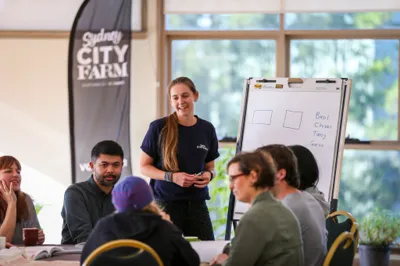
Volunteer at Sydney City Farm in St Peters City of Sydney runs Sydney City Farm in Sydney Park as a place to learn urban growing and sustainable food. You can join farm volunteers for two-hour shifts and help beds, nursery stock, and orchard projects take shape. What you can do in Sydney - Sign up for farm volunteer working bees through the council What's On calendar (volunteer for Sydney City Farm) - Attend a 45-minute site induction before your first regular shift, as the council requires - Help on Thursday cropping mornings, Friday nursery tasks, or Saturday orchard and display garden projects when sessions are listed - Explore the farm on a self-guided tour when you want to see the hub before you commit How to join New volunteers complete the council registration form and book a session online when places are open. Shifts are usually two hours. The organiser asks for sturdy shoes, a hat, gloves, and a water bottle. Why it matters in Sydney Neighbours meet while seedlings go in and harvests are shared. Skills from the farm travel home to balconies, courtyards, and community plots across the city. Good to know - Do I need gardening experience? The council welcomes newcomers after the mandatory induction; interest in horticulture matters more than a formal CV. - Is there a fee to volunteer? The volunteer programme pages describe free working bees; check the booking terms for your date. - Where is the farm? Sessions use Sydney City Farm at Sydney Park; the working-bee listing gives the street address in St Peters.

Showing 12 of 99

What's next

Got an idea like this?

Share it with your neighborhood, or explore what's happening nearby.