EnergyNairobiGrow clean-cookstove markets with women's last-mile groupsGrow clean-cookstove markets with women's last-mile groups Energising Development (EnDev) helps Kenya build lively markets for improved cookstoves and small solar (with GIZ, SNV, and CLASP). Households buy from producers, traders, and last-mile entrepreneurs, including women's groups and savings groups that demonstrate and sell stoves village by village. There is no single GIZ volunteer desk; the builder move is growing that market where you already cook and trade. What you can do - Buy or recommend an improved cookstove from a local seller or women's group near you, then share how it cooks in your kitchen - Join or start a savings group (chama) that sells or finances stoves on instalments for neighbours - If you produce or distribute ICS, study the climate-friendly cooking Kenya and Senegal professionalisation pattern and partner pathways on EnDev Kenya - Host a short cooking demo with your women's group, school, or market stall so new customers can taste the difference How it works EnDev strengthens producers and last-mile agents so quality stoves reach rural customers through ordinary commerce. Savings groups often make instalments workable. Use the country page to find the approach; then act through local sellers and groups already on the ground. Why it matters Cleaner cookstoves free hours, clear kitchen air, and keep more trees standing when neighbours sell and buy them together.cookstovemarketwomen +2
EnergyBonnWalk historic energy and transport networksWalk historic energy and transport networks The 2026 motto NetzWERKE: Denkmale & Infrastruktur puts bridges, locks, power houses, rail sheds, and supply buildings in the spotlight. These places once moved people, water, goods, and power. On Open Monument Day they open so you can see how earlier networks still shape streets and rivers. What you can do - Search the programme for industry, Technik, or infrastructure tags near you - Visit a dated listing such as Dresden's Bahnbetriebswerk Dresden-Altstadt when it opens - Ask guides how the site fed a town: water, power, freight, or passenger rail - Carry the pattern into advocacy: keep repairable infrastructure visible in your own city How it works DSD invites owners to present monuments as network nodes, not only as pretty facades. Filter for technical monuments, then pick one deep listing with hours and access notes. Why it matters Energy and transport heritage make climate and mobility conversations tangible. You stand inside the systems that still underwrite daily life.infrastructurerailpower +2
EventEnergyFrankfurtCorporate Sustainability Handprint at GIZ field in FrankfurtCorporate Sustainability Handprint at GIZ field in Frankfurt Outside Germany, GIZ teams use the Corporate Sustainability Handprint (CSH), a management tool that tracks both footprint (energy, water, travel) and handprint (active contributions such as solar arrays, carpooling, and fair procurement) in Frankfurt. Sustainability officers embed CSH targets in job roles so field offices contribute to the company-wide Sustainability Programme. What you can do - NGOs and development agencies: adapt the footprint/handprint split for your own country offices, track consumption and positive projects side by side - Municipal climate teams: borrow CSH indicators for embassies, twin-town partnerships, or international NGO hubs in your city - Workplace green teams: list one measurable handprint project per quarter (bike racks, PV, reusable event kit) How it works Country offices report CSH categories aligned with climate, procurement, and biodiversity goals. Handprint projects make visible what staff build, not only what they consume. Why it matters Corporate sustainability sticks when offices compete on contributions, not just compliance spreadsheets.handprintfootprintfield-office +2
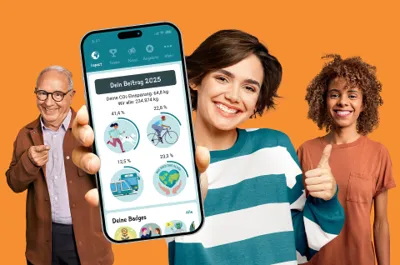
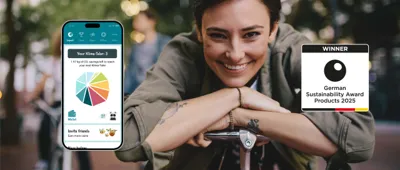
EnergyMunichJoin the Munich Klima-Taler teamJoin the Munich Klima-Taler team Munich joined the nationwide Klima-Taler network in 2025. Download the app, join the Landeshauptstadt München team, and collect one Taler per five kilograms of avoided CO₂ from walking, cycling, transit, and energy savings. Redeem at partner shops and services listed in the app. Businesses can join the marketplace for free because the city pays the licence. What you can do - Download Klima-Taler and join the Munich team via Re:think München - Log green trips and household meters, then spend Taler at partners on the in-app map - Shops: offer a reward through Munich Business (no fee) - This is a different city from the existing Frankfurt Klima-Taler listing How it works You can start without giving a name or email. Savings are credited to the city team you join. Offers change, so treat the app marketplace as the live list. Why it matters Playful rewards make everyday climate choices visible and keep spend with neighbourhood partners.gamificationmobilityenergy +2
Starter ideaEnergyViennaBalcony Solar NetworkBulk-buy balcony solar with your neighbours Connect with people in your building to research plug-in panels, share mounting help, and walk the Vienna registration steps together before anyone plugs in. What you can do - Host a roof or courtyard info session so neighbours compare kit specs side by side - Read the Wiener Netze balcony rules and register your Kleinsterzeugungsanlage (up to 800 W) before operating - Check the city balcony-module notes: Vienna does not subsidise balcony kits; city grants target fixed plants over 1 kWp with their own metering point - If your building wants to share rooftop generation beyond plug-in kits, book free energy-community advice from the Klima- und Innovationsagentur Wien (templates also at energiegemeinschaften.gv.at) How it works Austria treats plug-in balcony kits as Kleinsterzeugungsanlagen (max 800 W). Wiener Netze has two weeks after registration to check or swap the meter; Schuko / Schutzkontaktstecker connections are not allowed. After that, households on the same facade can split delivery and mounting. Larger shared plants belong in an Energiegemeinschaft, not a balcony kit. Vendor-neutral detail also lives at erneuerbare-energie.wien. Why it matters Collective buying lowers cost and fear of the unknown. Neighbours who compare kits and paperwork together are the ones who actually get panels on the railing.solarenergycollective
EnergyTallinnHelp Tallinn reach climate neutralityClimate-neutral city by design Tallinn’s green transformation puts climate neutrality at the centre: compact urban space, cleaner energy in buildings, and a shift to sustainable transport and circular resource use across the whole city. What you can do - Choose walking, cycling, or transit for everyday trips; support district energy-efficiency programmes where you live. - Join public consultations on climate and mobility plans linked from the strategy site. Why it matters Neighbourhood-level habits add up when the city also upgrades buildings, transit, and waste systems toward net-zero goals.climateenergylocal
EnergyFrankfurtEarn Klima-Taler for everyday climate wins in FrankfurtEarn Klima-Taler for everyday climate wins in Frankfurt Frankfurt joined the nationwide Klima-Taler network in late 2025. The app tracks CO₂ you avoid by cycling, riding transit, saving energy, or shopping mindfully, then awards one digital Klima-Taler for every five kilograms saved. Tokens can be redeemed for local discounts, free museum visits, or pool entry as partner offers grow. Since June 2026, BäderBetriebe Frankfurt accept seven Klima-Taler for one free swim per month (basic time slot at some Erlebnisbäder). What you can do - Download the app and join the Stadt Frankfurt am Main team (city announcement) - Log green trips and household energy readings to watch your savings add up - Redeem Taler at growing local partners: Palmengarten, Historisches Museum, sports clubs, shops, and Frankfurter Bäder - Compete in monthly city, school, or workplace challenges across the Rhine-Main region - Own a shop or venue? Register free rewards at admin.klima-taler.com (contact: klima-taler@stadt-frankfurt.de) How it works The Klimareferat implements a city-council decision to make everyday climate choices visible. You can start without a heavy signup flow; the app estimates CO₂ savings and shows what the community achieves together. Redemption options in Frankfurt are still expanding, while nearby Klima-Taler cities already offer pool and café perks you can browse for inspiration. Why it matters Playful rewards help residents notice how small habits stack into city-scale reductions, and local partners gain visibility for supporting the transition.gamificationmobilityenergy +2
EnergySão PauloInvite SENAI to map energy savings on your factory floorInvite SENAI to map energy savings on your factory floor PotencializEE brings SENAI specialists into small and medium industrial plants to find cheaper, cleaner kilowatt-hours. GIZ coordinates with Brazil's Ministry of Mines and Energy. The programme began in São Paulo and now reaches partner states including Minas Gerais, Paraná, Rio Grande do Sul, and Santa Catarina. What you can do - Inscreva sua indústria for a free SENAI pre-diagnosis visit at your plant - Walk the shop floor with the specialist: compressed air, boilers, heat pumps, refrigeration, and motors often hide quick wins - If the pre-diagnosis shows strong potential, take the subsidised deeper diagnosis (about 60% of that step's cost on published pages) and follow credit pathways (FINEP, Desenvolve SP guarantee fund where eligible) - Pass the signup link to neighbouring industrial SMEs in your cluster so the whole district gets leaner together How it works Register online. SENAI contacts eligible industrial SMEs (revenue and headcount caps are on the signup page), schedules a plant visit, and lists concrete savings measures. This pathway is for workplaces, not households. Why it matters Factories that measure and trim energy waste keep more money in the business and put cleaner production on the neighbourhood map.efficiencyfactorysenai +2
Join inEnergyWashington DCGreen Power PartnershipVoluntary green power for organisations and communities The Green Power Partnership encourages organisations to buy certified green power as a way to reduce the environmental impacts of purchased electricity. Hundreds of partners voluntarily purchase billions of kilowatt-hours of renewable electricity annually. What you can do - Encourage your school, co-op, or faith community to join as a Green Power Partner - Start a neighbourhood campaign for municipal facilities to switch to certified renewable supply - Use EPA resources to compare green power products in your utility territory How to participate - Review enrolment steps at Green Power Partnership - Track partner lists to find replicable models from similar organisations Why it matters Aggregated voluntary demand signals markets and councils to expand renewable generation, a community lever beyond individual rooftop solar.green-powerrenewablespartnership +2
EnergyWashington DCRE-Powering America's LandCommunity solar on brownfields and former landfills RE-Powering America's Land encourages renewable energy development on current and formerly contaminated sites, landfills, and mine sites when aligned with community vision. EPA identifies site potential and provides resources for communities, developers, and local governments. What you can do - Map brownfields or closed landfills in your county and propose community solar feasibility studies - Bring neighbours into planning so reuse projects reflect local priorities - Partner with municipalities to screen sites using EPA RE-Powering tools How to participate - Start with RE-Powering America's Land - Engage your local brownfield coordinator or environmental justice group Why it matters Repurposing degraded land for clean energy avoids greenfield sprawl and can fund remediation while lowering bills for nearby residents.brownfieldssolarlandfill +2
EnergyWashington DCAgSTAR biogas recoveryFarm-community energy from livestock waste AgSTAR promotes biogas recovery systems to reduce methane emissions from livestock waste. Anaerobic digesters can produce renewable energy while delivering agricultural and community co-benefits. What you can do - Connect local farmers interested in digesters with AgSTAR technical assistance - Advocate for community biogas projects that share energy benefits with nearby residents - Learn feasibility criteria before proposing a digester in your watershed How to participate - Explore case studies and tools at AgSTAR - Host a farm tour or workshop with extension agents and AgSTAR resources Why it matters Rural methane reduction can fund local energy resilience when communities co-design projects with farmers rather than treating digesters as distant industrial assets.biogasagriculturemethane +2
EnergyWashington DCSmartWay Transport PartnershipCleaner freight through voluntary efficiency SmartWay is a public-private partnership between EPA and the freight industry that helps shippers, carriers, and logistics companies improve fuel efficiency and reduce emissions. What you can do - Ask local businesses and municipalities to ship goods only with SmartWay carriers - Advocate for clean freight policies in your city's climate action plan - Support warehouse districts transitioning to electric yard equipment alongside SmartWay partners How to participate - Review partner lists and tools at SmartWay - Encourage regional logistics hubs to enrol and publish efficiency metrics Why it matters Freight pollution concentrates near ports and industrial corridors. Community pressure on shippers accelerates cleaner supply chains that neighbours breathe every day.freighttransportefficiency +2
VolunteerEnergyBrusselsFFRes: Fast and Fair Renewables task forceYouth-led advocacy for equitable renewables rollout FFRes (Fast and Fair Renewables) is a youth task force within the European Youth Energy Network (EYEN) that builds solutions at the intersection of young people and the energy transition. The programme won the European Climate Fund Award 2025 (E.ON foundation) for combining advocacy with practical policy work on fair renewables deployment. What you can do - Join EYEN as a volunteer and contribute to FFRes working groups on fair renewables - Follow FFRes outputs for replicable advocacy patterns your city or campus group can adapt - Connect local community-energy projects with EYEN's European network for visibility and peer learning How to participate - Apply via Join as a Volunteer on the EYEN site - Check open positions for solution-building and advocacy roles Why it matters Renewables expansion must be fast and fair. A youth-led task force that documents what works, and amplifies it across European capitals, gives local builders a template for equitable community energy.renewablesyouthadvocacy +2
CommunityBrusselsEnergy Transition Careers CompassDiscover clean-energy careers across Europe The Energy Transition Careers Compass is a digital platform developed by EYEN with tech partner Green Jobs Tree. It helps young people map skills, training paths, and job opportunities in the clean-energy sector, from community energy to grid modernisation. What you can do - Explore career pathways matched to your interests (engineering, policy, community organising, trades) - Use the compass to plan skills development before applying to local energy programmes - Share the tool with schools and youth groups in your city How to participate - Visit the Careers Compass via EYEN projects - Pair exploration with EYEN volunteer roles to gain practical experience Why it matters The energy transition needs builders at every skill level. A youth-focused careers map lowers the barrier from curiosity to paid work in local clean-energy projects.careersyouthskills +2
LearnCommunityBrusselsOpenPolicy Europe civic engagementUnderstand EU energy policy, then act locally OpenPolicy Europe is an EYEN project that helps young citizens navigate European policy landscapes and take informed civic action. It bridges Brussels-level energy debates with what residents can advocate for in their own municipalities. What you can do - Use OpenPolicy Europe to learn how EU clean-energy policies affect your city - Organise a local reading group or workshop using the platform's materials - Connect municipal climate plans with EU frameworks your council can access How to participate - Explore the project via EYEN, Our Projects - Join EYEN as a member organisation or volunteer to co-develop civic tools Why it matters Energy transition succeeds when citizens know which levers exist, local, national, and EU. OpenPolicy Europe turns abstract policy into actionable civic literacy.policycivicyouth +2
VolunteerEnergyBrusselsYoung Energy Consumers programmeYouth voice on fair energy access and consumer rights The Young Energy Consumers project places young people at the centre of debates about energy affordability, consumer protection, and fair access to clean technologies. EYEN coordinates peer learning between youth organisations across Europe. What you can do - Bring youth consumer perspectives into your local energy cooperative or municipal advisory board - Host a workshop on energy bills, efficiency, and rights using EYEN materials - Apply to EYEN volunteer roles focused on consumer advocacy How to participate - Learn more via EYEN, Our Projects - Contact EYEN at info@youthenergy.eu for partnership with local youth groups Why it matters Vulnerable households bear the highest energy burdens. Programmes that train young advocates create lasting local capacity for fair energy access.consumersyouthaffordability +2
VolunteerCommunityBrusselsCovenant of Mayors for Climate and EnergyLocal authorities committing to climate-neutral cities The Covenant of Mayors for Climate and Energy brings together local and regional authorities committed to cutting emissions, improving resilience, and expanding access to affordable clean energy. Close to 11 000 signatories develop sustainable energy and climate action plans in a joint effort to limit global warming. What you can do - Ask your municipality whether it has signed the Covenant and request a public progress report - Join or start a neighbourhood group that feeds input into your city's climate action plan - Volunteer with local climate assemblies linked to Covenant implementation How to participate - Explore signatory cities via Covenant of Mayors - Contact your city council sustainability office to propose concrete community projects Why it matters Cities drive most of Europe's energy use. When residents hold signatory councils accountable, national climate targets become neighbourhood action.citiesclimatemayors +2
EnergyBrusselsSmart Cities Marketplace Explore-Shape-DealMatch community-scale smart-city projects with support The Smart Cities Marketplace is the European hub for practical knowledge on sustainable urban mobility, efficient buildings, citizen-focused services, and integrated energy infrastructure. Its Explore-Shape-Deal process has matched roughly 130 projects with financing opportunities exceeding €615 million in private investment. What you can do - Explore case studies and replicate proven smart-city patterns in your municipality - Submit a local district or building project through the marketplace matchmaking process - Connect community energy or mobility pilots with marketplace advisors How to participate - Visit Smart Cities Marketplace and use Explore-Shape-Deal resources - Partner with your city innovation office to register a pilot project Why it matters Community-scale pilots need visibility and finance. A European marketplace lowers the barrier from local experiment to funded replication.smart-citiesmarketplacefinance +2
LearnEnergyBrusselsHorizon Europe 100 climate-neutral citiesMission cities chart the path to 2030 climate neutrality In April 2022, 112 cities were selected for the Horizon Europe mission on 100 climate-neutral and smart cities by 2030. Participating cities prepare climate city contracts covering governance, transport, energy, construction, and recycling, with 53 cities awarded an EU Mission Label as of October 2024. What you can do - If you live in a mission city, join public consultations on the climate city contract - Advocate for community energy and active mobility measures in your city's mission roadmap - Share replicable lessons from labelled cities with your local council How to participate - Check whether your city is listed at Climate-neutral and smart cities mission - Attend mission-city open days and citizen workshops Why it matters Mission cities are innovation hubs. Resident participation in contract design ensures fairness and keeps transitions community-owned.missionclimate-neutralcities +2
EventCommunityBrusselsYoung Energy Ambassadors programmeYouth voices shaping EU clean-energy policy The Young Energy Ambassadors initiative engages 18-35-year-olds from the EU, EEA, and Ukraine who are passionate about the clean energy transition. Each year a cohort of 30 ambassadors promotes EU energy policies among peers and represents youth at the European Sustainable Energy Week (EUSEW). What you can do - Apply to become a Young Energy Ambassador when calls open each spring - Host a local EUSEW side event featuring ambassador materials - Bring youth energy perspectives into your community council or campus group How to participate - Follow the programme via Energy and youth and EUSEW - The 2026 cohort begins its mandate at EUSEW, 9-11 June 2026 Why it matters Intergenerational fairness requires structured youth participation, not token consultation. Ambassadors create a pipeline from local action to EU policy dialogue.youthambassadorsEUSEW +2
EnergyParisFrance: Energy Sobriety (Sobriété Énergétique)Collective energy saving with joy, not austerity France's Sobriété Énergétique campaign encourages households and organisations to reduce energy use through practical, shared actions: lowering demand while maintaining comfort and solidarity during price shocks. What you can do - Adopt sobriety tips that focus on heating, lighting, and standby power - Organise building-level challenges with neighbours and share results - Pair personal actions with advocacy for building retrofits in your arrondissement How to participate - Use national sobriety guides distributed through municipalities and utilities - Connect local efforts with France's wider efficiency and climate programmes Why it matters Sobriety framed as collective care: not sacrifice: builds trust during crises and opens the door to deeper retrofits.energy sobrietyefficiencyFrance +2
CommunityNew DelhiIndia: Mission LiFE (Lifestyle for Environment)Community habits for responsible consumption Mission LiFE (Lifestyle for Environment), launched at COP26, promotes mindful consumption across seven themes: water, energy, waste, e-waste, single-use plastics, sustainable food, and healthy lifestyles. Campaigns include Plant 4 Mother tree planting and Clean Coast Safe Sea coastal action. What you can do - Join Eco clubs in schools: over 1.4 million schools participate - Plant trees through Plant 4 Mother and track community totals - Adopt LiFE-aligned product choices as Eco-mark rules expand demand for efficient goods How to participate - Connect with local Mission LiFE coordinators and Eco club networks - Organise neighbourhood clean-ups linked to Clean Coast Safe Sea Why it matters Mission LiFE links individual habits to measurable community outcomes: billions of trees planted through collective action since 2024.LiFEIndiaconsumption +2
Join inEnergyNew DelhiIndia: Go Electric campaignShift to EVs and efficient electric cooking India's Go Electric campaign promotes electric vehicles and electric cooking, with national targets, charging infrastructure investment, and consumer incentives including reduced taxes and modern efficient ceiling fan distribution. What you can do - Explore EV options and public charging maps in your city - Switch to induction cookstoves where grid power allows: 25–30% cost savings vs traditional methods reported - Join local ride-share or delivery co-ops transitioning fleets to electric How to participate - Use national Go Electric awareness resources and state-level EV policies - Advocate for charging in new buildings as codes require stations Why it matters Go Electric pairs mobility and cooking: two daily energy choices: with infrastructure that makes clean options affordable.electric-vehiclescookingIndia +2
VolunteerCommunityBarcelonaSpain: Barcelona Energy Advice PointsOne-stop shops for efficiency and energy poverty relief Since 2017, Barcelona has run 11 Energy Advice Points integrated into municipal housing offices. Multidisciplinary teams help residents: especially vulnerable households: upgrade home efficiency, access social tariffs, and avoid supply disconnections. What you can do - Walk in to an Energy Advice Point for personalised bill and retrofit guidance - Volunteer or train as an energy advisor through the programme's employment pathway - Replicate the one-stop-shop model in your city using Barcelona's public documentation How to participate - Visit a municipal Energy Advice Point in Barcelona - Cities outside Spain can adapt the model with IEA case-study evidence for funding pitches Why it matters Over 37 000 people assisted in 2024 alone; 96% of households receiving bill relief were in social vulnerability. Advice points turn abstract efficiency policy into door-level care.adviceBarcelonaefficiency +2