Programme nearbyCommunityBrusselsStart a mutual-aid time bank in your neighbourhoodTurn an hour of help into an hour you can receive TimeBanks connect neighbours who trade skills without cash: one hour of tutoring, transport, or garden work earns one hour you can spend when you need support. The model builds trust block by block. What you can do - Browse the TimeBank map and directory for an existing circle near you - Read how TimeBanking works and list three skills you could offer this week - Use the start a TimeBank guide if your area has no active group yet How it works Members log hours when they give or receive help. Coordinators run orientations, match offers to requests, and keep the ledger fair: every hour counts the same, whether you fix a bike or cook a meal. Why it matters Time banks keep care local when wages and prices squeeze households. They reward contributions mainstream markets overlook.time-bankmutual-aidskills +2
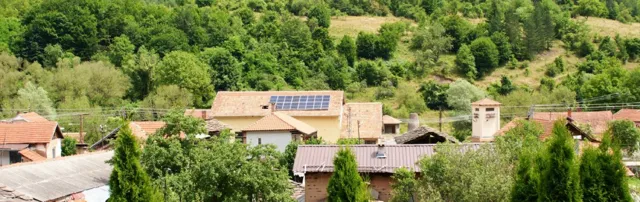
Programme nearbyEnergyBelgradeFund village solar that buys doors and mowersLet cooperative kilowatt-hours pay for what the village asks for Solarna Stara placed small cooperative solar plants in Temska and Dojkinci on Stara Planina with Energetska zadruga Elektropionir. First-year revenue bought village doors and a grass trimmer; members decide the next purchases for twenty-five years of shared income. What you can do - Study the Solarna Stara results story on Klima 101 before pitching a co-op plant in your village - Join or contact Elektropionir-style cooperatives and the energy communities portal for Serbian legal pathways - Propose that your municipality host a public roof for a citizen array with transparent revenue votes How it works Citizens and organisations co-finance modest rooftop plants. Sale of electricity returns to a village fund; assemblies pick practical upgrades instead of abstract dividends. Why it matters Six kilowatts can feel small on a grid chart and huge when they buy the door everyone needed.Solarna StaraElektropionircooperative +2
Programme nearbyCommunityHamburgPatient capital for African social startups in HamburgPatient capital for African social startups in Hamburg Impacc is a non-profit based in Germany, Kenya, and Ethiopia that uses business tools for social change in Hamburg. Instead of funding aid projects that end when the money runs out, Impacc invests donations in locally rooted, ecologically sustainable businesses, then reinvests any exit returns into the next cohort of founders. What you can do - Study Impacc's Cycle of Growth: due diligence on outstanding (often female) founders, patient capital to de-risk growth, and board support that helps companies attract follow-on investment - Adapt the model for your city: a revolving community fund that backs neighbourhood enterprises rather than one-off grants - Share the gap narrative with local policymakers: entrepreneurs who are too business-like for traditional aid but not yet bankable for commercial investors How it works (paraphrased) 1. Enable founders, select innovative models with job-creation potential in underserved markets 2. De-risk capitalization, scale proven ideas with venture building and patient capital 3. Perpetuate growth, minority stakes, board seats, and reinvestment of exits into new rounds (Impacc does not keep profits) Why it matters Development engines should keep running. A non-profit that treats social startups like long-term community assets gives builders a bridge between charity and venture capital.patient-capitalsocial-enterpriseAfrica +2
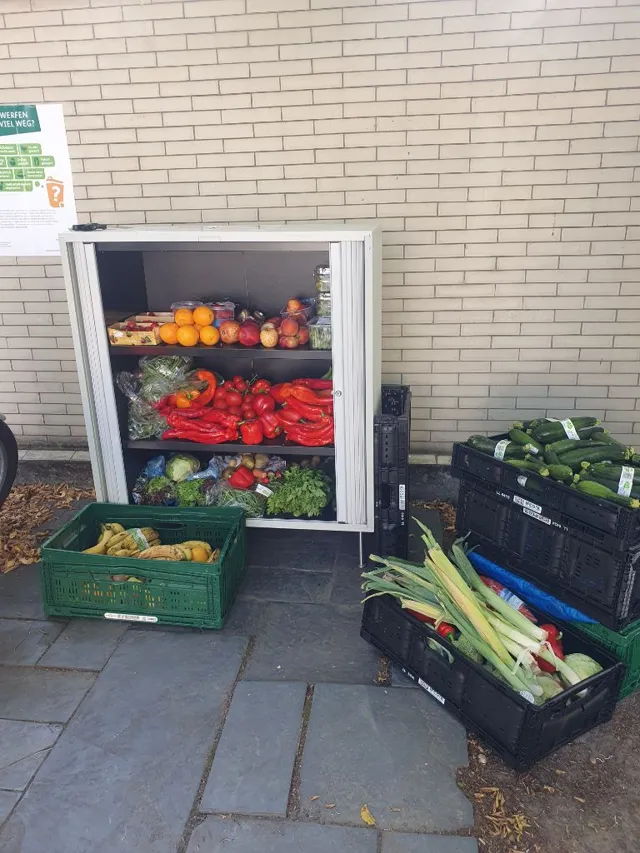
Programme nearbyFood & GardenHalle (Saale)Share rescued food at a Fairteiler in Halle (Saale)Share rescued food at a Fairteiler in Halle (Saale) foodsharing Halle (Saale) has been saving leftover food since 2013. Public Fairteiler shelves and fridges let anyone leave or take still-good food. Volunteers keep the spots clean, talk to donors, and run extra actions against waste. What you can do in Halle (Saale) - Walk up to the Fairteiler at Hordorfer Straße 4 (Hühnermanhattan, second gate) or at the Franckesche Stiftungen (between house 30 and 31) - Leave surplus food or take what you will eat - Support the volunteer crew that restocks and removes spoiled items How to join A Fairteiler is a public fridge or shelf. Anyone may use them. Volunteers need safe, clean sites, so new cupboards take time. Follow the deinhalle portrait for how the local group works. Why it matters in Halle (Saale) Halle keeps edible food in circulation between neighbours instead of the bin. Find more community projects in Halle (Saale). Good to know - Do I need to prove income? No. Anyone may leave or take still-good food at a Fairteiler. - Where are the cupboards? Hordorfer Straße 4 (Hühnermanhattan, second gate) and the Franckesche Stiftungen between house 30 and 31.hallefairteilerfoodsharing +1
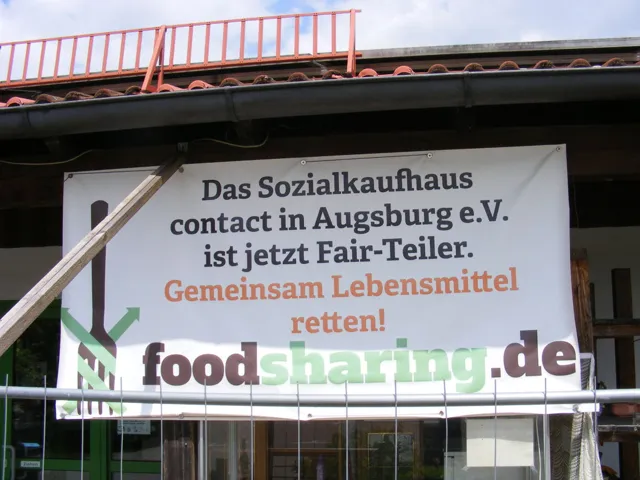
Programme nearbyFood & GardenAugsburgShare food at the contact Fairteiler in AugsburgShare food at the contact Fairteiler in Augsburg contact in Augsburg e.V. hosts a Foodsharing shelf and fridge inside its Sozialkaufhaus. You may take food for your own kitchen or leave what you will not use. House hours are Monday to Saturday, 10:00 to 18:00 (last entry 17:45). What you can do in Augsburg - Visit contact Foodsharing for the Fairteiler rules - Take or leave food during opening hours - Read more on foodsharing.de if you want to join the wider network How to join The Fairteiler sits at Im Tal 8. It is a walk-up shelf and fridge, not a soup-kitchen queue. Anyone may use the Fairteiler food, whatever their income. Why it matters in Augsburg Augsburg gets a daily, indoor place where leftover food keeps moving between neighbours. Find more community projects in Augsburg. Good to know - What are the opening hours? Monday to Saturday, 10:00 to 18:00 (last entry 17:45). - Is it a soup kitchen? No. It is a walk-up shelf and fridge; anyone may take or leave food for home use.augsburgfairteilerfoodsharing +1
Programme nearbyCommunityHamburgCopy Mietshäuser Syndikat ownership in HamburgCopy Mietshäuser Syndikat ownership in Hamburg The Mietshäuser Syndikat helps self-organised house projects in Germany: residents form a cooperative, the syndicate takes a stake, and the building stays permanently out of speculative resale in Hamburg. What you can do - Read how the Syndikat model withdraws homes from the private market - Contact the network if your group is forming a self-organised house project - Visit an existing project to see how residents share costs, repairs, and decision-making How it works A founding group finds a building, sets up a limited-liability housing cooperative, and invites the syndicate to co-own a non-voting share. That lock keeps the property community-held even when individual flats change hands. Why it matters Collective ownership turns rent pressure into shared stewardship. Neighbours who control their block can invest in efficiency, childcare, and common rooms together.housingcooperativecollective +2
Programme nearbyCommunityBrusselsKeep homes permanently affordable with a Community Land TrustSeparate the land from the home so prices stay fair Community Land Trust Brussels builds permanently affordable owner-occupied housing: residents buy the home, the trust keeps the land, and resale formulas stop speculation from pricing out the next family. What you can do - Explore CLTB housing projects across Molenbeek and Anderlecht - Register for a mandatory candidate-homeowner info session to learn purchase terms - Read how residents co-design and manage their buildings day to day How it works CLTB acquires land, develops homes with resident input, and attaches a ground lease that caps resale gains. Low-income households gain stability without feeding a rising market. Why it matters When land stays in community hands, affordability survives gentrification. Residents build skills in self-management that outlast any single sale.housingland-trustaffordable +2
Programme nearbyCommunityBrusselsLaunch a worker cooperative through Solidarity Economy EuropeShare ownership and decisions at work RIPESS Europe links worker cooperatives, social enterprises, and mutual-aid networks that put solidarity ahead of shareholder profit. Worker co-ops let employees own and steer the business together. What you can do - Read the Solidarity Economy in Europe overview and map co-ops near you - Connect with RIPESS Europe member networks for start-up advice - Visit a local worker cooperative and ask how they handle hiring, surplus, and one-member-one-vote governance How it works Founders draft bylaws for democratic control, equal voice, and shared risk. Sector federations help with legal setup, training, and inter-cooperation so small co-ops can bid for contracts together. Why it matters Worker ownership keeps wealth with the people who create it. It opens stable jobs for workers excluded from extractive firms.cooperativeworkersolidarity +2
Programme nearbyCommunityParisMap and grow a local solidarity economy networkLink co-ops, time banks, and fair-trade groups on one map Solidarity economy networks across Europe share tools, swap suppliers, and run joint fairs so residents can find ethical work, housing, and food in one place. RIPESS Europe coordinates more than 40 national and sectoral members. What you can do - Browse RIPESS Europe members and note groups active in your city - Host a neighbourhood mapping evening: list co-ops, mutual-aid circles, and community finance projects on one wall - Propose a joint stall or repair swap with two groups that have never met How it works Territorial networks run annual assemblies, share case studies, and connect practitioners with policy allies. Local chapters translate the model into street-level events: markets, open days, and skill shares. Why it matters Visibility helps people choose solidarity providers over anonymous chains. Cross-linking turns isolated projects into an ecosystem neighbours can navigate.cooperativeworkersolidarity +2
Programme nearbyCommunityLondonExchange skills with hOurworld community time creditsLog an hour given, spend an hour received hOurworld hosts hundreds of time banks where members record service hours and spend credits locally: tutoring, transport, pet care, or admin help, all valued equally. What you can do - Search the hOurworld directory map for a circle near London - Read TimeBanking 101 and post your first offer - Follow the start a TimeBank steps if you want to launch a new group with neighbours How it works Providers and receivers agree on a task, log hours in the platform, and build credit balances. Community funds seed new members so exchanges start before anyone runs a deficit. Why it matters Equal-hour accounting dignifies unpaid care and odd-hour skills. Networks activate quickly after floods or heat waves because trust already exists.time-bankmutual-aidskills +2
Programme nearbyCommunityFrankfurtCopy Mietshäuser Syndikat ownership in FrankfurtCopy Mietshäuser Syndikat ownership in Frankfurt More than 200 projects across Germany use the Mietshäuser Syndikat pattern: a local cooperative buys the building, the syndicate holds a blocking share, and resale stays community-controlled for generations in Frankfurt. What you can do - Study the Syndikat brochure and FAQ with your housing group - List buildings at risk of rent hikes and invite owners to a community purchase conversation - Pair with legal advisers who understand cooperative housing statutes in your region How it works Groups form a Gesellschaft or equivalent cooperative, raise member shares, and negotiate finance with ethical banks. The syndicate's minority stake prevents privatisation without resident consent. Why it matters The model travels: Frankfurt, Leipzig, and port towns now host syndicated houses. Each success makes the next purchase less lonely.housingcooperativecollective +2
Programme nearbyCommunityRemscheidShare food on Tuesday at Neuer Lindenhof in RemscheidShare food on Tuesday at Neuer Lindenhof in Remscheid Foodsharing Remscheid and volunteers at Neuer Lindenhof give rescued food to anyone who comes. There is no means test. Integreat listed a public hand-out every Tuesday 12:00 to 13:00 at Lindenhofstraße 20, with waiting numbers from 11:30 (page updated 20 May 2026). Confirm it still runs before you travel. What you can do - Arrive for the Tuesday window at Lindenhofstr. 20, 42857 Remscheid - Take what you can use. No income check - Write foodsharing-remscheid@gmx.de if you want to help sort or hand out food How it works Foodsavers deliver surplus. Lindenhof volunteers give it away. Solarpunker does not run the stall. If the Tuesday slot has paused, ask the address on Integreat. Why it matters A weekly public table keeps edible food in the neighbourhood instead of the bin, and it does not ask people to prove need.foodsharingsurplus +1
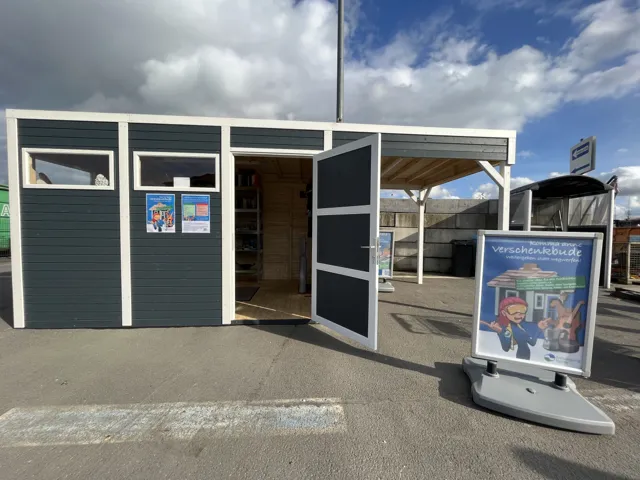
Programme nearbyRepair & ReuseHerneLeave or take goods at Verschenkbude in HerneLeave or take goods at Verschenkbude in Herne Entsorgung Herne placed a Verschenkbude on the Wertstoffhof at Meesmannstraße 2: a small hut where residents leave intact, clean, working household goods and others take them for free. What you can do - Drop books, CDs, toys, games, crockery, kitchen tools, hobby kit, small sports gear, bikes, or scooters that still work - Browse the shelves for a second-hand find during yard hours - Hand working small electronics to the acceptance desk, not into the hut. Offer bulky furniture on the city's swap and gift market instead How it works The hut is not a dump. No plants, no textiles (clothes, bedding, blankets), no shoes, no stuffed animals, and no unopened cardboard boxes. Use the Wertstoffhof opening hours. Office contact hours at Südstraße 10 are separate. Why it matters A free hut on the recycling yard gives intact objects a neighbour instead of a skip.reuseswaprecycling +1