Programme nearbyCommunityBrusselsStart a mutual-aid time bank in your neighbourhoodTurn an hour of help into an hour you can receive TimeBanks connect neighbours who trade skills without cash: one hour of tutoring, transport, or garden work earns one hour you can spend when you need support. The model builds trust block by block. What you can do - Browse the TimeBank map and directory for an existing circle near you - Read how TimeBanking works and list three skills you could offer this week - Use the start a TimeBank guide if your area has no active group yet How it works Members log hours when they give or receive help. Coordinators run orientations, match offers to requests, and keep the ledger fair: every hour counts the same, whether you fix a bike or cook a meal. Why it matters Time banks keep care local when wages and prices squeeze households. They reward contributions mainstream markets overlook.time-bankmutual-aidskills +2
Programme nearbyEnergyParisFrance: Energy Sobriety (Sobriété Énergétique)Collective energy saving with joy, not austerity France's Sobriété Énergétique campaign encourages households and organisations to reduce energy use through practical, shared actions: lowering demand while maintaining comfort and solidarity during price shocks. What you can do - Adopt sobriety tips that focus on heating, lighting, and standby power - Organise building-level challenges with neighbours and share results - Pair personal actions with advocacy for building retrofits in your arrondissement How to participate - Use national sobriety guides distributed through municipalities and utilities - Connect local efforts with France's wider efficiency and climate programmes Why it matters Sobriety framed as collective care: not sacrifice: builds trust during crises and opens the door to deeper retrofits.energy sobrietyefficiencyFrance +2
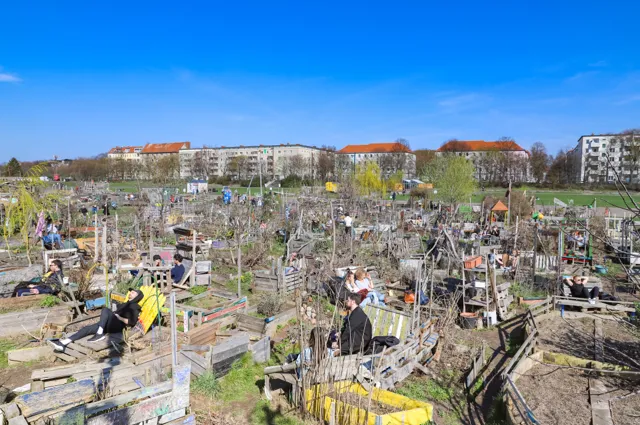
Programme nearbyFood & GardenBerlinJoin a solidarity farming group (Solawi) near you in BerlinJoin a solidarity farming group (Solawi) near you in Berlin Solidarische Landwirtschaft (Solawi) groups connect households with nearby farms: members pay a fair share, help on field days, and collect weekly veg boxes together in Berlin. What you can do - Search the Solawi finder for a group near Berlin or your city - Visit an open day, meet the farmers, and ask about volunteer shifts and box sizes - Bring a friend: many groups need a few more members to balance the season plan How it works You sign a seasonal contract with the farm collective, not a supermarket supplier. Work days might include planting, weeding, or packing boxes; harvest shares reflect what the field actually yields. Why it matters Solawi keeps small farms on the land and gives city residents a direct stake in how food is grown.solawicsafarm +2
Programme nearbyCommunityHamburgCopy Mietshäuser Syndikat ownership in HamburgCopy Mietshäuser Syndikat ownership in Hamburg The Mietshäuser Syndikat helps self-organised house projects in Germany: residents form a cooperative, the syndicate takes a stake, and the building stays permanently out of speculative resale in Hamburg. What you can do - Read how the Syndikat model withdraws homes from the private market - Contact the network if your group is forming a self-organised house project - Visit an existing project to see how residents share costs, repairs, and decision-making How it works A founding group finds a building, sets up a limited-liability housing cooperative, and invites the syndicate to co-own a non-voting share. That lock keeps the property community-held even when individual flats change hands. Why it matters Collective ownership turns rent pressure into shared stewardship. Neighbours who control their block can invest in efficiency, childcare, and common rooms together.housingcooperativecollective +2
Programme nearbyCommunityBrusselsLaunch a worker cooperative through Solidarity Economy EuropeShare ownership and decisions at work RIPESS Europe links worker cooperatives, social enterprises, and mutual-aid networks that put solidarity ahead of shareholder profit. Worker co-ops let employees own and steer the business together. What you can do - Read the Solidarity Economy in Europe overview and map co-ops near you - Connect with RIPESS Europe member networks for start-up advice - Visit a local worker cooperative and ask how they handle hiring, surplus, and one-member-one-vote governance How it works Founders draft bylaws for democratic control, equal voice, and shared risk. Sector federations help with legal setup, training, and inter-cooperation so small co-ops can bid for contracts together. Why it matters Worker ownership keeps wealth with the people who create it. It opens stable jobs for workers excluded from extractive firms.cooperativeworkersolidarity +2
Programme nearbyCommunityParisMap and grow a local solidarity economy networkLink co-ops, time banks, and fair-trade groups on one map Solidarity economy networks across Europe share tools, swap suppliers, and run joint fairs so residents can find ethical work, housing, and food in one place. RIPESS Europe coordinates more than 40 national and sectoral members. What you can do - Browse RIPESS Europe members and note groups active in your city - Host a neighbourhood mapping evening: list co-ops, mutual-aid circles, and community finance projects on one wall - Propose a joint stall or repair swap with two groups that have never met How it works Territorial networks run annual assemblies, share case studies, and connect practitioners with policy allies. Local chapters translate the model into street-level events: markets, open days, and skill shares. Why it matters Visibility helps people choose solidarity providers over anonymous chains. Cross-linking turns isolated projects into an ecosystem neighbours can navigate.cooperativeworkersolidarity +2
Programme nearbyCommunityLondonExchange skills with hOurworld community time creditsLog an hour given, spend an hour received hOurworld hosts hundreds of time banks where members record service hours and spend credits locally: tutoring, transport, pet care, or admin help, all valued equally. What you can do - Search the hOurworld directory map for a circle near London - Read TimeBanking 101 and post your first offer - Follow the start a TimeBank steps if you want to launch a new group with neighbours How it works Providers and receivers agree on a task, log hours in the platform, and build credit balances. Community funds seed new members so exchanges start before anyone runs a deficit. Why it matters Equal-hour accounting dignifies unpaid care and odd-hour skills. Networks activate quickly after floods or heat waves because trust already exists.time-bankmutual-aidskills +2
Programme nearbyCommunityFrankfurtCopy Mietshäuser Syndikat ownership in FrankfurtCopy Mietshäuser Syndikat ownership in Frankfurt More than 200 projects across Germany use the Mietshäuser Syndikat pattern: a local cooperative buys the building, the syndicate holds a blocking share, and resale stays community-controlled for generations in Frankfurt. What you can do - Study the Syndikat brochure and FAQ with your housing group - List buildings at risk of rent hikes and invite owners to a community purchase conversation - Pair with legal advisers who understand cooperative housing statutes in your region How it works Groups form a Gesellschaft or equivalent cooperative, raise member shares, and negotiate finance with ethical banks. The syndicate's minority stake prevents privatisation without resident consent. Why it matters The model travels: Frankfurt, Leipzig, and port towns now host syndicated houses. Each success makes the next purchase less lonely.housingcooperativecollective +2
Programme nearbyCommunityLeipzigSupport Fairmined Credits for Corazones de OroFund inclusion in Pacarní with one gram of impact Fairever offers Fairmined Credits: each credit stands for one gram of responsibly mined gold from Iquira, Colombia. The physical gold stays in the local market; the credit pays extra impact. Most of the price supports Corazones de Oro, an inclusion project for children and youth with special needs in Pacarní, with a share for the Alliance for Responsible Mining. What you can do - Buy a Fairmined Credit on the Fairever site (Corazones de Oro section) - Share the project with a makers’ group or repair café that wants a solidarity action without shipping gold - Follow Alliance for Responsible Mining for more ASM community programmes How it works Credits separate metal trade from social impact funding. Miners sell gold locally; buyers fund verified community work and ARM’s standards work. Why it matters Solidarity can travel farther than a parcel — one credit ties European makers to a named Colombian community project.fairminedcreditssolidarity +2
Programme nearbyRepair & ReuseFrankfurtNeighbourhood free store (Umsonstladen) in FrankfurtNeighbourhood free store (Umsonstladen) in Frankfurt Die Teilerei runs a solidarity free store in Frankfurt Niederrad: drop off clean things you no longer need, browse what neighbours shared, no price tags. What you can do - Visit during open hours to give or take clothes, housewares, books, and everyday goods - Volunteer after an onboarding session: email kontakt@teilerei-ffm.de, reach out on Instagram, or ask staff in store - Use the in-store Taschenstation so visitors without a bag can skip disposables - Support running costs via betterplace.org if you want to chip in financially How it works The collective is self-organised, solidarity-based, and resource-conscious. Newcomers meet the team at onboarding dates, then choose shifts in the shop, events, or neighbourhood outreach. Why it matters Goods stay in the neighbourhood instead of incineration, and every visit builds mutual trust on the block.umsonstladenfree-storesharing +4
Programme nearbyRepair & ReuseLeipzigSwap and upcycle at inab’s Westend hubGive items a second life before the bin At inab (Jugend, Bildung und Beruf) in Leipzig’s Westend, circular economy is everyday practice: a Tauschladen for clothing and household goods, plus a Solidarische Recyclingstation for wood, metal, lamps, and small furniture. What you can do Tauschladen - Mon-Fri 9:00-11:30 and 12:30-16:00 (closed last Friday of the month) - Clothing, shoes, toys, books, small appliances - Up to five items can be taken without swapping; on-site repair and laundry prep for textiles Solidarische Recyclingstation - Mon-Fri 13:00-16:00: email photos and a phone number before bringing bulky material - Accepts: wood offcuts, pallets, lamps, small furniture, small electrics - Not accepted: white goods, large sofas, sanitary fittings Access note Take-away from the recycling station may require proof of Leipzig-Pass, ALG II, social assistance, child benefit, or housing benefit: see the project page. Why it matters Neighbourhood swap and recycling stations keep usable goods and materials local instead of in bulk waste streams.swapupcyclingsolidarity