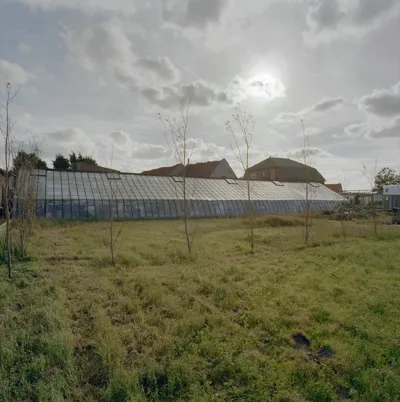
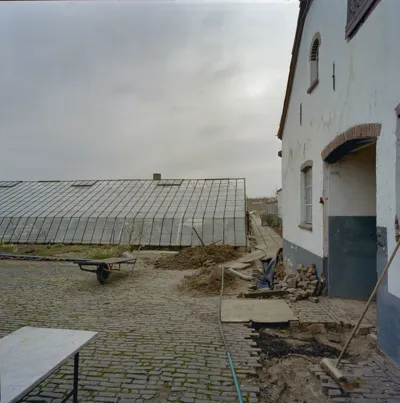
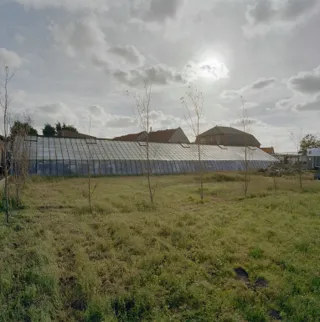
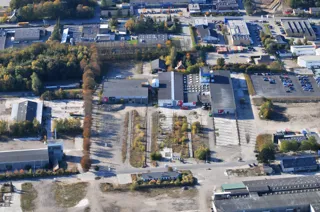
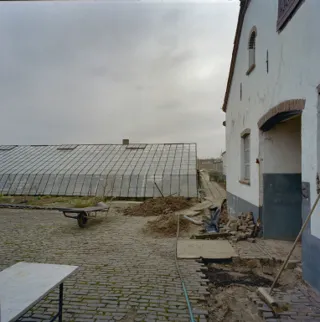
VolunteerRepair & ReuseBerkel en RodenrijsAsk for circular demolition in BerkelAsk for circular demolition in Berkel In Berkel en Rodenrijs, ask Mustang for a circular demolition that reuses greenhouse glass and steel. The firm keeps a yard on Noordeindseweg where those parts are checked, cleaned, and stored for a second build. What you can do in Berkel - Ask Mustang to list what is in a greenhouse before anyone cuts it down (Mustang circular demolition) - Ask which glass, gutters, and steel can go into another greenhouse - Ask how parts move from the site to the yard, and what is cleaned there - If a part cannot be used again, ask how it will be handled - Read the contact page and ask them to walk the site with you How to join Mustang is a company, not a volunteer club. You contact them when a greenhouse or a building needs to come down. They start with a list of materials and a report of what still has value. Then they take the reusable parts off, move them to the yard at Noordeindseweg 346A, and check them. Most parts later go into another greenhouse. Partners named on the page are Kerklaan Greenhouses and Kerklaan Horti Materials. The page does not say the yard is a walk-in shop. Ask before you visit. Why it matters in Berkel Glasshouse country is full of frames that still have years in them. A careful take-down keeps that glass and steel in the district instead of ordering a full new kit. You also get a plain list of what is worth keeping before the machines arrive. Find more community projects in Berkel en Rodenrijs. Good to know - What does circular demolition mean here? Mustang describes it as taking a greenhouse or a building apart so the materials are used again at a high quality. They also take away the parts that cannot have a second life. - Where is the yard? Noordeindseweg 346A, 2651 LM Berkel en Rodenrijs, the Netherlands. Use the contact page rather than arriving unannounced. - Who is it for? Growers and owners who want a greenhouse taken down and the good parts built again. The page does not list a price.demolitiongreenhousesalvage +2
VolunteerRepair & ReuseRoskildePlan circular demolition in RoskildePlan circular demolition in Roskilde In Roskilde, you can see how circular demolition was planned at Musicon, the old concrete works the city bought in 2003. A pre-demolition audit of Hall 12 listed what could be used again before the selective take-down began. What you can do in Roskilde - Walk the Musicon district and see old factory ground turned into a neighbourhood (CityLoops on circular demolition) - Ask the city to require a material audit before the next public building comes down - Read the two CityLoops guides: one for the audit, one for selective demolition - If you own a building, use the Copenhagen Værdibyg guide to set a reuse aim before you tender the job (Værdibyg circular demolition booklet) - Ask designers to look at the audit while they draw the next building How to join Musicon is a public district of about 200,000 square metres, a former concrete factory and gravel pit. The city did not lock it to one fixed plan. Projects grow step by step with residents, builders, and the municipality. Hall 12 was audited by Golder: a desk study, then a field study, then a list of how to handle each material, including a store of saved parts. You can walk the district. You cannot join the Hall 12 works as a volunteer day. The audit is the pattern to copy. Why it matters in Roskilde An early list stops good doors, timber, and steel from being treated as rubbish. CityLoops found that contractors do not add this audit on their own after the contract is signed, so the city has to ask for it in the tender. A Danish client can follow the same idea with the Værdibyg steps: set an aim, survey resources, and write the handling rules into the tender. Find more community projects in Roskilde. Good to know - What is a pre-demolition audit? It is a list of materials, how much there is, how clean they are, and whether they can be used again, recycled, or must be treated as harmful. CityLoops says reuse is hard to promote without that list. - When should the first clear-out happen? As soon as the last user has left, before damp and vandalism spoil loose items.demolitionauditsalvage +2
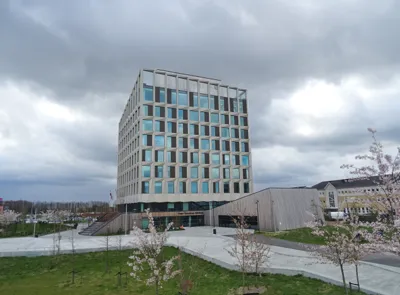
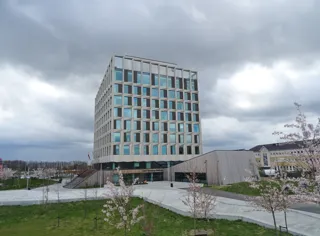
Repair & ReuseHøje-TaastrupUse circular demolition rules in TaastrupUse circular demolition rules in Taastrup In Taastrup, circular demolition rules were written so the old city hall would not be smashed by default. The 1980 hall at Bygaden 2 is being kept and turned into homes. That saves more than sorting rubble. What you can do in Taastrup - Walk by Bygaden 2 and see the hall that stayed up (Høje-Taastrup on the old hall) - Ask your council to require a resource map before it sells a building for demolition - Ask for at least 80 percent by weight of clean materials to be reused, recycled, or recovered if a part must come off - Look at the new city hall, which was built with a recycled concrete foundation (CityLoops handbook) - If you pay for a demolition in Denmark, set a reuse aim with the Værdibyg guide before the tender (Værdibyg booklet) How to join The municipality sold the old hall to IKANO with circular conditions. A pre-demolition audit had to map harmful materials and parts worth keeping. Selective demolition applied to parts that could not be used in place. The later plan keeps the hall, about 17,000 square metres, and turns it into about 200 homes, with about 130 townhouses around it. The old heat plant on the grounds is planned as a neighbourhood house of about 200 square metres. The grounds are about 100,000 square metres. Staff left in February 2023 for a new hall at Rådhusstræde 1. This is not an open-house tour. You can see the building from the street. Why it matters in Taastrup Keeping the hall avoids about 20,000 tonnes of new raw material and about 2,000 tonnes of carbon dioxide compared with knocking it down, according to the CityLoops account. A resident in Copenhagen can reach Høje-Taastrup by suburban rail and see a real case of "do not demolish if the building can still work". Find more community projects in Høje-Taastrup. Good to know - What if some parts still come off? The updated rules still ask for selective demolition of those parts, and they count a structure that stays standing as fully kept in use. - Where is the new hall? It is at Rådhusstræde 1. The photo shows that tower. The old hall is at Bygaden 2.demolitionreusecity-hall +2
Repair & ReuseMikkeliSort circular demolition piles in MikkeliSort circular demolition piles in Mikkeli In Mikkeli, circular demolition sorted more than 99 percent of two public buildings so concrete, bricks, and a few special parts stayed in use. The sites were Pankalampi health centre and Tuukkala hospital, both taken down in 2021 under CityLoops rules. What you can do in Mikkeli - Ask the city to put the same sorting list into the next demolition contract (CityLoops in Mikkeli) - Ask for a pre-demolition audit early enough that designers can use the parts - Ask for a separate contract to clear furniture and easy parts before the heavy machines start - Visit Mikkelipuisto to see granite slabs that came from the Tuukkala yard - Read the CityLoops selective demolition guide and the Mikkeli report before you copy the contract How to join The buildings are gone, so there is no live tour. Pankalampi stood at Kiiskinmäenkatu in the 50130 district: a 1976 health centre with a 1992 extension, a 1979 dental clinic, and a 1992 garage, about 9,855 square metres. Tuukkala hospital, empty since 2010, had a 1960 part and a 1970s part. Ahosen Palvelut from Jyväskylä took Pankalampi. Terra Infra from Kouvola took Tuukkala. Building Services ran the contracts. Miksei and Xamk wrote a model contract other cities can reuse. Why it matters in Mikkeli The contract names the piles, and someone checks during the job. At Tuukkala, Metsäsairila recorded 9,019 tonnes, of which more than 8,000 tonnes were concrete and brick, and only 58 tonnes were mixed waste. The city also saved a fire escape from Pankalampi for a new day care, sold the backup power plant, and let a vocational project turn oak boards into a table top and cutting boards at ESEDU. Find more community projects in Mikkeli. Good to know - Why strip the building before the excavators? In Mikkeli, empty public buildings can sit for years. A separate strip does not need a demolition permit, so local firms can start earlier. - Where did special pieces go? A fire escape from Pankalampi went to a new day care. Granite slabs from the Tuukkala yard went to Mikkelipuisto.demolitionsortingconcrete +2
Repair & ReuseApeldoornSee circular demolition in ApeldoornSee circular demolition in Apeldoorn In Apeldoorn, circular demolition on Griffiersveld put old concrete pavers back on the same street. You can still walk that residential road and see a street that kept its own stones. What you can do in Apeldoorn - Walk Griffiersveld in the Matenveld district and look at the reused pavers (CityLoops on circular demolition) - Ask the city to measure a road before it is rebuilt, and to store the counts in the city road list - Ask for road materials to be listed on a matching tool such as DuSpot when the city has them to spare - Ask the contractor to reuse pavers on the same street before anyone orders new ones - If you farm or build nearby, ask whether spare pavers from a city job are available How to join The Griffiersveld job is finished, so you take part by walking the street and by asking the city to keep the rule. Before the works, the city measured how much road material there was and how good it was. Apeldoorn first thought of building its own online market, then chose DuSpot, a Dutch list other cities already use for street works. By the end of the project the city agreed to publish its materials there, including what sits in municipal depots. You do not need a ticket to walk the street. Check the city or DuSpot if you want to take materials. Why it matters in Apeldoorn A brick road is simpler than a hospital, and that is why it is a good first copy. The piles are concrete, bricks, tiles, ceramics, stone, and soil. When those stay in the neighbourhood, the next street does not start from a quarry. CityLoops noted that eager city staff and the contractor did more for reuse than a brand-new website. Find more community projects in Apeldoorn. Good to know - What is circular demolition on a road? Crews lift the pavers instead of crushing them into mixed waste, then lay the sound ones again. - Where is the street? Griffiersveld, Matenveld, Apeldoorn, in the 7327 DV postcode area.demolitionpaversstreet +2
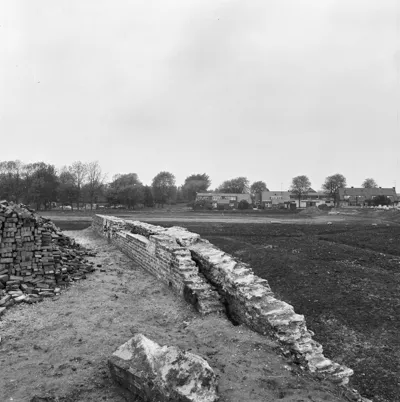
LearnRepair & ReuseBredaFind circular demolition salvage in BredaFind circular demolition salvage in Breda In Breda, you can follow a circular demolition that saved concrete, steel, and bricks from a 23,000 square metre hall at Prinsenhil. The parts came off the old building in a way that lets a new hall, a path, or a home renovation use them again. What you can do in Breda - Read how the hall at Prinsenhil was taken apart, then ask a builder to copy those steps (WDP circular demolition story) - Look for salvaged beams, roof panels, insulation, clinker, and steel from this kind of job - Ask for the old concrete floor to stay on site as a new base or a site road - Ask the city to write selective taking-apart into the next demolition tender - If you renovate, ask for used parts before you order new ones How to join This is a company practice, not an open workshop. WDP and the demolition firm Gubbels described the job in February 2023. The first phase was about 90 percent done. A new building on that part was expected by the end of that year. A second taking-apart was due in early 2024, with a new building later that year. Each taking-apart was expected to last eight to nine weeks. Do not walk onto a live site. Check the WDP page for what the firms say now about salvage sales. Why it matters in Breda A neighbour who renovates can use a beam or a brick that already exists. On this job the concrete floor stayed on the ground as a base and as a road, so it did not have to leave by truck. Stone was planned for green noise walls along walking and training paths, which gives plants and birds a place beside the path. Find more community projects in Breda. Good to know - What is circular demolition in Breda? Crews unscrew and sort the hall so materials stay useful. The old habit was to smash everything. This way takes more time, and a crew sometimes needs to learn the new steps. - Can I buy the old parts? Gubbels sold most parts to people who renovate. Regular buyers saw the list first. Leftovers were offered on Marktplaats.demolitionsalvagebricks +2