Programa por pertoFood & GardenCologneAdquira uma Biotonne: feche o ciclo da em CologneAdquira uma Biotonne: feche o ciclo da em Cologne Cerca de 40% do que vai parar na lixeira cinza de resíduos é lixo orgânico compostável. Em Niehl, esse lixo é queimado: isso gera custos, emissões de CO₂ e perda de matéria fértil que poderia retornar aos parques e jardins na forma de “torffreier Kölner Kompost”. O que você pode fazer - Peça ao seu locador o “Biotonne” marrom gratuito (os inquilinos podem usar o modelo de cartão postal d Zero WasteKöln disponível na página do projeto). - Forre a lixeira com jornal, mantenha-a à sombra e evite usar sacos plásticos “compostáveis”: eles exigem condições industriais que as usinas de Colônia não oferecem. - Compre o “Kölner Kompost” ou “Blumenerde” nos pontos de venda da AWB/AVG (a Associação defende a criação de mais pontos de coleta nos bairros). Por que isso é importante A coleta seletiva de resíduos orgânicos é obrigatória na Alemanha desde 2015, mas as famílias de Colônia ainda precisam solicitar a lixeira. Menos resíduos orgânicos no lixo residual pode significar uma lixeira cinza menor (e mais barata).compostcircularlocal
Programa por pertoFood & GardenMunichLeve Münchner Erden para casa a partir de em MunichLeve Münchner Erden para casa a partir de em Munich Münchner Erden transformam os bio-resíduos separados da cidade em substratos sem turfa e composto de qualidade no Erdenwerk Freimann. O composto base vem da planta de fermentação seca do AWM ao lado: entrada regional, saída regional. O que você pode fazer - Compre a granel ou em sacos no Erdenwerk Freimann (Werner-Heisenberg-Allee 62) - Retire Münchner Bio-Erde ou Qualitätskompost nos Wertstoffhöfe participantes e na Halle 2 em Pasing - Comece ou melhore um composteiro doméstico com dicas de jardim do AWM e compre solo para lacunas - Encomende volumes maiores a granel ou entrega pelo serviço Erden do AWM ao renovar canteiros Como funciona O AWM mistura composto certificado com substratos selecionados no local. Os produtos seguem orientação RAL e servem jardins, varandas e recuperação de gramado: prova de que a biomassa de Munique retorna como solo vivo. Por que importa Composto urbano sem turfa preserva turfeiras e fecha o ciclo entre sua biomassa e os tomates na varanda.compostcircularpeat-free +1
Programa por pertoRepair & ReuseLjubljanaBled STICT: desafio sobre a economia circular no setor têxtil com especialistas internacionaisReduzindo a pegada têxtil do turismo No âmbito do projeto da UE STICT (Têxteis Sustentáveis no Turismo Circular), a EBM firmou parceria com o município de Bled e especialistas internacionais em sustentabilidade para explorar soluções para os impactos ambientais e econômicos dos têxteis em um destino com intenso movimento turístico. A iniciativa investiga o abastecimento sustentável, a coleta e a reutilização de têxteis em hotéis, locais de eventos e empresas locais na região de Bled. O que o projeto explora - Pegada ambiental da roupa de cama de hotéis e dos têxteis utilizados em eventos - Sistemas de coleta e redistribuição de têxteis reutilizáveis ou recicláveis - Medidas políticas que os municípios podem adotar para mudar suas práticas de aquisição Como participar - Siga a EBM para ficar por dentro das oficinas e descobertas à medida que o projeto STICT publicar seus resultados - Se você administra um local de eventos próximo a Bled, entre em contato com a EBM para saber sobre a participação no projeto-piloto de auditoria têxtil Por que isso é importante Destinos turísticos geram uma quantidade desproporcional de resíduos têxteis. A participação de Bled no STICT significa que as conclusões se aplicam diretamente a uma das regiões mais visitadas da Eslovênia: tornando as lições replicáveis para todas as cidades turísticas europeias.textilescirculartourism +1
Programa por pertoCommunityFlorenceCapannori: uma das primeiras cidades da Europa a receber a certificação “Zero Waste”O pioneiro que mostrou que isso era possível Capannori, um município com cerca de 45.000 habitantes próximo a Lucca, na Toscana, é uma das primeiras cidades da Europa a obter a certificação “Zero Waste”. Há décadas, o município se propôs a provar que uma comunidade poderia reduzir drasticamente o volume de resíduos enviados para aterros e incineração: não por meio de soluções tecnológicas, mas por meio da separação na fonte, reutilização e envolvimento da comunidade. O que Capannori construiu - Coleta seletiva porta a porta como padrão para todas as residências - Um Centro de Pesquisa Zero Waste (Centro Capannori Rifiuti Zero) que estuda falhas no design de produtos e defende a responsabilidade do produtor - Compostagem e coleta de têxteis integradas à coleta de papel, vidro, metal e plásticos - Metas de redução de resíduos incorporadas ao planejamento municipal Por que isso é importante O modelo de Capannori não é fruto de riqueza ou de uma geografia privilegiada. É um modelo replicável: comece com metas ambiciosas de coleta seletiva, envolva os moradores desde o início e redirecione o orçamento destinado ao descarte para a prevenção. O resultado, certificado pela ZWE, inspirou dezenas de municípios italianos a seguirem o exemplo. Como participar - Visite ou entre em contato com Zero Waste Itália para saber como o modelo de Capannori pode ser adaptado ao seu município - Siga o centro de pesquisa de resíduos zero de Capannori para acessar publicações e ferramentas de advocacycertifiedcircularpioneer +2
Programa por pertoCommunityZagrebIlha de Krk: o primeiro conjunto de ilhas da Europa certificado pelo programa “Zero Waste”Sete municípios: um modelo comum A Ilha de Krk tornou-se a primeira ilha da Europa a receber a certificação “Zero Waste” quando todos os seus sete municípios — Krk, Baška, Dobrinj, Malinska-Dubašnica, Omišalj, Punat e Vrbnik — obtiveram, em conjunto, a certificação “Zero Waste” por meio da empresa de gestão de resíduos PONIKVE. O resultado: 60% de coleta seletiva em média e apenas 73 kg de resíduos residuais por morador por ano, em comparação com a média nacional croata de 247 kg. O que torna Krk um modelo replicável - Separação seletiva porta a porta integrada ao sistema de resíduos já existente na ilha - Certificação conjunta entre vários municípios de pequeno porte que compartilham um único operador - Agricultores e hotéis participam dos mesmos circuitos de coleta que as residências - Foco contínuo na prevenção e reutilização de resíduos: não apenas uma melhor triagem Como participar - Se o seu município tiver parceria com a PONIKVE, pergunte sobre o voluntariado na coleta ou na compostagem - Visite ou siga a Zelena Akcija para apoiar a campanha nacional em prol da certificação “Zero Waste” Por que isso é importante Krk mostra que ilhas turísticas — onde os picos sazonais de resíduos são mais difíceis de gerenciar — ainda podem atingir as metas d Zero Waste. O modelo já está inspirando outras comunidades costeiras em toda a Croácia e além.islandcertifiedrecycling +2
Programa por pertoRepair & ReuseBrusselsSTICT: replicando iniciativas de prevenção de resíduos têxteis em BruxelasUma cidade que aprende com os melhores programas têxteis da Europa Bruxelas participa do projeto STICT (Inovação Têxtil Sustentável e Transição Circular), que reúne modelos de melhores práticas para a prevenção e gestão de resíduos têxteis e trabalha com cidades para implementá-los e replicá-los. Zero Waste A Bélgica lidera a parceria de Bruxelas, levando estratégias baseadas em evidências às autoridades locais e às empresas. O que o projeto faz - Documenta os modelos mais eficazes de coleta, reparo e revenda de têxteis de toda a Europa - Trabalha com as autoridades de Bruxelas para implementar medidas escaláveis de prevenção de resíduos têxteis - Oferece um kit de ferramentas de replicação para que outras cidades possam adotar abordagens comprovadas sem precisar começar do zero - Conecta oficinas locais de conserto, eventos de troca de roupas e organizações de upcycling à rede têxtil circular da cidade Como participar - Moradores de Bruxelas: encontrem oficinas locais de reparo de têxteis e eventos de troca de roupas por meio do Zero Waste Bélgica - Empresas do setor têxtil e varejistas em Bruxelas: entrem em contato com Zero Waste Bélgica para participar do modelo circular do STICT - Outros municípios: solicitem o kit de ferramentas de replicação do STICT para adaptar a abordagem de Bruxelas ao seu contexto Por que isso é importante Os têxteis estão entre os fluxos de resíduos que mais crescem na Europa. A adesão de Bruxelas ao STICT significa que uma cidade densamente povoada e na vanguarda da moda está construindo infraestrutura para reparo e reutilização: enviando um sinal para o setor e oferecendo aos moradores alternativas reais ao descarte.textilesreuseprevention +2
Programa por pertoCommunityWarsawNormas para resíduos costeiros do Mar Báltico: a criação de um modelo replicável a partir de UstkaTransformando as práticas de gestão de resíduos de uma cidade portuária do Mar Báltico em um modelo nacional A Associação Polonesa “Zero Waste” trabalha em parceria com a gmina (município) de Ustka, na costa do Mar Báltico, com foco em padrões de gestão de resíduos adequados a ambientes costeiros: detritos da pesca, picos de volume durante a temporada turística e plástico marinho. O projeto visa desenvolver padrões replicáveis para municípios costeiros do Mar Báltico que outras cidades ao longo da costa possam adotar sem precisar começar do zero. O que o projeto envolve - Desenvolvimento de padrões de gestão de resíduos especificamente adequados a contextos costeiros - Colaboração com Ustka na gestão de redes fantasmas (veja a iniciativa linkada abaixo) - Compartilhamento de conhecimento com a Região da Pomerânia, que convidou a Associação para apoiar modelos de economia circular para os moradores - Documentação das práticas eficazes para que Darłowo, Kołobrzeg, Władysławowo e outras cidades do Báltico tenham uma estrutura pronta para uso Como participar - Ustka e municípios da costa do Báltico: entrem em contato com a Associação Polonesa“Zero Waste” para obter a estrutura de normas de resíduos costeiros - Moradores da costa: apoiem os programas locais de triagem de resíduos, especialmente no que diz respeito a detritos marinhos: separem os resíduos corretamente e denunciem locais de descarte ilegal próximos à costa - Comunidades pesqueiras: participem do programa de coleta de redes fantasmas para garantir que as redes que não estão mais em uso sejam encaminhadas para o fluxo correto de resíduos Por que isso é importante As cidades litorâneas enfrentam picos de resíduos que os turistas nunca veem no mapa, detritos da pesca, redes fantasmas e aumentos repentinos durante a temporada de verão. As normas de Ustka dão a todos os municípios do Báltico uma vantagem inicial, em vez de terem que reinventar o manual porto por porto.coastalcircularstandards +2
Programa por pertoCommunityKievPátio de Construção Circular de Kharkiv: reaproveitamento de resíduos de demolição próximo à linha de frenteDesperdício zero em uma cidade sob bombardeio Zero Waste Kharkiv: membro da Aliança “Zero Waste” da Ucrânia, está conduzindo a iniciativa Circular Construction Yard, que reutiliza resíduos de demolição gerados pelos bombardeios russos. Trabalhando próximo à linha de frente, a equipe documenta, recupera e encaminha materiais de construção reutilizáveis — tijolos, aço, madeira e entulho — para projetos de reparo e reconstrução, evitando que acabem em aterros sanitários e reduzindo a necessidade de materiais virgens. O que a iniciativa envolve - Identificar e documentar materiais reutilizáveis provenientes de edifícios demolidos - Coordenar com equipes de construção e reparo para encaminhar os materiais recuperados para projetos de reconstrução em andamento - Pesquisar a legislação ucraniana e da UE sobre resíduos de demolição para propor requisitos mais rigorosos de aquisição circular - Demonstrar que os princípios da economia circular são aplicáveis mesmo em condições de conflito ativo Por que isso é importante Toda cidade que se reconstrói após um desastre — seja um conflito, uma enchente ou um terremoto — enfrenta a mesma questão: devemos enviar para o aterro ou reutilizar? O Pátio de Construção Circular de Kharkiv está desenvolvendo uma metodologia que pode servir a qualquer cidade passando por uma reconstrução em grande escala, mesmo sob bombardeios. Como participar - Organizações internacionais que atuam na Ucrânia: entrem em contato com a Zero Waste Alliance Ukraine (ZWAU) para coordenar a logística de recuperação com o Circular Construction Yard - Pesquisadores e defensores de políticas públicas: a pesquisa jurídica da ZWAU sobre regulamentações de resíduos de demolição está disponível: apoiem a pressão por mandatos de compras circulares no plano de reconstrução pós-guerra da Ucrânia - Doadores e fundações: o programa opera com recursos limitados perto da linha de frente; o apoio direto permite sua continuidadedemolition-wastecircularwartime +2
Programa por pertoFood & GardenFrankfurtFeche o ciclo do composto de Frankfurt na RMBFeche o ciclo do composto de Frankfurt na RMB A RMB Rhein-Main Biokompost opera uma das plantas modernas de resíduos orgânicos da região para a FES Frankfurt. Restos de cozinha e de jardim fermentam em cerca de 21 dias em biogás e viram composto de qualidade em paralelo: energia para a rede e solo para o seu canteiro. O que você pode fazer - Carregue composto no Kofferraumservice (seg–sex 08:00–16:00, sáb 09:00–12:00) - Compre produtos de composto a granel ou ensacados na loja RMB no local - Planeje a visita em rmb-frankfurt.de (acesso atual pela Riederhofstraße) - Combine a retirada com compostagem doméstica ou comunitária para manter os orgânicos de Frankfurt nos canteiros locais Como funciona Moradores e jardineiros visitam Peter-Behrens-Str. 8 em Frankfurt-Ostend. A planta cobre suas necessidades energéticas e injeta eletricidade excedente na rede pública enquanto produz composto natural para jardins. Por que importa Quando resíduos orgânicos ficam no ciclo fechado, você evita importar turfa e vê de onde seu solo realmente vem: energia de quem constrói, não sacos anônimos.compostcircularlocal +1
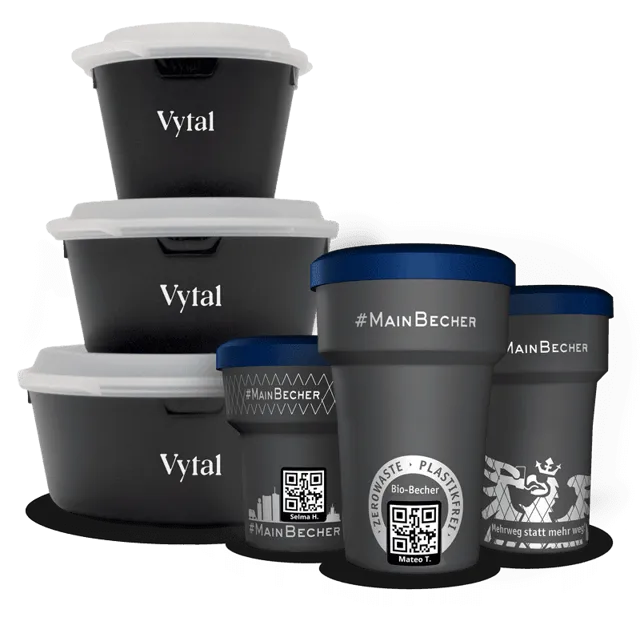
Programa por pertoRepair & ReuseFrankfurtRede de copos reutilizáveis e embalagens para em FrankfurtRede de copos reutilizáveis e embalagens para em Frankfurt Mapeie os cafés e quiosques que emprestam copos reutilizáveis e embalagens para viagem ao longo do rio e das ruas principais; um copo retornável vale mais do que uma montanha de copos descartáveis. O que você pode fazer - Use #MainMehrweg e #MainBecher para encontrar estabelecimentos participantes - Devolva os copos em qualquer ponto parceiro, não apenas onde você os pegou emprestados - Incentive as empresas locais a aderirem ao sistema, caso ainda não estejam listadas Por que isso é importante Os sistemas de reutilização só funcionam quando um número suficiente de pessoas devolve os copos; os líderes comunitários mantêm o ciclo em movimento.reusecircularlocal
Programa por pertoRepair & ReuseNairobiTijolos de resíduos plásticos da Gjenge MakersMateriais de construção a partir de resíduos plásticos triturados A Gjenge Makers (Nairóbi, Quênia) transforma resíduos plásticos em materiais de construção acessíveis, triturando e prensando o plástico descartado para produzir tijolos e pavers que, segundo a Impacc, são sete vezes mais resistentes e 50% mais leves que o concreto. O que você pode fazer - Adquira pavers ou tijolos para pavimentação comunitária, pátios de escolas ou caminhos de jardim - Organize campanhas de coleta de plástico no bairro para abastecer as empresas locais de reciclagem - Visite ou faça um tour pela oficina, quando possível, para conhecer as linhas de produção em pequena escala Como participar - Informe-se sobre produtos e parcerias de coleta por meio da página do portfólio da Gjenge Makers Por que isso é importante O lixo plástico se transforma em infraestrutura pública quando os espaços de criação combinam a coleta com engenharia de qualidade, com resistência testada, peso reduzido e custo acessível.plasticrecyclingbricks +2
Programa por pertoCommunityFlorenceProjeto-piloto “Zero Waste” na Toscana: 51 municípios traçando o caminho juntosUma rede regional de aprendizado mútuo Desde o início de 2023, a Zero Waste Itália vem conduzindo um programa piloto com 51 municípios da rede “Zero Waste” em toda a Toscana, apoiando-os na partilha de conhecimento, na identificação de obstáculos e no fortalecimento do caminho coletivo rumo à certificação “Zero Waste”. O programa piloto foi concebido para compreender, em grande escala: o que funciona e o que impede o avanço dos municípios, para que a ZWI possa aprimorar seu modelo de apoio à rede de 340 cidades da Itália. O que o programa piloto faz - Mapeia as taxas atuais de coleta seletiva, as lacunas de infraestrutura e as barreiras políticas em todos os 51 municípios - Facilita a aprendizagem entre pares entre os municípios que estão à frente e aqueles que ainda estão ganhando impulso - Produz resultados que a ZWI utiliza para aprimorar as ferramentas de apoio à rede nacional Como participar - Se você mora na Toscana, verifique se o seu município faz parte do projeto-piloto e participe de eventos abertos ao público ou consultas sobre metas de redução de resíduos - Entre em contato com a Zero Waste Itália se o seu município quiser aderir à rede regional Por que isso é importante Apoiar 340 municípios individualmente é insustentável. Projetos-piloto de agrupamentos regionais, como o da Toscana, são a forma pela qual o movimento ZW da Itália amplia sua expertise: fortalecendo cada comunidade da rede.networkpilotcircular +2