Programm in der NäheFood & GardenCologneHolen Sie sich eine Biotonne: Schließen Sie den in CologneHolen Sie sich eine Biotonne: Schließen Sie den in Cologne Etwa 40 % dessen, was in der grauen Restmülltonne landet, sind kompostierbare Bioabfälle. In Niehl werden diese verbrannt: Das kostet Geld, verursacht CO₂-Emissionen und führt zum Verlust von Nährstoffen, die als torffreier Kölner Kompost in Parks und Gärten zurückgeführt werden könnten. Was Sie tun können - Bitten Sie Ihren Vermieter um die kostenlose braune Biotonne (Mieter können die Postkartenvorlage von „Zero Waste“ Köln auf deren Projektseite nutzen). - Legen Sie die Tonne mit Zeitungspapier aus, stellen Sie sie in den Schatten und verzichten Sie auf „kompostierbare“ Plastiktüten: Diese benötigen industrielle Bedingungen, die die Kölner Anlagen nicht bieten. - Kaufen Sie „Kölner Kompost“ oder Blumenerde in den AWB/AVG-Verkaufsstellen (der Verein setzt sich für mehr Abholstellen in den Stadtteilen ein). Warum das wichtig ist Die getrennte Bioabfallsammlung ist in Deutschland seit 2015 verpflichtend, aber Kölner Haushalte müssen die Tonne noch beantragen. Weniger Bioabfall im Restmüll kann eine kleinere (und damit günstigere) graue Tonne bedeuten.compostcircularlocal
Programm in der NäheFood & GardenMunichMünchner Erden aus Bioabfällen mitnehmen in MunichMünchner Erden aus Bioabfällen mitnehmen in Munich Münchner Erden verwandeln getrennte Bioabfälle der Stadt in torffreie Pflanzsubstrate und Qualitätskompost im Erdenwerk Freimann. Der Basis-Kompost stammt aus der Trockenfermentationsanlage des AWM gleich nebenan: regional rein, regional raus. Was du tun kannst - Kaufe Sack- oder Schüttware im Erdenwerk Freimann (Werner-Heisenberg-Allee 62) - Hol Münchner Bio-Erde oder Qualitätskompost an teilnehmenden Wertstoffhöfen und in der Halle 2 in Pasing ab - Starte oder verbessere einen Hauskomposter mit AWM-Gartentipps und kaufe Erde für Lücken dazu - Bestelle größere lose Mengen oder Lieferung über den AWM-Erden-Service bei Beetumbau So funktioniert es Das AWM mischt zertifizierten Kompost mit ausgewählten Substraten vor Ort. Produkte sind RAL-orientiert und für Gärten, Balkone und Rasensanierung gedacht: Beweis, dass Münchens Braune Tonne als lebendige Erde zurückkommt. Warum das zählt Torffreier Stadtkompost schützt Moore und schließt den Kreislauf zwischen deiner Biotonne und den Tomaten auf dem Balkon.compostcircularpeat-free +1
Programm in der NäheRepair & ReuseLjubljanaBled STICT: Wettbewerb zum Thema Kreislaufwirtschaft in der Textilbranche mit internationalen ExpertenBekämpfung des textilen Fußabdrucks im Tourismus Im Rahmen des EU-Projekts STICT (Sustainable Textiles In Circular Tourism) hat EBM gemeinsam mit der Gemeinde Bled und internationalen Nachhaltigkeitsexperten nach Lösungen für die ökologischen und wirtschaftlichen Auswirkungen von Textilien in einem stark vom Tourismus geprägten Reiseziel gesucht. Die Initiative untersucht die nachhaltige Beschaffung, Sammlung und Wiederverwendung von Textilien in Hotels, Veranstaltungsorten und lokalen Unternehmen in der Region Bled. Was das Projekt untersucht - Ökobilanz von Hotelwäsche und Veranstaltungstextilien - Sammel- und Umverteilungssysteme für wiederverwendbare oder recycelbare Textilien - Politische Hebel, mit denen Kommunen ihre Beschaffung umstellen können So können Sie sich beteiligen - Folgen Sie EBM, um über Workshops und Erkenntnisse informiert zu werden, sobald das STICT-Projekt Ergebnisse veröffentlicht - Wenn Sie eine Veranstaltungsstätte in der Nähe von Bled leiten, erkundigen Sie sich bei EBM nach einer Teilnahme am Pilotprojekt zum Textilaudit Warum das wichtig ist Tourismusdestinationen verursachen unverhältnismäßig viel Textilabfall. Durch die Teilnahme von Bled am STICT-Projekt lassen sich die Erkenntnisse direkt auf eine der meistbesuchten Regionen Sloweniens übertragen, sodass die gewonnenen Erkenntnisse für jeden europäischen Ferienort übertragbar sind.textilescirculartourism +1
Programm in der NäheCommunityFlorenceCapannori: eine der ersten zertifizierten „Zero Waste“-Städte EuropasDer Vorreiter, der bewiesen hat, dass es möglich ist Capannori, eine Gemeinde mit rund 45.000 Einwohnern in der Nähe von Lucca in der Toskana, ist eine der ersten Städte Europas, die die Zertifizierung nach dem „Zero Waste“-Standard erhalten hat. Vor Jahrzehnten machte sie sich daran, zu beweisen, dass eine Gemeinde die Menge an Abfall, die auf Deponien und in Verbrennungsanlagen landet, drastisch reduzieren kann: nicht durch technische Lösungen, sondern durch Mülltrennung an der Quelle, Wiederverwendung und Bürgerbeteiligung. Was Capannori aufgebaut hat - Haus-zu-Haus-Mülltrennung als Standard für jeden Haushalt - Ein Forschungszentrum „Zero Waste“ (Centro Capannori Rifiuti Zero), das Mängel im Produktdesign untersucht und sich für die Herstellerverantwortung einsetzt - Kompostierung und Textilsammlung integriert neben Papier, Glas, Metall und Kunststoffen - In die kommunale Planung eingebettete Ziele zur Abfallreduzierung Warum das wichtig ist Das Modell von Capannori ist kein Ergebnis von Wohlstand oder besonderen geografischen Gegebenheiten. Es ist ein übertragbares Konzept: Man beginnt mit ehrgeizigen Zielen für die getrennte Sammlung, bindet die Einwohner frühzeitig ein und lenkt das Abfallbudget von der Entsorgung hin zur Vermeidung um. Das ZWE-zertifizierte Ergebnis inspirierte Dutzende italienischer Gemeinden, diesem Beispiel zu folgen. So können Sie sich engagieren - Besuchen Sie Zero Waste Italien oder nehmen Sie Kontakt auf, um zu erfahren, wie sich das Modell von Capannori für Ihre Gemeinde anpassen lässt - Folgen Sie dem Zero-Waste-Forschungszentrum von Capannori, um Publikationen und Instrumente zur Interessenvertretung zu erhaltencertifiedcircularpioneer +2
Programm in der NäheCommunityZagrebInsel Krk: Europas erster zertifizierter „Zero Waste“-InselverbundSieben Gemeinden: ein gemeinsames Modell Die Insel Krk wurde zur ersten zertifizierten „Zero Waste“-Insel Europas, als alle sieben Gemeinden – Krk, Baška, Dobrinj, Malinska-Dubašnica, Omišalj, Punat und Vrbnik – gemeinsam über das Abfallentsorgungsunternehmen PONIKVE die Zertifizierung „Zero Waste“ erhielten. Das Ergebnis: eine durchschnittliche Trennsammelquote von 60 % und nur 73 kg Restmüll pro Einwohner und Jahr – im Vergleich zum kroatischen Landesdurchschnitt von 247 kg. Was das Modell von Krk übertragbar macht - Haus-zu-Haus-Sammlung, integriert in das bestehende Abfallsystem der Insel - Gemeinsame Zertifizierung mehrerer kleiner Gemeinden, die sich einen Betreiber teilen - Landwirte und Hotels nehmen an denselben Abholrunden teil wie Haushalte - Kontinuierlicher Fokus auf Abfallvermeidung und Wiederverwendung: nicht nur bessere Mülltrennung So können Sie sich engagieren - Wenn Ihre Gemeinde mit PONIKVE zusammenarbeitet, erkundigen Sie sich nach Möglichkeiten für ehrenamtliches Engagement bei der Abfallsammlung oder Kompostierung - Besuchen oder folgen Sie Zelena Akcija, um die landesweite Zertifizierungsinitiative „Zero Waste“ zu unterstützen Warum das wichtig ist Krk zeigt, dass Tourismusinseln – wo saisonale Abfallspitzen am schwersten zu bewältigen sind – dennoch die Ziele der „Zero Waste“ erreichen können. Das Modell inspiriert bereits andere Küstengemeinden in ganz Kroatien und darüber hinaus.islandcertifiedrecycling +2
Programm in der NäheRepair & ReuseBrusselsSTICT: Übertragung von Maßnahmen zur Vermeidung von Textilabfällen in BrüsselEine Stadt, die von den besten Textilprogrammen Europas lernt Brüssel beteiligt sich am STICT-Projekt (Sustainable Textile Innovation and Circular Transition), das Best-Practice-Modelle für die Vermeidung und Bewirtschaftung von Textilabfällen zusammenstellt und gemeinsam mit Städten an deren Umsetzung und Übertragung arbeitet. Zero Waste Belgien leitet die Brüsseler Partnerschaft und stellt den lokalen Behörden und Unternehmen evidenzbasierte Strategien zur Verfügung. Was das Projekt leistet - Dokumentiert die effektivsten Modelle zur Sammlung, Reparatur und zum Wiederverkauf von Textilien aus ganz Europa - arbeitet mit den Brüsseler Behörden zusammen, um skalierbare Maßnahmen zur Vermeidung von Textilabfällen umzusetzen - stellt ein Toolkit zur Übertragung bereit, damit andere Städte bewährte Ansätze übernehmen können, ohne bei Null anfangen zu müssen - vernetzt lokale Reparaturwerkstätten, Kleidertauschbörsen und Upcycling-Organisationen im kreislaufwirtschaftlichen Textilnetzwerk der Stadt So können Sie sich engagieren - Brüsseler Einwohner: Finden Sie lokale Textilreparaturwerkstätten und Kleidertauschveranstaltungen über Zero Waste Belgium - Textilunternehmen und Einzelhändler in Brüssel: Wenden Sie sich an Zero Waste Belgium, um am STICT-Kreislaufmodell teilzunehmen - Andere Kommunen: Fordern Sie das STICT-Toolkit zur Umsetzung an, um den Brüsseler Ansatz an Ihre Gegebenheiten anzupassen Warum das wichtig ist Textilien gehören zu den am schnellsten wachsenden Abfallströmen in Europa. Der Beitritt Brüssels zu STICT bedeutet, dass eine dicht besiedelte, modebewusste Stadt eine Infrastruktur für Reparatur und Wiederverwendung aufbaut: Damit sendet sie ein Signal an die Industrie und bietet den Einwohnern echte Alternativen zur Entsorgung.textilesreuseprevention +2
Programm in der NäheCommunityWarsawAbfallstandards an der Ostseeküste: Entwicklung eines übertragbaren Modells auf der Grundlage von UstkaDie Abfallwirtschaft einer ostseeseitigen Hafenstadt als nationales Vorbild Der polnische Verein „Zero Waste“ arbeitet mit der Gemeinde (Gmina) Ustka an der Ostseeküste zusammen und konzentriert sich dabei auf Abfallwirtschaftsstandards, die auf Küstengebiete zugeschnitten sind: Fischereiabfälle, Spitzenbelastungen während der Touristensaison und Plastikmüll im Meer. Ziel des Projekts ist die Entwicklung übertragbarer Standards für Küstengemeinden an der Ostsee, die andere Städte entlang der Küste übernehmen können, ohne bei Null anfangen zu müssen. Was das Projekt umfasst - Entwicklung von Abfallwirtschaftsstandards, die speziell auf Küstengebiete zugeschnitten sind - Zusammenarbeit mit Ustka beim Umgang mit Geisternetzen (siehe verlinkte Initiative unten) - Wissensaustausch mit der Woiwodschaft Pommern, die den Verein eingeladen hat, Modelle der Kreislaufwirtschaft für die Einwohner zu unterstützen - Dokumentation bewährter Verfahren, damit Darłowo, Kołobrzeg, Władysławowo und andere Ostseestädte über einen vorgefertigten Rahmen verfügen So können Sie sich engagieren - Ustka und Gemeinden an der Ostseeküste: Wenden Sie sich an den polnischen Verband „Zero Waste“, um den Rahmen für Abfallstandards an der Küste zu erhalten - Anwohner an der Küste: Unterstützen Sie lokale Abfalltrennungsprogramme, insbesondere im Hinblick auf Meeresmüll: Trennen Sie Abfälle korrekt und melden Sie illegale Müllablagerungen in Küstennähe - Fischergemeinden: Beteiligen Sie sich am Einsammelprogramm für Geisternetze, um sicherzustellen, dass ausgediente Netze in den richtigen Abfallstrom gelangen Warum das wichtig ist Küstenstädte sehen sich mit Abfallspitzen konfrontiert, die Touristen auf der Landkarte niemals erkennen: Fischereimüll, Geisternetze und saisonale Anstürme im Sommer. Die Standards von Ustka verschaffen jeder baltischen Gemeinde einen Vorsprung, anstatt das Konzept Hafen für Hafen neu erfinden zu müssen.coastalcircularstandards +2
Programm in der NäheCommunityKievKreislaufbaustelle in Charkiw: Wiederverwendung von Abbruchabfällen nahe der FrontlinieNull Abfall in einer Stadt unter Beschuss Zero Waste Charkiw: Ein Mitglied der „Zero Waste“-Allianz in der Ukraine betreibt die Initiative „Circular Construction Yard“, die Abbruchabfälle aus den russischen Bombardements wiederverwertet. Das Team arbeitet nahe der Front und dokumentiert, bergt und leitet wiederverwendbare Baumaterialien – Ziegel, Stahl, Holz und Bauschutt – an Reparatur- und Wiederaufbauprojekte weiter, wodurch diese Materialien nicht auf Deponien landen und der Bedarf an neuen Rohstoffen sinkt. Was die Initiative umfasst - Identifizierung und Dokumentation wiederverwendbarer Materialien aus abgerissenen Gebäuden - Koordination mit Bau- und Reparaturteams, um geborgene Materialien an laufende Wiederaufbauprojekte weiterzuleiten - Recherche zu ukrainischem und EU-Recht bezüglich Abbruchabfällen, um strengere Anforderungen an die kreislauforientierte Beschaffung vorzuschlagen - Nachweis, dass Prinzipien der Kreislaufwirtschaft auch unter aktiven Konfliktbedingungen anwendbar sind Warum das wichtig ist Jede Stadt, die nach einer Katastrophe – sei es ein Konflikt, eine Überschwemmung oder ein Erdbeben – wieder aufgebaut wird, steht vor derselben Frage: Deponieren oder wiederverwenden? Der „Circular Construction Yard“ in Charkiw entwickelt eine Methodik, die jeder Stadt dienen kann, die einen groß angelegten Wiederaufbau durchläuft – selbst unter Beschuss. So können Sie sich engagieren - In der Ukraine tätige internationale Organisationen: Kontaktieren Sie die Zero Waste Alliance Ukraine (ZWAU), um die Logistik der Materialrückgewinnung mit dem „Circular Construction Yard“ abzustimmen - Forscher und politische Akteure: Die juristischen Untersuchungen der ZWAU zu Vorschriften für Abbruchabfälle stehen zur Verfügung: Unterstützen Sie das Bestreben, Vorschriften für eine kreislauforientierte Beschaffung im ukrainischen Nachkriegs-Wiederaufbauplan durchzusetzen - Spender und Stiftungen: Das Programm wird mit begrenzten Mitteln nahe der Frontlinie durchgeführt; direkte Unterstützung ermöglicht dessen Fortführungdemolition-wastecircularwartime +2
Programm in der NäheFood & GardenFrankfurtFrankfurts Kompostkreislauf bei RMB schließenFrankfurts Kompostkreislauf bei RMB schließen RMB Rhein-Main Biokompost betreibt für die FES Frankfurt eine moderne Bioabfallanlage. Küchen- und Grünabfälle vergären in etwa 21 Tagen zu Biogas und werden parallel zu Qualitätskompost: Strom fürs Netz und Erde für dein Beet. Was du tun kannst - Lade Kompost im Kofferraumservice (Mo–Fr 08:00–16:00, Sa 09:00–12:00) - Kaufe lose oder verpackte Kompostprodukte im RMB Shop vor Ort - Plane deinen Besuch über rmb-frankfurt.de (aktueller Zugang über Riederhofstraße) - Kombiniere die Abholung mit Haus- oder Gemeinschaftskompostierung, damit Frankfurts Organics in lokalen Beeten bleiben So funktioniert es Anwohnerinnen und Gärtnerinnen besuchen Peter-Behrens-Str. 8 in Frankfurt-Ostend. Die Anlage deckt den eigenen Energiebedarf und speist Überschussstrom ins Netz ein, während natürlicher Kompost für Gärten entsteht. Warum das zählt Wenn Bioabfälle im Kreislauf bleiben, sparst du Torfimporte und siehst, wo deine Erde wirklich herkommt: Macher-Energie statt anonymer Säcke.compostcircularlocal +1
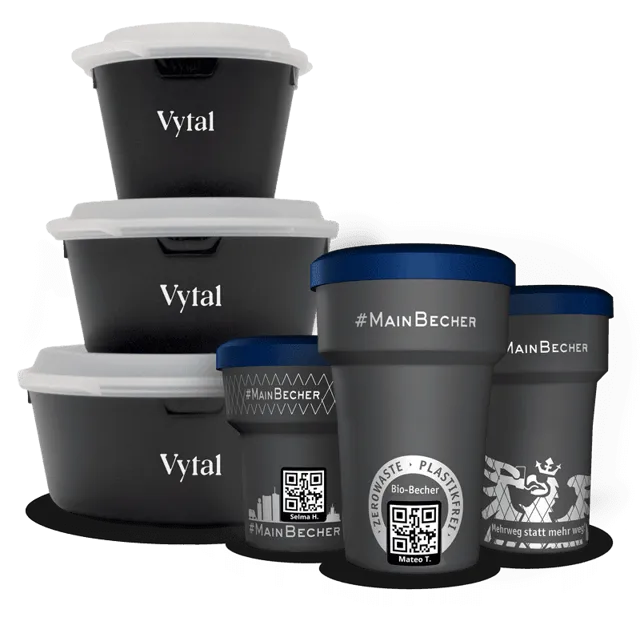
Programm in der NäheRepair & ReuseFrankfurtNetzwerk für Mehrwegbecher und Mitnahmeboxen in FrankfurtNetzwerk für Mehrwegbecher und Mitnahmeboxen in Frankfurt Erfassen Sie Cafés und Kioske entlang des Flusses und der Hauptstraßen, die Mehrwegbecher und Mitnahmeverpackungen verleihen – ein Mehrwegbecher ist besser als ein Berg Einweggeschirr. Was du tun kannst - Nutze #MainMehrweg und #MainBecher, um teilnehmende Lokale zu finden - Gib die Becher an jeder beliebigen Partnerstelle zurück, nicht nur dort, wo du sie ausgeliehen hast - Ermutige lokale Unternehmen, sich dem Pool anzuschließen, falls sie noch nicht aufgeführt sind Warum das wichtig ist Mehrwegsysteme funktionieren nur, wenn genügend Menschen die Becher zurückgeben – lokale Vorreiter halten den Kreislauf am Laufen.reusecircularlocal
Programm in der NäheRepair & ReuseNairobiGjenge Makers – Bausteine aus KunststoffabfällenBaumaterialien aus zerkleinertem Kunststoffabfall Gjenge Makers (Nairobi, Kenia) verwandelt Kunststoffabfälle in erschwingliche Baumaterialien, indem es ausrangierten Kunststoff zerkleinert und zu Ziegeln und Pflastersteinen presst, die laut Impacc siebenmal fester und 50 % leichter als Beton sind. Was Sie tun können - Beschaffen Sie Pflastersteine oder Ziegel für die Pflasterung in Ihrer Gemeinde, auf Schulhöfen oder für Gartenwege - Organisieren Sie Plastik-Sammelaktionen in Ihrer Nachbarschaft, um lokale Recyclingbetriebe zu versorgen - Besuchen Sie nach Möglichkeit die Werkstatt, um mehr über die Produktion in kleinem Maßstab zu erfahren So können Sie mitmachen - Informieren Sie sich über Produkte und Sammelpartnerschaften auf der Gjenge Makers-Portfolioseite Warum das wichtig ist Plastikmüll wird zu öffentlicher Infrastruktur, wenn Makerspaces die Sammlung mit solider Technik verbinden – auf Festigkeit geprüft, gewichtsreduziert und kostengünstig.plasticrecyclingbricks +2
Programm in der NäheCommunityFlorencePilotprojekt „Zero Waste“ in der Toskana: 51 Gemeinden gestalten gemeinsam den WegEin regionales Netzwerk, in dem man voneinander lernt Seit Anfang 2023 führt die Zero Waste, Italien ein Pilotprogramm mit 51 „Zero Waste“-Kommunen in der Toskana durch und unterstützt diese dabei, Wissen auszutauschen, Hindernisse zu erfassen und den gemeinsamen Weg zur „Zero Waste“-Zertifizierung zu stärken. Das Pilotprojekt soll in großem Maßstab Aufschluss darüber geben, was funktioniert und was die Gemeinden behindert, damit ZWI sein Unterstützungsmodell für das Netzwerk aus 340 Städten in Italien verbessern kann. Was das Pilotprojekt leistet - Erfasst die aktuellen Quoten der getrennten Sammlung, Infrastrukturlücken und politische Hindernisse in allen 51 Gemeinden - Fördert das gegenseitige Lernen zwischen Gemeinden, die bereits weiter fortgeschritten sind, und solchen, die erst noch Schwung aufbauen - Liefert Erkenntnisse, die ZWI zur Verbesserung der nationalen Netzwerk-Unterstützungsinstrumente nutzt So können Sie sich beteiligen - Wenn Sie in der Toskana leben, prüfen Sie, ob Ihre Gemeinde Teil des Pilotprojekts ist, und nehmen Sie an öffentlichen Tagen der offenen Tür oder Konsultationen zu Abfallreduktionszielen teil - Wenden Sie sich an Zero Waste Italien, wenn Ihre Gemeinde dem regionalen Netzwerk beitreten möchte Warum das wichtig ist Die individuelle Unterstützung von 340 Gemeinden ist nicht nachhaltig. Durch regionale Cluster-Pilotprojekte wie das in der Toskana kann die italienische ZW-Bewegung ihr Fachwissen skalieren und so jede Gemeinde im Netzwerk stärken.networkpilotcircular +2