Porto-Novo

Solarpunk-Ideen und lokale Initiativen, die in Porto-Novo wachsen.

Ideen
1
Initiativen
0
Mitmachende
0

Porto-Novo auf der Karte

Top-Ideen in Porto-Novo
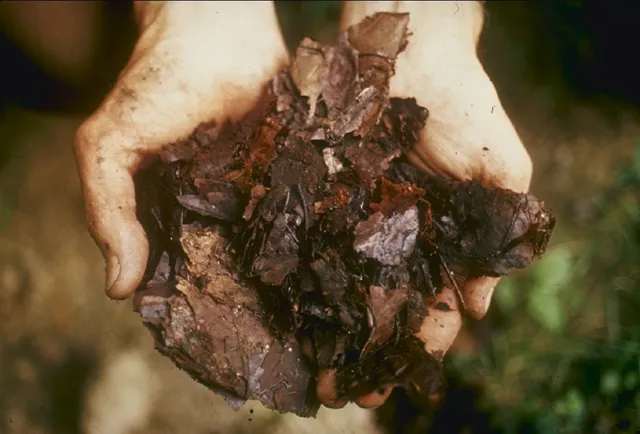
Make organo-mineral fertilizer from agricultural waste

Make organo-mineral fertilizer from agricultural waste The Islamic Organization for Food Security (IOFS) has trained Beninese actors in Porto-Novo to convert agricultural waste into organo-mineral fertilisers. The pattern answers two pressures at once: degraded soils and the high cost of imported chemical fertiliser. Skills focus on fertility and soil health without leaning on synthetic molecules alone. What you can do - Study the IOFS capacity-building approach and run a local workshop that maps farm residues to compost recipes - Partner with agricultural training centres or producer associations to host hands-on fertiliser making - Share the Porto-Novo pattern with municipal agri-extension teams looking for low-cost soil recovery - Follow IOFS food-security programmes for future regional trainings (IOFS news) How it works Trainers walk participants through converting crop and processing waste into organo-mineral blends that rebuild organic matter. The September 2024 Porto-Novo sessions are past; treat them as a replicable curriculum, not a live registration link. Organisers and ministries can invite similar modules through IOFS channels. Why it matters When fertiliser prices spike, yields fall and soils thin further. Teaching communities to feed fields from their own residues builds resilience that survives the next price shock. Source & repost Shared here so you can get inspired or find action already happening near you. Solarpunker does not own or organise it. Source: IOFS: Strengthening Benin's Agricultural Resilience through Organic Fertilizer Production. Photo: Wikimedia Commons, Compost.jpg (public domain).

In der Region Cotonou

Ideen und Initiativen aus Nachbarstädten im weiteren Raum Cotonou.

Ideen aus der Region

Turn organic waste into Maggot-Compost with soldier flies

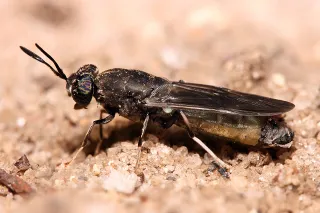
Turn organic waste into Maggot-Compost with soldier flies In Tori-Bossito, southern Benin, the cooperative Agro-Eco Services turns animal waste and agro-industrial leftovers into Maggot-Compost. Black soldier fly larvae cut a process that can take months down to about 12 days, then the team blends the result with biochar from agricultural waste. Farmers get a nutrient-rich organic fertiliser that feeds soil life without chemical burn. What you can do - Buy or trial Maggot-Compost if you farm or garden in Benin or neighbouring countries (Agro-Eco Services) - Visit the production site in Tori-Bossito to see larvae, biochar, and bagging in one loop - Adapt the pattern: collect local organic waste, partner with a youth coop, and sell compost instead of burning residues - Read how the model scaled from a Master's research project into a regional supplier (discovery: Africa Eye) How it works Larvae rapidly break down organic matter. After harvest, the residue is mixed with biochar and sold as Maggot-Compost to market gardeners, development partners, and research projects. The coop reports serving over 2,500 clients across Benin and neighbouring countries. Contact them via the website to purchase or partner; do not treat this page as a booking form. Why it matters More than a third of farmland in Benin faces degradation. Closing the waste-to-fertility loop keeps nutrients local, cuts dependence on expensive chemical inputs, and gives young agronomists a builder pathway that restores soil. Source & repost Shared here so you can get inspired or find action already happening near you. Solarpunker does not own or organise it. Source: Agro-Eco Services: Qui sommes-nous. Discovery: Africa Eye: Insects to the Rescue. Photo: Wikimedia Commons, Hermetia illucens Black soldier fly edit1.jpg (GFDL 1.2, Muhammad Mahdi Karim).

Grow rural agri-finance and cooperative savings groups

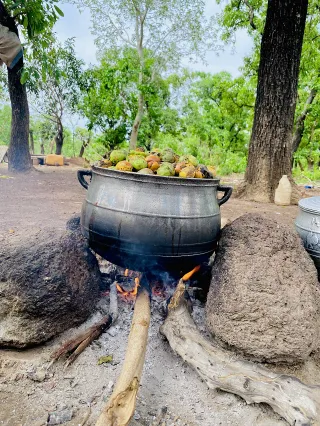
Grow rural agri-finance and cooperative savings groups GIZ's country package Benin of the global programme GV AgFin (promotion of agri-finance for agri-based rural enterprises) strengthens both sides of the credit market. On the demand side it coaches farms and MSMEs in financial management and helps them meet banks and microfinance institutions through producer associations. On the supply side it helps partner MFIs design products for priority value chains: rice, shea, cashew, soya, poultry, and vegetables. Solidarity savings and credit groups (GSEC) encourage saving inside cooperatives and agribusiness clusters. What you can do - Join or form a GSEC-style savings group inside your cooperative so members practice bookkeeping before seeking loans - Ask your producer association how group guarantees and adapted products (equipment, processing, nurseries) work with partner MFIs - Study the published knowledge products on farm investment planning and share them with credit officers in your region - Read the programme brief for regions covered (69 of 77 communes) and contact pathways via GIZ GV AgFin Benin (PDF) How it works Technical advice reaches farmers and MSMEs as well as nine partner MFIs and one bank. Adapted products include group loans for cooperatives, equipment and processing credit, and MSME loans for poultry, seed production, and cashew nurseries. Partner MFIs have disbursed more than 45 million EUR in credits to tens of thousands of farmers and hundreds of agri MSMEs in the target chains. Those loans are not backed by a GV AgFin credit line or guarantee fund. Why it matters Innovation stalls when growers are treated as too risky for banks. Finance that fits seasonal cash flows and cooperative guarantees lets rural builders invest in soil, processing, and decent work. Source & repost Shared here so you can get inspired or find action already happening near you. Solarpunker does not own or organise it. Source: GIZ: GV AgFin Benin factsheet (PDF). Commissioned by BMZ; political partner MAEP Benin. Photo: Wikimedia Commons, Shea nuts 1.jpg (CC BY-SA 4.0, Kanbongma).

Initiativen aus der Region